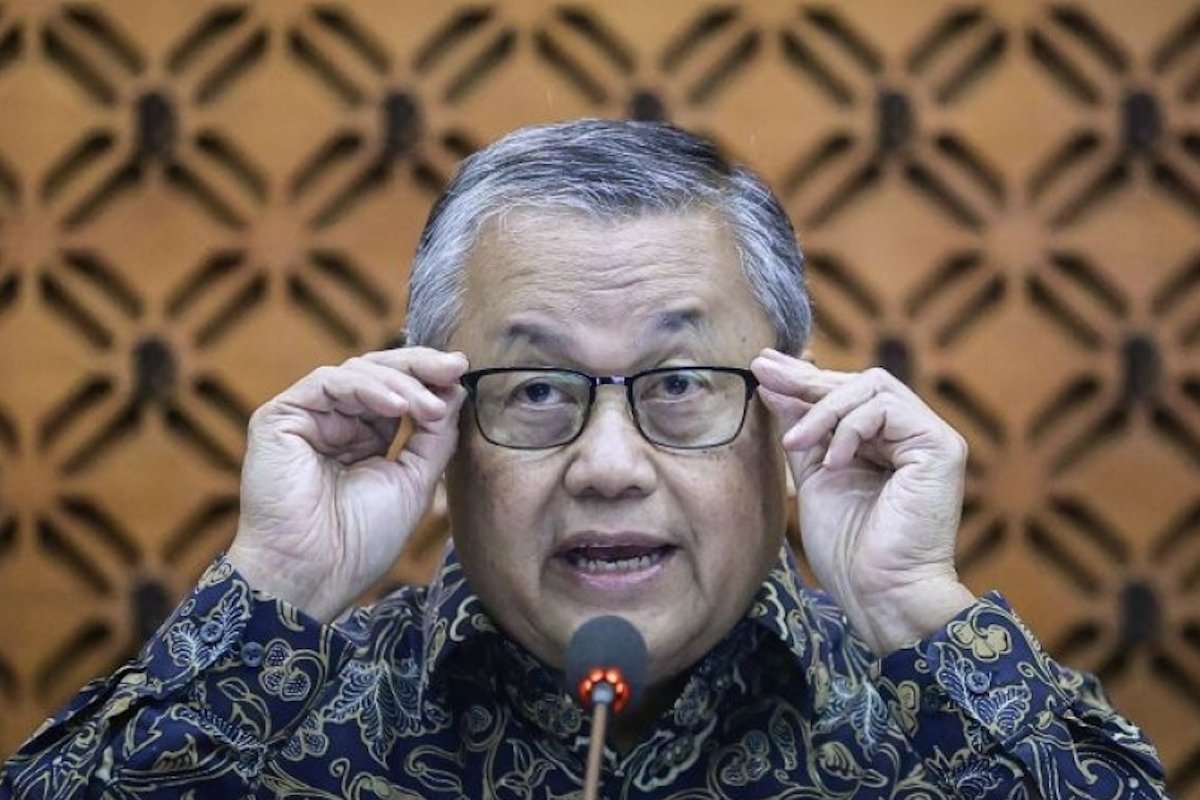
JAKARTA — The abrupt resignation of Bank Indonesia Governor Perry Warjiyo has sent shockwaves through financial markets, exposing the fragile state of Southeast Asia's largest economy. Warjiyo, who stepped down midway through his second five-year term citing personal reasons, had been a steadying force for seven years, guiding the central bank through the pandemic, global supply chain disruptions, and aggressive monetary tightening cycles. His departure, quickly accepted by President Prabowo Subianto, strips away a layer of predictability at a moment when Indonesia faces a punishing mix of domestic fiscal strain, capital flight, and external vulnerability.
The rupiah has depreciated roughly 7% since early 2026, making it one of Asia's worst-performing currencies. Foreign exchange reserves have fallen to $144.9 billion, reflecting heavy central bank intervention to cushion the decline. Sovereign bond yields are climbing, equity markets are buckling under policy anxieties, and Bank Indonesia finds itself at a dangerous crossroads where monetary defense collides with political expediency.
Fiscal and external pressures mount
Indonesia's current account deficit has widened to 1.1% of GDP, driven by moderating commodity export windfalls and strong demand for imported capital goods. Foreign direct investment inflows have slowed, constrained by regulatory ambiguity and labor market rigidity. The Prabowo administration's ambitious populist programs, including a flagship free school meals initiative, have pushed the fiscal deficit to 2.92% of GDP, near the statutory ceiling of 3%. International rating agencies and institutional investors have watched with alarm as domestic protests over spending have prompted reactive policy shifts.
Bank Indonesia was forced into aggressive tightening, raising its policy rate by 100 basis points this year to 5.75% to defend the rupiah. This creates acute tension between high borrowing costs and growth objectives. Global institutional funds have rotated out of Indonesian local-currency government bonds (SBNs) into safer Western debt, squeezing local banking liquidity and choking credit for small and medium-sized enterprises. The monetary authority is trapped in a trilemma: it cannot simultaneously defend the currency, support growth, and accommodate fiscal expansion.
Market psychology has turned defensive. Corporate treasurers are hedging foreign exchange exposures well ahead of standard cycles, accelerating dollar hoarding and compounding pressure on the rupiah. Analysts at major investment banks have revised their terminal policy rate expectations upward, warning that unchecked fiscal expansion could force an overly restrictive monetary stance that risks triggering a slowdown.
Central bank independence under threat
The circumstances of Warjiyo's exit have amplified long-standing fears about the erosion of central bank independence. Legislative changes through the Financial Sector Strengthening Law expanded Bank Indonesia's mandate to include job creation and economic growth alongside price stability. Independent economists and rating agencies warned that dual or tertiary mandates dilute monetary orthodoxy. When the line between fiscal stimulus and price stability is blurred, investors price in a higher risk premium for holding Indonesian sovereign assets.
Institutional concerns were compounded earlier this year by changes to the board of governors, including appointments of figures with close ties to the ruling coalition. When a long-serving governor exits abruptly under such politically charged conditions, the signal to global capital markets is unambiguous: monetary policy autonomy is slipping. This comes amid broader regional concerns about governance, as seen in youth-led protests in India that also highlighted institutional fragility.
Indonesia's structural competitiveness has been eroding for years, as detailed in our analysis of its competitiveness slump. The digital economy, while booming, masks a hidden workforce in the informal sector, adding to the complexity of monetary policy. Meanwhile, Jakarta's efforts to position Bali as a financial hub risk creating a tax haven, further complicating the regulatory landscape.
Externally, the protracted conflict in the Middle East has triggered energy price volatility and logistical bottlenecks. As a net oil importer, Indonesia has absorbed heavy imported inflation, pushing headline inflation to 3.34%. Rather than passing global energy shocks onto consumers through market-based fuel pricing, the government has shielded households, placing an unsustainable burden on state-owned enterprises like Pertamina and PLN.
Warjiyo's resignation is not merely a personnel change; it is a symptom of a deeper crisis. The central bank's credibility, the government's fiscal discipline, and the country's economic resilience are all under scrutiny. For an Indonesia that has long prided itself on stability, the road ahead looks increasingly uncertain.