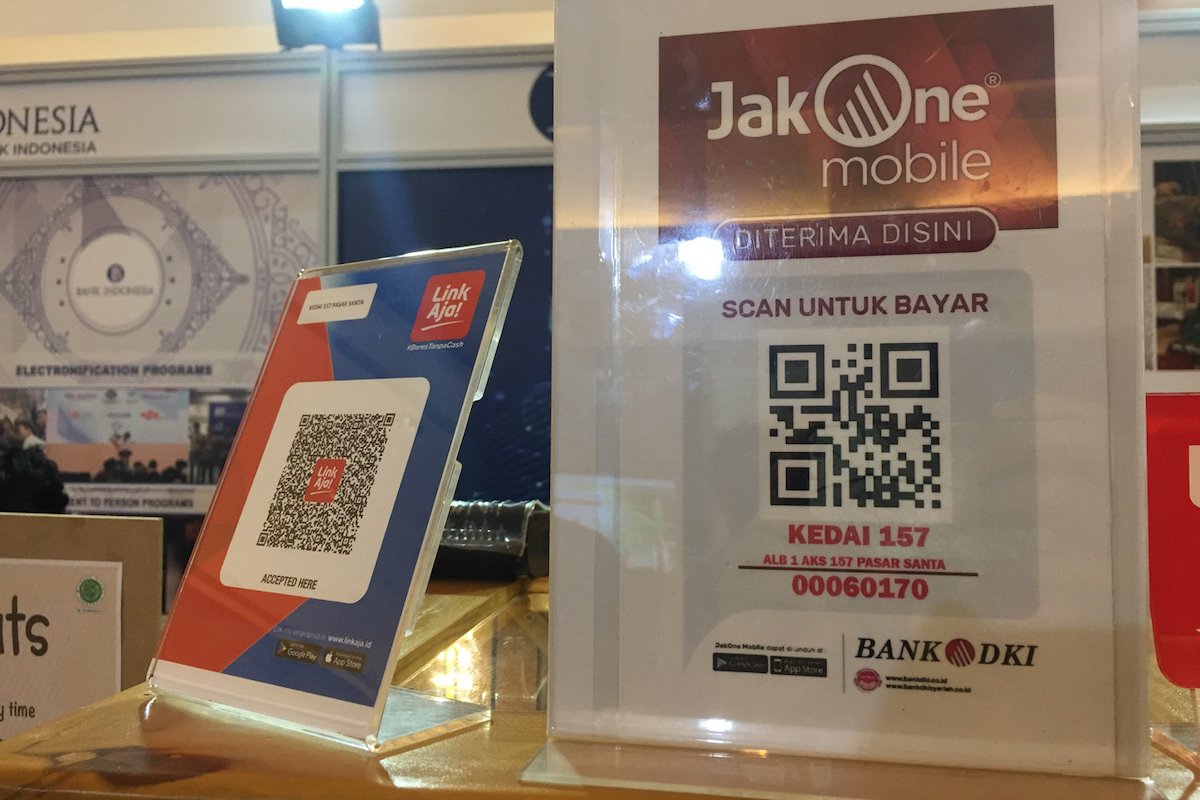
When an Indonesian tourist scans a QR code at a shop in Bangkok or Kuala Lumpur, the transaction looks like a simple convenience. But behind that scan lies a strategic shift: Asian central banks are quietly building a regional payment network that gives their economies more control over cross-border money flows.
Indonesia offers the clearest example. Bank Indonesia introduced the Quick Response Code Indonesian Standard (QRIS) to unify a fragmented domestic QR-payment market. Merchants no longer need separate codes for each provider. Adoption has been rapid: in the first half of 2026, QRIS processed 12.55 billion transactions worth about 600.7 trillion rupiah, used by more than 66 million people and nearly 45 million merchants, mostly micro, small and medium-sized enterprises. That volume was double the same period in 2025.
These numbers matter because Indonesia is not exporting an experimental platform. It is extending a domestic system that has already achieved mass adoption. Cross-border QRIS links now connect Indonesia with several regional partners, letting Indonesian travelers pay abroad and foreign visitors pay Indonesian merchants. The usual framing is about tourism and digital innovation, but the strategic significance goes further.
Bypassing the dollar, not abandoning it
When payments are directly connected and settled in local currencies, consumers and businesses can avoid unnecessary currency conversions. A transaction between two Asian countries does not always need to pass through a third currency. That does not mean Asia is abandoning the US dollar. The dollar remains central to trade invoicing, foreign-exchange reserves, commodity markets and international finance. Asian central banks are neither able nor necessarily seeking to overturn that system.
This distinction matters because local-currency initiatives are often presented in extreme terms. One side sees them as proof that the dollar’s dominance is ending; the other dismisses them as political gestures with little commercial value. Indonesia’s experience points to a more practical story. Transactions under Bank Indonesia’s Local Currency Transaction framework reached the equivalent of US$14.1 billion by July 2025, up 112% from $6.7 billion a year earlier. The seven-month figure was already 87% of the $16.28 billion recorded throughout 2024. Average monthly users rose from 5,020 in 2024 to 7,568 in 2025.
These figures remain small compared with Indonesia’s total international transactions, but their growth shows that local-currency cooperation is moving beyond declarations made at regional meetings. The link between payment connectivity and local-currency settlement is especially important. Cross-border QR systems provide a channel that consumers and small businesses can use; local-currency arrangements provide the settlement framework behind those payments. Together, they bring monetary cooperation out of central-bank conference rooms and into ordinary economic activity.
The regional ambition is already clear. In 2023, ASEAN leaders backed stronger regional payment connectivity and wider use of local currencies, linking the initiative to cheaper cross-border payments, deeper financial integration, stronger regional value chains and reduced exposure to exchange-rate volatility. Technology is making that ambition more credible. Project Nexus, initiated by the Bank for International Settlements Innovation Hub, developed a framework for connecting domestic instant-payment systems. Instead of creating a separate link between every pair of countries, participating systems connect through a shared platform. Indonesia, Malaysia, the Philippines, Singapore and Thailand were involved in the project’s development. Under the Nexus model, most cross-border payments could reach their recipients within 60 seconds. In 2025, the central banks of Indonesia, India, Malaysia, the Philippines, Singapore and Thailand established Nexus Global Payments to move the initiative toward implementation.
Yet faster payments do not automatically produce monetary sovereignty. Greater connectivity brings greater exposure to fraud, cyberattacks and money laundering. It also raises difficult questions about data governance, consumer protection and responsibility when a cross-border transaction fails. Indonesia’s own figures reveal the challenge: its financial-inclusion index reached 93.61% in 2026, while its financial-literacy index stood at 69.57%. Access to financial services is expanding faster than many consumers’ ability to understand and manage digital risks. There is also a regional divide. Singapore’s advanced financial infrastructure, Indonesia’s enormous digital market and the more limited systems of developing ASEAN economies do not begin from the same position. Without regulatory coordination and technical support, payment integration could widen the gap between regional leaders and late adopters. As ASEAN's digital payment boom outruns its anti-scam defenses, the need for robust safeguards becomes more urgent.
This is why Bank Indonesia’s role deserves attention. It has helped connect three areas often treated separately: domestic financial inclusion, cross-border payment infrastructure and local-currency settlement. That combination offers a more realistic path to monetary sovereignty than grand pronouncements about dethroning the dollar. It is a slow, incremental process, but one that is already changing how money moves across Asia.