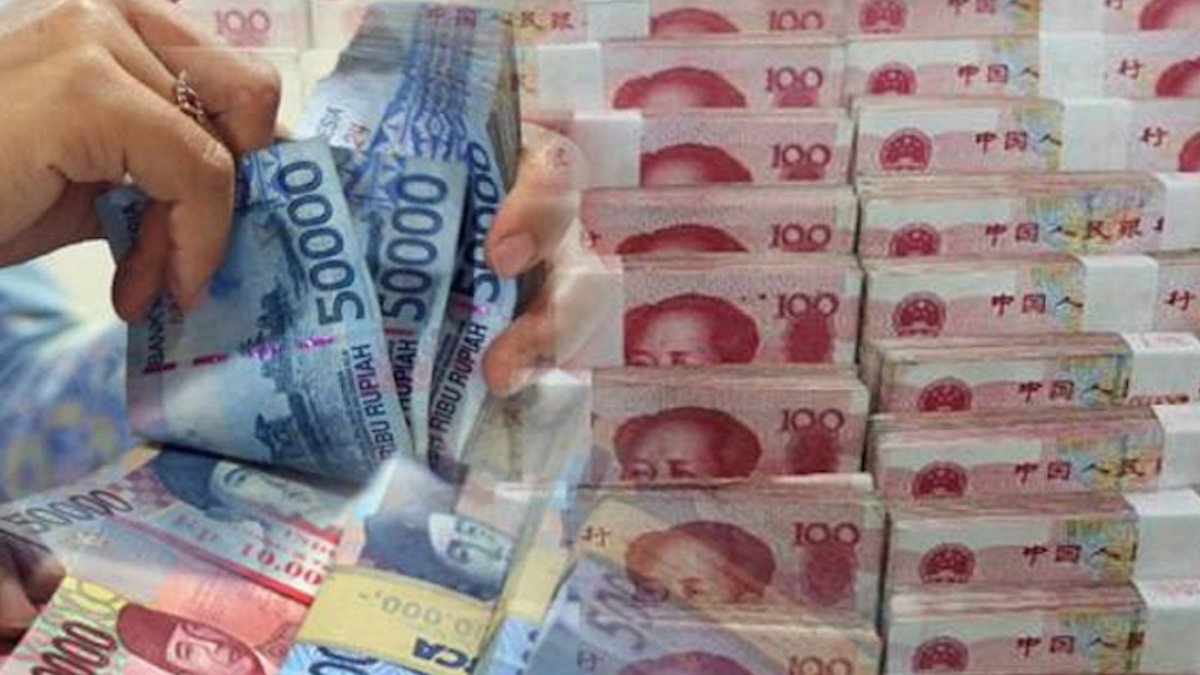
For half a century, the dominant pattern of cross-border capital between Asia and the United States was straightforward: American firms bought Asian assets, U.S. capital funded Asian growth, and American consumers absorbed Asian production. That pattern was so entrenched that few questioned whether it could ever reverse. In 2025 and early 2026, it has reversed—quietly, deliberately, and at a scale that most analysts have yet to fully absorb.
On April 26, 2026, India's largest pharmaceutical company, Sun Pharma, signed a definitive agreement to acquire New Jersey-based Organon for $11.75 billion in an all-cash transaction. It is the largest acquisition by an Indian biopharmaceutical company in history. Sun Pharma will become the world's seventh-largest biosimilar seller and a top-three player in global women's health.
In January 2026, Mitsubishi Corporation completed a $7.5 billion acquisition of Aethon Energy's U.S. natural gas assets—the largest Japanese acquisition ever in America's energy sector. In March 2026, Toyota Industries was taken private in a $43 billion deal, the largest Japanese take-private in history. SoftBank committed $30 billion to OpenAI's Stargate venture, the largest single corporate commitment ever made to an AI infrastructure project, and also acquired Ampere Computing from Carlyle and Oracle for $6.5 billion. Sumitomo Corporation completed a $5.8 billion buyout of SCSK Corp.
The Numbers Behind the Shift
The aggregate data confirms the trend. Total Asia-Pacific M&A activity in 2025 reached $946 billion, up from $687.7 billion in 2024. Japan-related M&A surged to $385.9 billion. Greater China M&A reached $399 billion, up 46% versus 2024. India recorded $113 billion in 2025, up 42% year-on-year. Foreign capital flowing into the U.S. in 2025 hit $385 billion. The Americas accounted for 60% of global M&A deal values. The direction has flipped, and the speed is accelerating.
Three Structural Forces Driving the Reversal
The reversal is being driven by three structural forces, none of which is likely to weaken in the next five years.
Tariff bypass. The Trump administration's 2025 tariff regime—struck down by the U.S. Supreme Court in February 2026, only to be reimposed under different legal authority within hours—has made exporting into the U.S. structurally more expensive. For foreign companies, the most stable response is no longer to ship into the American market; it is to own production inside it.
Capability acquisition. Asian firms are not buying American assets primarily for revenue. They are buying for FDA pipelines, regulatory expertise, brand equity, and proprietary technology that would take decades to build organically. Sun Pharma's acquisition of Organon brings women's health franchises, biosimilars manufacturing capacity, and U.S. distribution networks that no Indian firm has previously held at this scale.
Geopolitical hedging. Asian and European companies are increasingly aware that operating only in their home market is a strategic liability. Owning assets in multiple major blocs is the new resilience strategy. This is part of a broader trend where Asian governments are also rethinking their industrial policies, as seen in India's defense push transforming into industrial statecraft across Asia.
What Asian Founders Are Missing
The strategic implications for Asian business founders are significant, yet most are not internalizing them. For decades, the assumed path for an Asian company was to build domestically, then expand regionally, then perhaps list in New York or seek acquisition by an American buyer. The endpoint of the journey was almost always American capital arriving to value the Asian asset.
That endpoint is changing. The most ambitious Asian companies in 2026 are not waiting to be acquired by American firms—they are acquiring American firms themselves. The valuation premium that once accrued to American buyers is now being claimed by Asian acquirers.
This shift is structural, not cyclical, and will continue regardless of which political party occupies the White House in 2028. The economic factors that made this shift possible—particularly the relative weakness of the U.S. dollar against Asian currencies, the durable U.S. tariff posture, and the accumulated capital reserves of Japanese, Indian, Chinese, and Middle Eastern firms—are not temporary conditions.
For Asian governments, the implication is that domestic industrial policy should support outbound acquisitions, not just inbound investment. The next decade of Asian economic growth will be defined as much by what Asian companies own outside Asia as by what they produce inside it. This is reminiscent of how tolling the Malacca Strait could price out American hegemony, as Asian nations seek greater economic autonomy.
The Founder's Lesson
Most Asian business founders are still operating with a mental model built for a world that ended in 2024. They benchmark against domestic competitors and define success by regional market share. They view American expansion as the final, distant chapter of a long growth story.
The most successful Asian companies of the next decade will operate differently. They will treat global ownership as a near-term strategic objective rather than a far-future ambition. They will build capital structures designed to acquire, not just to be acquired. They will hire executives with experience in integrating foreign operations.
The shift in capital direction is now visible in the data, but the shift in mindset has not yet caught up. The founders who close that gap fastest will define what Asian business looks like in 2030. The world is buying America, but most Asian business founders have not noticed yet. The ones who do will spend the next decade with an entirely different set of opportunities than those who don't.