The Trump administration has rolled out a broad strategy to wean US defense contractors off Chinese critical minerals, using executive orders, export restrictions, and more than US$2 billion in new investments. The goal: build a supply chain that relies on domestic production and allied nations for materials like scandium and tungsten, which are vital for advanced military technology.
Key measures since July
On July 20, President Donald Trump signed an executive order that curtails the Department of War's ability to waive restrictions on critical materials sourced from adversary nations—China, Russia, North Korea, and Iran. The order pushes contractors to qualify new domestic and allied sources, with waivers ending on January 1, 2027, unless a plan to remove such materials is approved.
Ten days later, Trump invoked the Defense Production Act to declare tungsten scrap and battery waste—known as black mass—as scarce and essential to national defense, directing the Commerce Department to restrict their export. This move aims to keep these materials within the US and allied supply chains.
On August 7, the US Treasury welcomed new S&P Global reference prices for gallium, germanium, tungsten, antimony, neodymium, and praseodymium. This is part of a broader agreement with allies, including Japan, Mexico, and the European Union, to set phased-in price floors for critical minerals. At a mining industry roundtable, Trump unveiled over US$2 billion in new mineral investments.
Major investments
The largest award, US$1.4 billion, went to Sila Nanotechnologies, a California-based battery maker, to expand silicon-carbon anode production and build a lithium-ion cell plant for satellites, drones, and munitions. Another US$400 million will support Sunrise Energy Metals in developing the world's first primary scandium mine in Australia, a metal used in high-heat aluminum alloys for fighter jets and spacecraft.
Other awards include US$150 million to Niron Magnetics in Minnesota for rare earth-free permanent magnets, US$85 million to Standard Bauxite for refractory-grade bauxite, and smaller sums for graphite, tantalum, niobium, and boron projects, plus US$180 million for mining schools.
Skepticism from Chinese media
Chinese state media and commentators have questioned whether US contractors can source enough critical minerals from domestic and allied producers within the tight timeline. Guancha.cn, a Chinese news outlet, called the goal “mission impossible” for defense contractors to stop buying rare earths, magnets, tungsten, molybdenum, and tantalum from China, Russia, Iran, or North Korea within five months.
“The complexity of mineral refining has also slowed the progress of US projects,” the outlet noted, pointing to ReElement, a rare earth refining startup that plans to adapt chromatography—a technique common in pharmaceuticals but never before used at scale for minerals. It also cited a lawsuit between USA Rare Earth and MP Materials over alleged technology theft, highlighting the challenges of building a domestic industry.
A Tianjin-based columnist writing as Zui Qingxian argued that the US is trying to rebuild in five months an industrial system that took China more than two decades to establish. “Rare earths need smelting, separation, purification, and processing before they can be used. China has long dominated that chain, holding close to 90% of global refining capacity,” he wrote.
He added that American suppliers lack the decades-old industrial base, having outsourced the highly polluting smelting stage over the last 30 years. “Rebuilding a complete supply chain may take at least five years,” he said, and US companies still cannot maintain production without China's rare earths in the short term.
Diversifying away from China
China has already taken steps to restrict exports. In December 2024, it banned exports of gallium, germanium, and antimony to the US, then tightened broader rare earth controls through 2025 and extended dual-use restrictions to Japan in early 2026. According to Nikkei, China's rare earth exports to Japan fell 51% year-on-year in the first half of 2026, with a sharper 81% drop in June alone. Exports of dysprosium and terbium to Japan have been zero every month since the start of the year. US imports of these minerals also fell 28% over the same period.
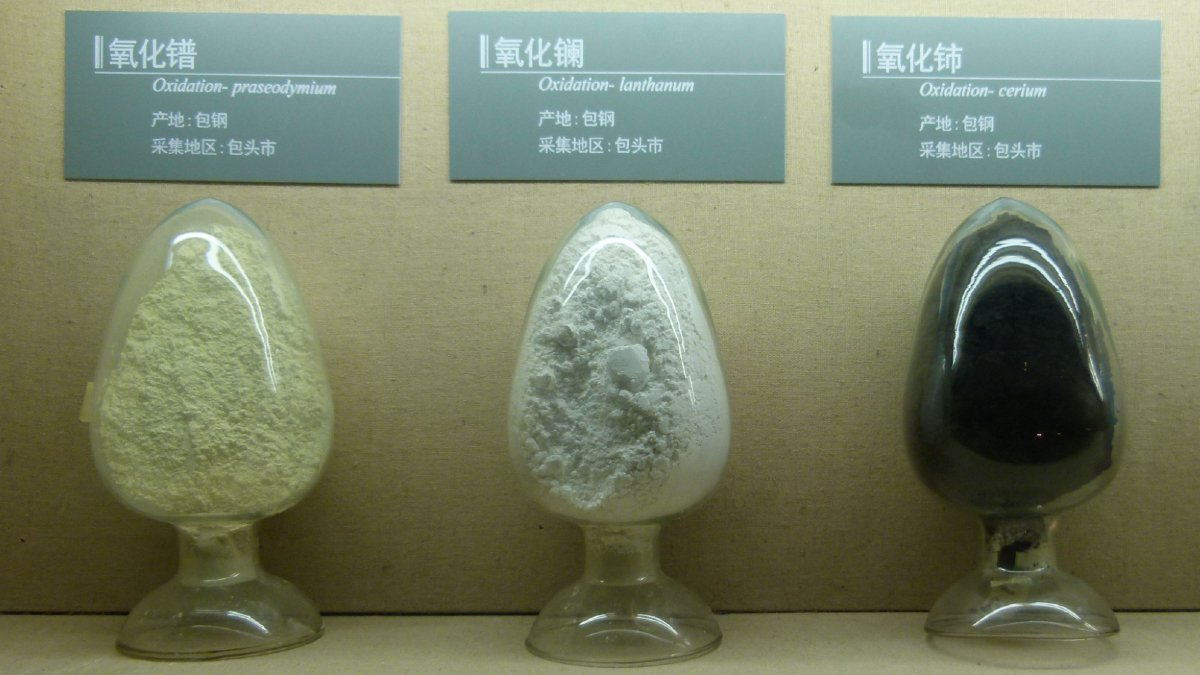
The US remains almost entirely reliant on imports for these dual-use niche minerals, including gallium, germanium, dysprosium, terbium, and yttrium. The push to diversify is part of a broader effort to reduce dependence on China, but as analysts note, the road ahead is long and fraught with technical and industrial hurdles. The India-China thaw shows that supply chain shifts can be strategic, but building a new system from scratch is another matter entirely.