For six years, India's China policy rested on a single assumption: economic dependence on a rival with a disputed border is a liability. After the 2020 Himalayan clashes, New Delhi tightened scrutiny on Chinese investment, restricted business travel, and slow-walked deals. The message was clear: India would absorb economic costs to shrink China's grip on sensitive sectors.
That stance is now being recalibrated. On August 6, Indian and Chinese officials met in New Delhi for the 36th round of the border-affairs working mechanism, continuing a thaw that has eased business travel, revived commercial ties, and selectively loosened investment rules. Both sides reiterated the usual language about peace and tranquillity along the Line of Actual Control.
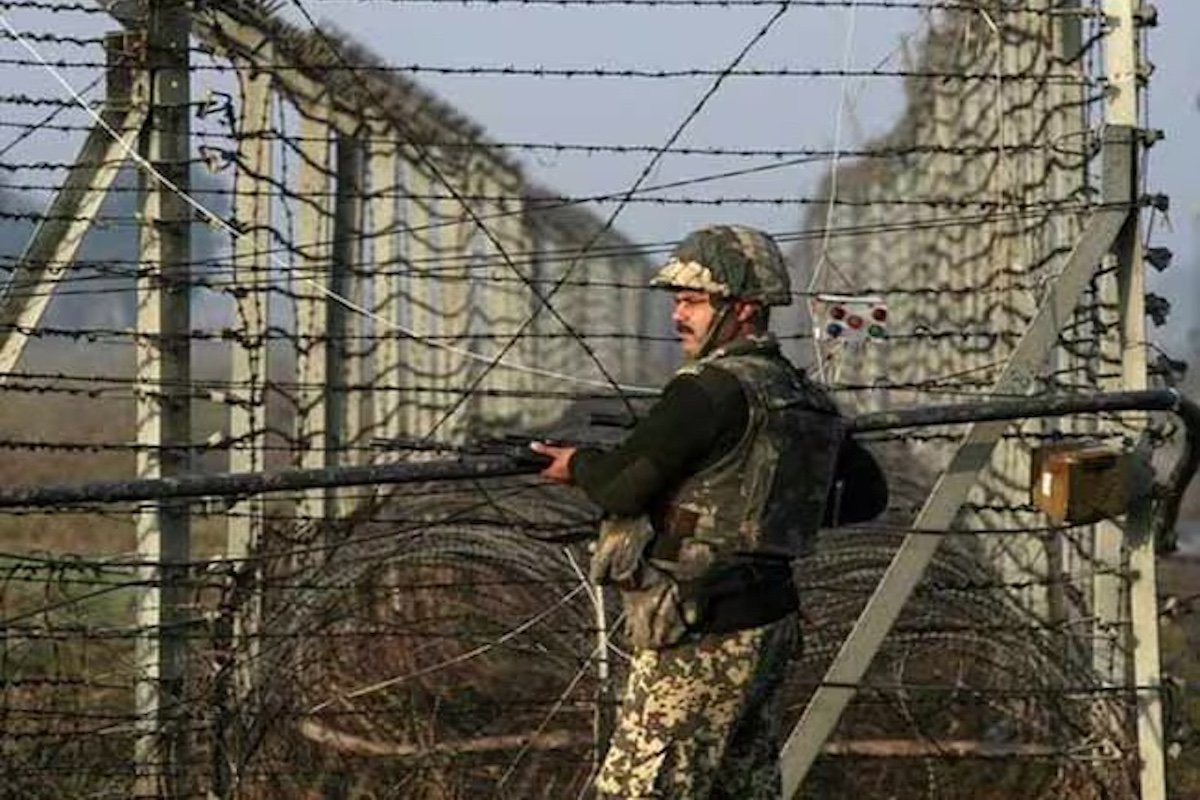
But a quieter border is not reconciliation. The 2024 disengagement deals resolved the face-off points at Depsang and Demchok—real progress, yet not full de-escalation. Both sides still maintain large forces across the frontier, and the territorial dispute remains unresolved.
Calling this a rapprochement misses the point. India has not stopped competing with China. What has changed is New Delhi's realization that de-risking and decoupling are not the same. Building a manufacturing base that can rival China's may require more access to Chinese machinery and know-how in the near term, not less.
The $132 billion reality
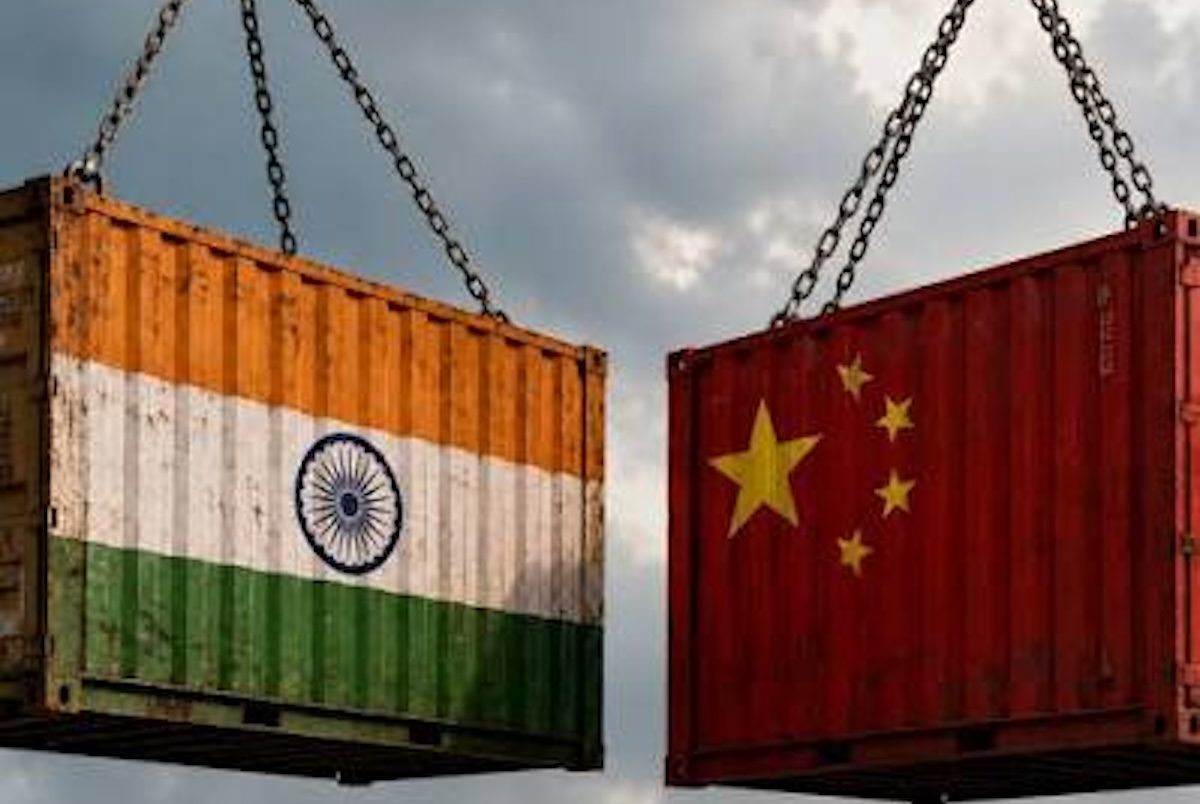
The numbers explain the pragmatism. India imported nearly $132 billion in goods from China last fiscal year—more than from any other country. Total trade reached roughly $151 billion, with India's deficit topping $100 billion. A large share is machinery, electronics, chemicals, and components—industrial inputs Indian manufacturers depend on.
This is the contradiction at the heart of India's industrial strategy: New Delhi wants to become the next global alternative to Chinese manufacturing, but many factories that would make that happen cannot function without Chinese equipment.
India has already learned the cost of that gap. After post-2020 travel restrictions, manufacturers could not get Chinese specialists to install, run, and fix machinery. Reuters, reporting on the eventual visa easing, cited an estimate putting the cost to electronics production at around $15 billion over four years. India eventually loosened visa rules for Chinese professionals. The lesson was awkward: restrictions meant to hem in China were also hemming in India's own factories.
From exclusion to selective access
Investment policy is following the same playbook. In March, India eased some curbs—not by opening the door wide, but by creating more room for Chinese technology, machinery, and capital to flow into Indian manufacturing while retaining control over ownership. Under new rules, investments with up to 10% Chinese ownership can, under certain conditions, get faster approval. Selected projects in electronics, batteries, and other sectors are moving more quickly. The logic is straightforward: get the capability, don't let the dependence become permanent.
India's EV industry is the clearest illustration. Chinese carmakers still face political and investment walls in India, but Chinese EV technology is harder to keep out. Reuters reported in June that Tata Motors is building its premium EVs on a platform licensed from China's Chery, and other Indian firms are pursuing similar licensing arrangements: get the tech, skip handing over the equity.
India can probably keep Chinese companies at arm's length. Keeping their technology out of Indian factories is a lot harder.
Self-reliance has not disappeared
None of this means Modi has quietly shelved the self-reliance push. If anything, New Delhi is getting more precise about where dependence is actually dangerous. In July, officials flagged roughly $51 billion in critical imports for priority domestic substitution—EVs, solar, textiles, footwear. New Delhi is preparing incentives for domestic polysilicon production to cut reliance on China in the solar chain, according to a Reuters August 7 report.
On the surface, that looks like a contradiction—easing barriers to Chinese capital and technology with one hand while spending real money to cut Chinese imports with the other. It isn't, really. You can't ban your way out of dependence before your own alternatives are good enough. Push manufacturers onto worse, pricier substitutes too early, and you weaken the very industries you're counting on to eventually take China on. So the real strategy isn't to cut China off. It's closer to: use what you need from China now, while building toward needing less of it later.
What China gets from the thaw
Beijing has its own reasons to go along. India is a big, growing market for Chinese manufacturers at a time when Chinese firms face more trade barriers and political scrutiny in the US, Europe, and elsewhere. China has little reason to walk away from that.
But the dependence isn't symmetrical. India needs China's industrial base far more than China needs Indian demand—and that imbalance is exactly why New Delhi wants to reshape this relationship rather than blow it up. A steadier border also lowers the odds that economic friction pushes India to diversify away faster or drives it closer to countries trying to counterbalance Beijing.
Border peace is increasingly treated as economic infrastructure. The thaw is a truce in the supply chain, not a strategic reset. India is still competing, but it has decided that the path to self-reliance runs through Beijing's factories—for now.