When Kevin Warsh took the helm at the Federal Reserve in May, his reading list likely leaned on Milton Friedman and Adam Smith. Six months on, it might just as easily feature Isaac Asimov, Arthur C. Clarke, and Philip K. Dick.
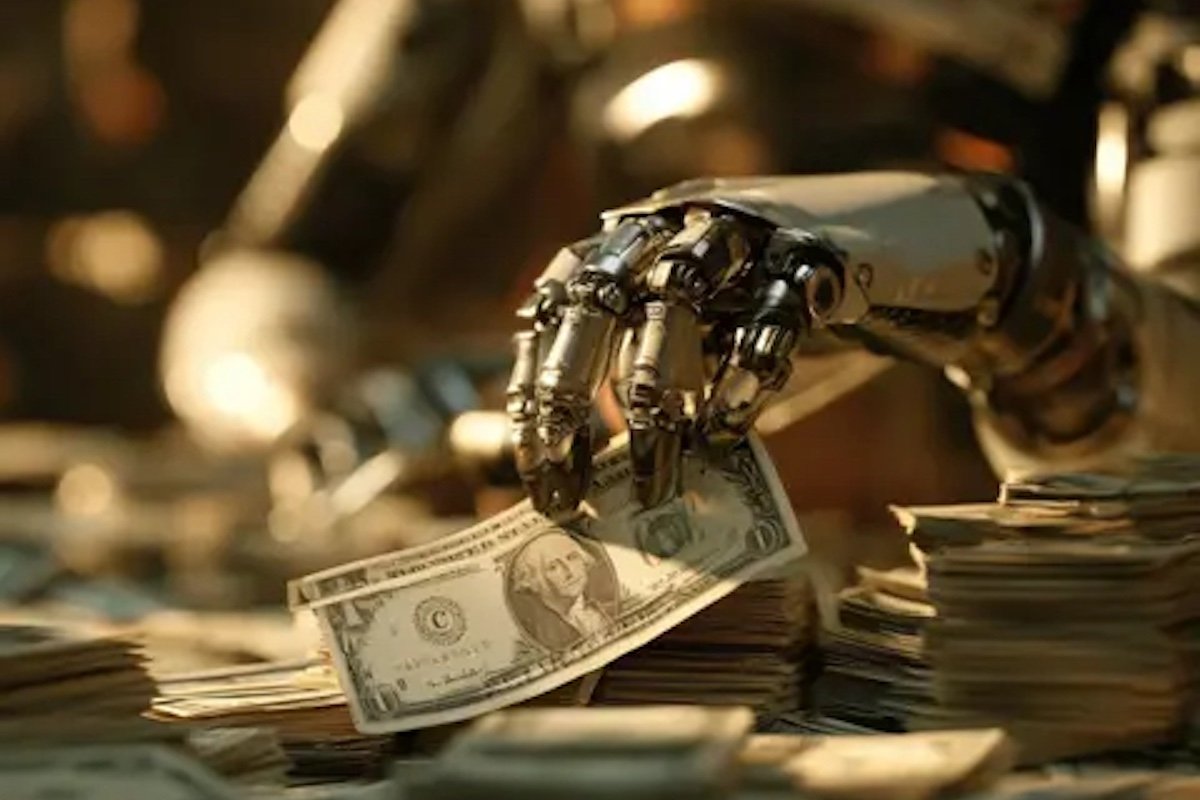
Under Warsh, artificial intelligence has moved from science-fiction curiosity to a defining variable in the global economic outlook for 2027. The past week underscored the shift: rather than dwelling on inflation or potential growth, Warsh devoted much of his attention to how AI could reshape both the US economy and the dollar's global dominance.
AI as an economic force
The Fed is now actively mapping scenarios for how AI could transform the world's largest economy. In a November 16 speech, Warsh highlighted AI's potential to supercharge idea generation. "It appears to be changing the method, and, at least as important, the speed of innovation," he said. "If idea generation broadens, growth could be sustained at a level substantially higher than the long-run average."
Wall Street is reaching similar conclusions. Goldman Sachs argued in a recent note that part of the dollar's resilience reflects investor enthusiasm for companies expected to benefit most from the AI boom. "We have found that dollar performance looks linked to AI-related equity performance, in both good times and bad," the bank wrote.
Deutsche Bank's global head of FX research, George Saravelos, has gone so far as to label it the "AI dollar." He argues the boom helps explain why widespread forecasts for a weaker greenback failed to materialize this year. "Our expectations for a weaker dollar this year did not play out," Saravelos noted. He warned that a meaningful downgrade in AI-related capital expenditure expectations would likely push US real yields lower, curb foreign equity inflows, and undermine two of the dollar's most important pillars of support.
Risks take center stage
What's striking is that Warsh spent much of his latest speech emphasizing risks rather than rewards. Earlier this year, he frequently highlighted AI's potential to lift productivity and raise the economy's speed limit. Now the tone is more cautious. "No technological transformation is risk-free," Warsh said. "And the risks in this case, if overlooked, can be highly disruptive and economically costly."
One concern is that extraordinary optimism surrounding AI could eventually collide with economic reality. After years of heavy investment and surging equity valuations, expected returns could disappoint, triggering a sharp repricing of AI-related assets, a broader economic slowdown, and higher unemployment.
Fed Governor Michael Barr echoed those warnings, focusing on the financial system's growing exposure to the sector. "In addition to the question of equity valuations, the AI buildout has been increasingly funded by debt," Barr noted. He said the Fed is studying three channels through which "advanced-computing debt" could threaten financial stability: rapid expansion of borrowing by AI firms, increasingly circular financing networks, and a web of complex financial obligations tied to the sector.
Barr noted that on-balance-sheet debt among the seven largest AI firms has risen sharply this year and is expected to exceed US$800 billion before year-end. "The growth of debt at these firms brings to mind the telecom investment cycle of the late 1990s and early 2000s," he warned.
An AI downturn could become a dollar story
Even as policymakers focus on financial risks, investors are increasingly preoccupied with another possibility: that an AI downturn could become a dollar story. "US technology stocks have delivered very strong returns in recent years, both in absolute terms and relative to other markets," said Kirsti Sunde Midttun, an analyst at Nordea. "This has contributed to a strong dollar."
The problem, she argues, is that the path to profitability remains uncertain. "A sharp decline in the US equity market could lead to a significantly weaker dollar." AI-led gains in the stock market have attracted huge volumes of foreign capital into the US, supporting the dollar as overseas investors convert local currencies into dollars to buy shares in AI-related companies.
That dynamic leaves both Wall Street and the dollar highly dependent on the commercial success of the AI boom. "A large share of AI industry revenues is driven by model developers such as OpenAI and Anthropic and their need for ever-increasing data-center capacity," Midttun noted. Yet many of these firms continue to run substantial losses. If access to capital tightens before profits emerge, demand throughout the AI supply chain could weaken sharply, dragging down earnings, valuations, and ultimately the dollar itself.
Others argue that the technology's economic contribution may be even larger than official statistics suggest. Mary Kate Godfrey of the Council on Foreign Relations contends that conventional measures likely understate AI's contribution to US growth because much of the equipment powering the revolution is imported. This has implications for Asia, where many of those components are manufactured, and for the broader dollar's long slide as central banks in the region diversify reserves.
For now, the Fed's stress-testing of AI scenarios reflects a recognition that the technology's impact on the dollar and the global economy is no longer a matter of speculation. As Warsh put it, the question is not whether AI will matter, but how quickly and with what consequences.