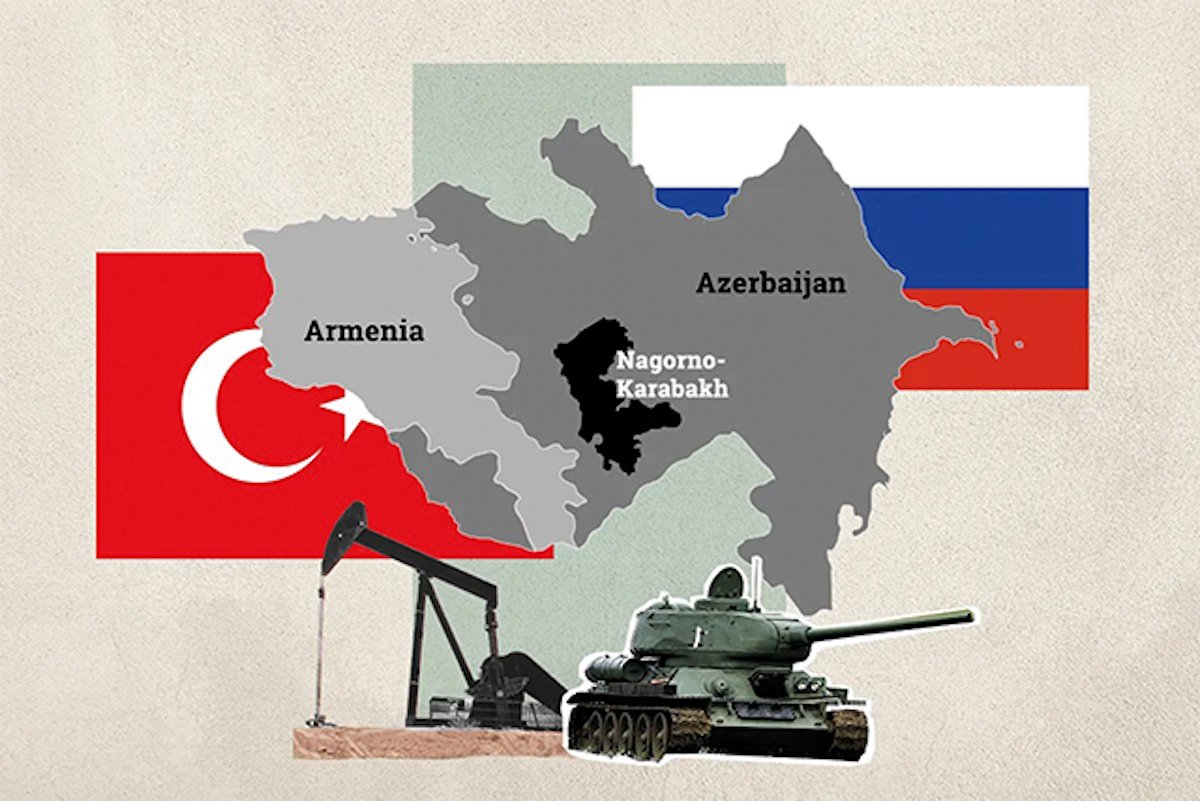
When Armenia regained independence in 1991, its security was shaped by the historic rivalry between Russia and Turkey. Yerevan looked to Moscow for protection, while Ankara cultivated a close partnership with Azerbaijan, Armenia's eastern neighbor and longtime adversary.
That alignment gave Russia a military foothold near Turkey's border, a position Moscow valued highly. Turkey had joined NATO in 1952, and the Cold War's end did not erase the strategic competition. In my 2005 study of the South Caucasus, I described the relationship as a “geostrategic armistice” – rivals who competed but avoided direct confrontation.
As late as 2016, I argued that closer economic ties between Russia and Turkey were unlikely to shift the balance in Nagorno-Karabakh, a predominantly Armenian-populated region internationally recognized as part of Azerbaijan. The self-proclaimed Nagorno-Karabakh Republic governed most of it with Armenian support.
Today, that armistice has evolved into pragmatic cooperation between rivals, and the balance has tilted in Turkey's favor.
Turkey's growing leverage
Turkey's policy toward Armenia has been driven by its alliance with Azerbaijan since the early 1990s. In 1993, during the first Nagorno-Karabakh war, Ankara closed its land border with Armenia in solidarity with Baku. Over the following decades, Turkey and Azerbaijan built deep commercial ties, exemplified by the Baku–Tbilisi–Ceyhan pipeline, which carries Azerbaijani oil through Georgia to a Turkish Mediterranean port. Armenian exporters, meanwhile, had no direct land route to Turkish markets.
The second Nagorno-Karabakh war in 2020 marked a turning point. Turkey's military and political backing helped Azerbaijan win, while Russia brokered a ceasefire that fell short of Armenian expectations. Moscow also agreed to Turkish officers serving alongside Russians at a monitoring center in Azerbaijan. By 2024, Russian peacekeepers had left Nagorno-Karabakh, leaving Turkey's influence intact through its alliance with Azerbaijan.
After Russia's full-scale invasion of Ukraine in 2022, Turkey maintained ties with Kyiv but declined to join Western sanctions. As Western markets closed to Russian firms, trade through Turkey became a vital lifeline, further enhancing Ankara's regional standing.
Twenty years ago, I weighed Moscow's military interests in Armenia heavily. Today, I would ask what a dispute with Turkey over Armenia might cost Russia. The calculus has changed.
Armenia should preserve friendly relations with Russia while reducing its security dependence on Moscow. In 2023, at Yerevan's invitation, European Union civilian observers began monitoring the Armenian side of the border with Azerbaijan – a sign of shifting alignments.
The border question
Armenia has long offered to establish diplomatic relations with Turkey and open the border without preconditions. The 2009 Zurich Protocols, which provided for both steps, were signed but never ratified. Turkey and Azerbaijan formalized their alliance in the 2021 Shusha Declaration, and Turkish President Recep Tayyip Erdogan has insisted on an Armenian–Azerbaijani peace agreement before full normalization with Armenia. That condition gives Baku a say in when the border opens.
Despite the closed border, the two sides have discussed restoring a railway link. In April 2026, Armenian and Turkish officials met in eastern Turkey to talk about reopening the line to Gyumri in northwestern Armenia. If freight trains ran again, a producer in Gyumri could ship goods directly to customers across the border or onward to a Turkish Mediterranean port.
In southern Armenia, Azerbaijan needs a route across Armenian territory. The province of Syunik separates mainland Azerbaijan from Nakhchivan, an Azerbaijani exclave bordering Turkey. The proposed US-backed Trump Route for International Peace and Prosperity (TRIPP) would link the two across Syunik, giving Turkey a more direct path east to Azerbaijan and Central Asia. Russia has expressed interest in participating, reflecting its continued stake in Armenian railways, which a subsidiary of Russian Railways operates under concession.
Yerevan has its own proposal: Armenian trains running from Yeraskh through Nakhchivan to Meghri, both in Armenia but connected by a line passing through Azerbaijani territory. The Washington Declaration, which outlines Azerbaijan's desired connection, promises reciprocal benefits but leaves the Armenian route unspecified. An agreement on Syunik would determine whether an Armenian train from Yerevan could once again reach Meghri through Nakhchivan.
The South Caucasus is in flux. Russia's military presence has shrunk, Turkey's influence has grown, and Armenia is seeking new balances. The path forward depends on whether Yerevan, Baku, and Ankara can turn pragmatic interests into lasting agreements.