The Nvidia affair has escalated into a full-blown political and national security crisis. According to The New York Times, U.S. intelligence agencies are convinced that Alice Huang, who had an affair with Nvidia CEO Jensen Huang, was working with Chinese intelligence. The allegations have triggered comparisons to a spy thriller, but the implications are far more serious: they suggest that the Department of Commerce may have allowed the Chinese Communist Party to circumvent American export controls on advanced semiconductors.
Senator John Kennedy (R-La.) voiced the concern on NBC's "Meet the Press," saying, "It appears to me, I emphasize 'appears,' that the Department of Commerce has allowed the Communist Party of China to circumvent our export controls on advanced chips." The scandal now weaves together sex, espionage, smuggling, and, most troublingly, presidential interference.
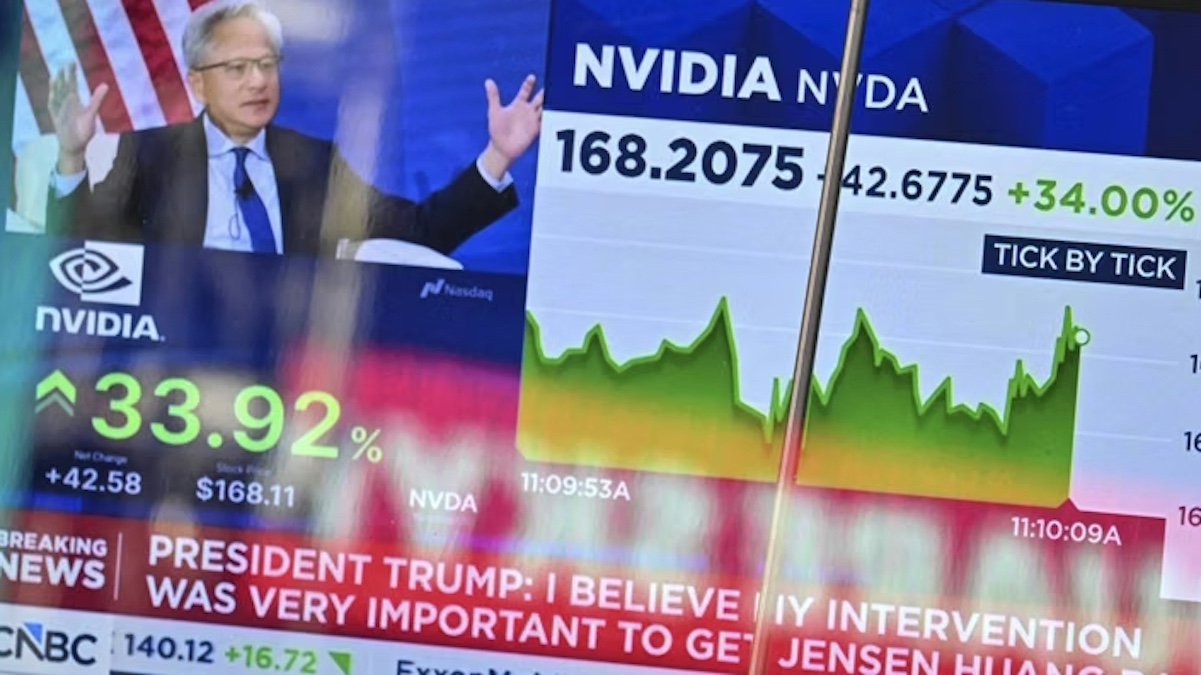
President Donald Trump reportedly called Nvidia's board on Monday to pressure them into reinstating Jensen Huang as CEO, which they did. When CNBC asked Trump whether he had assured the board that Huang would not be prosecuted, Trump replied, "I gave them enough assurance." That statement has raised alarms about potential obstruction of justice and the use of presidential power to shield a key ally.
The timing is critical. Congress is just beginning to decide which issues to investigate, and Democrats hold a larger majority in the House than any party has had in three decades. Voters went to the polls furious about corruption, and the administration is already bracing to resist oversight—a core constitutional function of the legislative branch.
In our recent Briefing podcast, former congressional lawyer Giancarlo Pellegrini and good government advocate Debra Perlin discussed how such oversight typically unfolds. Usually, there is a period of conflict—officials claim executive privilege, lawmakers threaten contempt, and eventually a compromise is reached. But this time, the White House and the Justice Department have signaled a different approach: they have threatened criminal investigation of any member of Congress who probes public corruption. That is not a response; it is a threat.
Congressional tools and executive pushback
Congressional committees know that it is easier to compel testimony from private parties than from executive branch officials. That is why Representative Robert Garcia (D-Calif.), chair of the House Oversight Committee, has made clear he will scrutinize corruption involving Trump's sons and son-in-law. But the Justice Department is trying to block even that. An opinion from the Office of Legal Counsel last summer asserted that private citizens can claim executive privilege—a notion no court has ever endorsed—if they have advised the president. A new executive order also purports to require contractors to coordinate their responses to legislative inquiries with the White House. Courts will likely reject both moves, but the legal battles will take time.
Some observers worry that the Supreme Court has made it harder for Congress to conduct oversight. The Mazars case from Trump's first term established that investigations must have a "valid legislative purpose" beyond public education or chasing headlines. Lawmakers can easily point to potential new laws, such as the bipartisan Chip Security Act, as a product of these investigations.
The political dimension is just as striking. For weeks, Secretary of State Marco Rubio and Treasury Secretary Scott Bessent have expressed dismay at the lenient treatment Nvidia received. They blamed the commerce secretary, not the president. Now that "if only the czar knew!" routine no longer works. The question is whether any senior official will resign over this apparent breach of national security.
The public voted in overwhelming numbers to reject corruption and a political system that rewards the wealthy. Just two weeks later, President Trump has thrust himself even more directly into the center of a spreading scandal. He seems to believe that public opinion will not matter and that a scaffolding of Supreme Court opinions will protect him and his associates from accountability.
Congress has enormous power in this situation. The Nvidia controversy is the perfect moment to use it. The stakes are not just about one company or one CEO; they are about the integrity of American democracy and the rule of law. As the world watches, lawmakers must decide whether they will fulfill their constitutional duty or bow to executive pressure.
For the Indo-Pacific region, the outcome matters deeply. Nvidia's chips are central to the global AI race, and any weakening of export controls could reshape the technological balance. Nvidia's dominance in AI chips has made it a strategic asset, and Huang's return ties Nvidia even tighter to U.S. statecraft. Meanwhile, Southeast Asia is left to police chip smuggling as the U.S. political crisis deepens. The world is watching to see if Congress can rise to the occasion.