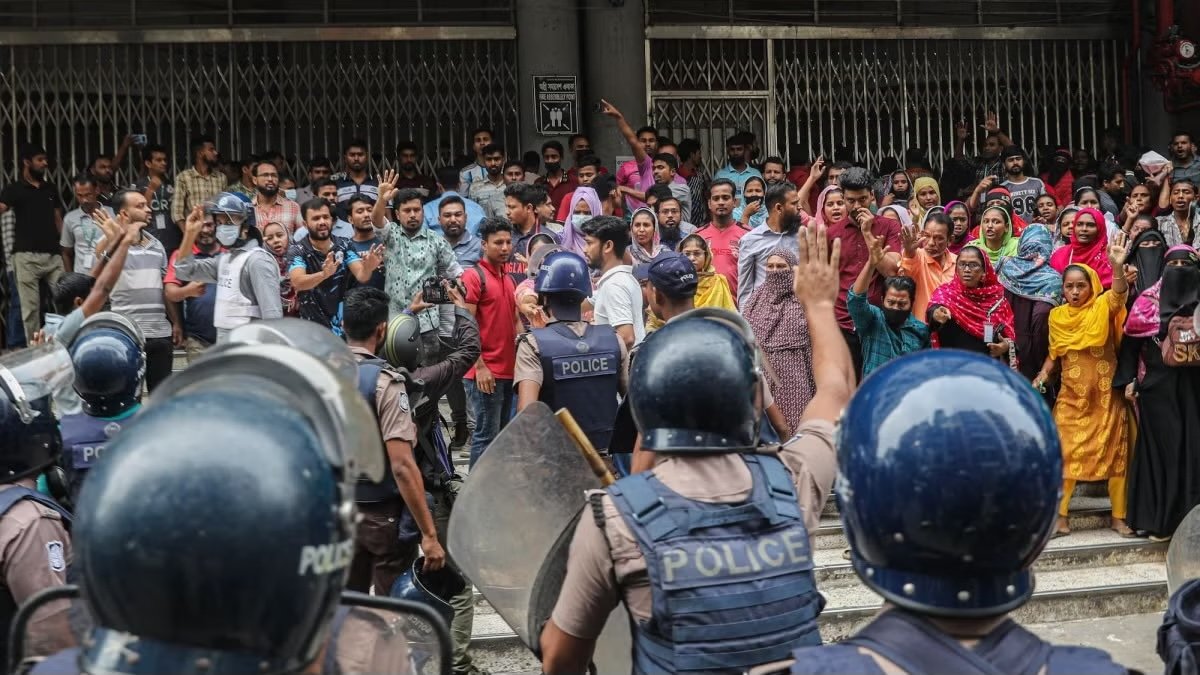
Garment workers in Bangladesh have kept up their protests this week, rejecting a government-approved minimum wage increase they say is far too low to cope with soaring living costs. In Gazipur, a hub for the country's garment industry, police used tear gas and sound grenades to disperse demonstrators who blocked the Dhaka-Tangail Highway on Thursday.
The protests follow a decision by a government-appointed panel to raise the monthly minimum wage by 36%, from Tk12,500 (about $100) to Tk17,000 (about $138). Workers are demanding Tk30,000, or roughly $240 per month, arguing that even the higher figure is insufficient for basic needs.
“Let me be clear: Garment workers are not asking for luxury; they are demanding the right to live with dignity,” said Sultana Begum, president of the Green Bangla Garments Workers Federation, earlier in November. Begum was later arrested after taking part in an international webinar on wage demands, along with the federation's general secretary, Md Ilias.
Workers describe mounting hardship
At a demonstration on Wednesday, worker Kabir Hossain told the Bengali daily Prothom Alo that supporting his family on the previous minimum wage had become nearly impossible. After paying rent, buying food, and covering other expenses, he said, virtually nothing remained at the end of the month. He vowed to keep protesting until the demand for higher wages is met.
Another worker, Shariful Islam, said prices had risen sharply while incomes had not kept pace. Worker Nazul Islam explained why demonstrators blocked the highway: “Our factory declared a holiday. After that, everyone was returning home along the highway. At that time, several people armed with sticks attacked us. We then took up positions on the highway and blocked it.”
The garment industry employs more than four million people and accounts for the overwhelming majority of Bangladesh's export earnings, making the outcome of these protests critical not only for workers but for the country's economy.
Police have also detained other union figures, including Mostafa Kamal, vice president of the Bangladesh Garments Trade Union Federation, and organizer Rozina Akter Sumi. The arrests have drawn sharp criticism from Amnesty International South Asia, which said on social media that the crackdown “raises concerns about the targeting of workers for exercising their rights to freedom of peaceful assembly, freedom of association, and collective bargaining.”
Amnesty called on the government to stop arresting and intimidating workers and union representatives, and to ensure that any use of force complies with international human rights standards. The group also urged authorities to set a minimum wage that is fair and based on the actual cost of living, allowing workers to support themselves and their families with dignity.
The protests come as shoppers in the United States prepare for Black Friday sales, a reminder that the low prices of fast fashion carry hidden costs. Factory floors in Bangladesh are often crowded, poorly ventilated, and dangerously hot, with workers exposed to high-speed machinery, repetitive-motion injuries, chemical hazards, and fire risks. The industry also consumes large amounts of water and energy, and dyeing and finishing processes generate wastewater that can pollute rivers and groundwater.
Bangladesh's government, led by Prime Minister Tarique Rahman, has yet to respond to the international criticism. The situation remains tense, with workers vowing to continue their protests until their demands are met.