Chinese stocks experienced a volatile week, with the startup Moonshot AI unveiling a new model that briefly reignited investor enthusiasm about the country's technological progress. Yet beneath the surface of this AI-driven optimism, Beijing's familiar playbook is back in action: the national team of state-backed funds, regulators, and insurers has stepped in to prop up a market rattled by broader economic headwinds.
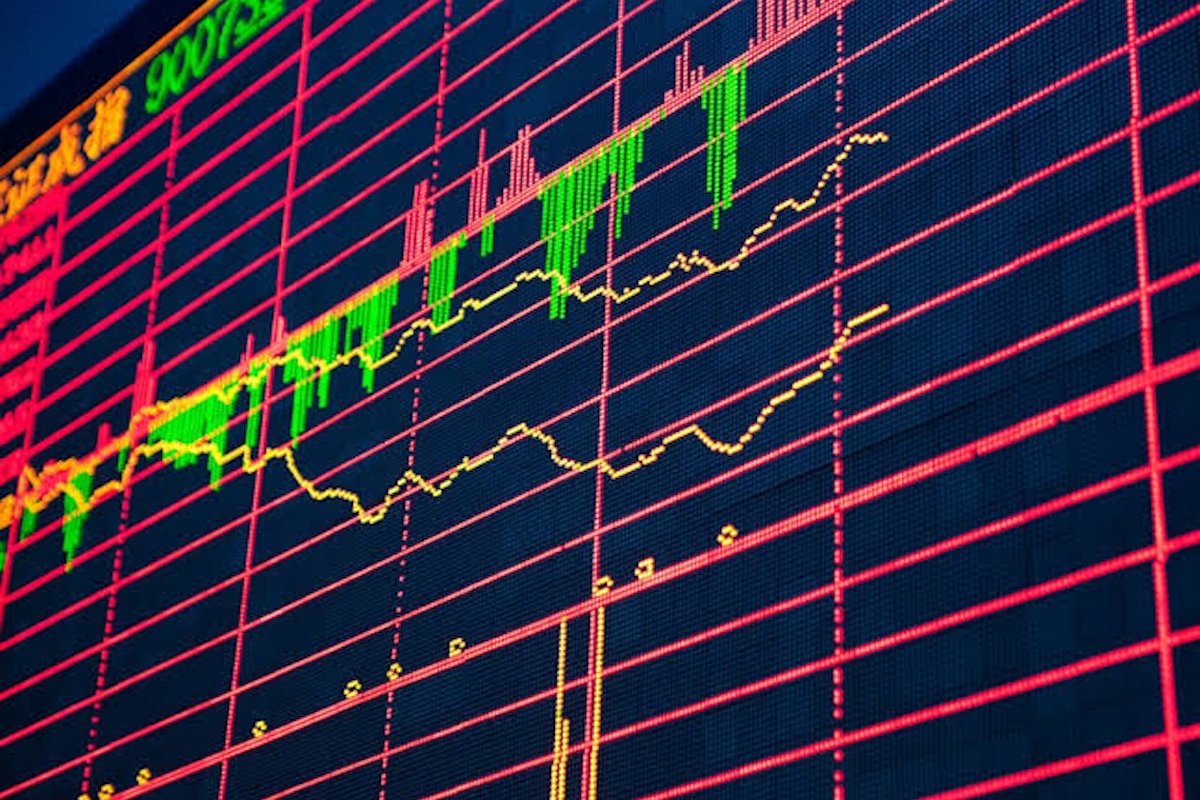
President Xi Jinping's administration reactivated this crisis-response mechanism after a chaotic selloff in tech shares, particularly in the semiconductor-heavy STAR 50 index. On Sunday alone, funds linked to the government announced purchases worth nearly US$8.9 billion. The move echoes previous interventions, most notably in 2015 when a market crash prompted a sweeping government response, including trading suspensions and patriotic campaigns to encourage stock buying.
The national team has been deployed repeatedly since then: during the 2018 margin-call crisis, the COVID-19 pandemic in 2021-22, ETF troubles in 2023, and the fallout from US President Donald Trump's tariffs in 2025. Now, as tech stocks wobble again, the pattern continues. The latest intervention targeted the ChinaAMC STAR 50 ETF, which had plunged 17% last week amid concerns over lofty chip valuations and volatility in South Korean and Taiwanese markets. By Tuesday, concerted buying drove the STAR 50 index up 11%, its biggest single-day rally in roughly two years, lifting the broader CSI 300 Index to a 1.7% gain year-to-date.
Band-Aid on a Broken Economy
While the national team's actions have stabilized benchmarks, analysts argue they fail to address China's deeper economic troubles. “China's national team is offering market protection, not macro repair,” said Geoffrey Yu, a strategist at BNY Mellon. “State-backed equity purchases can stabilize benchmarks and reduce downside pressure, but they don't solve weak domestic demand or the property drag. Beijing can protect prices, but confidence still requires a stronger growth impulse.”
The underlying strains are stark. A massive property crisis, near-record youth unemployment, dismal local government finances, and weak consumer demand continue to weigh on the economy. Even robust export growth—27% year-on-year in June—has not been enough to offset domestic headwinds. Gavekal Dragonomics notes that China's ratio of annual exports to total manufacturing sales rose to 24% in the first four months of 2026, the highest since 2001, when the country joined the World Trade Organization. For context, that ratio was 18.3% in 2019. “For the world's second largest economy, it's remarkable,” Gavekal economists wrote.
However, the benefits of this export surge are unevenly distributed. Xu Tianchen, an economist at the Economist Intelligence Unit, expects continued export strength driven by AI, but warns that “domestic demand remains a drag. Retail sales remain pretty flat and fixed asset investment was negative last month.” Carlos Casanova at Union Bancaire Privée adds that industrial production growth of 5.3% is “increasingly concentrated in high tech and semiconductor-related goods. In other words, the gap between exports and industrial output widened, suggesting that the current export-at-all-costs strategy is delivering limited spillovers to the broader economy.”
Domestic demand remains subdued, with fixed asset investment falling 5.7% year-to-date in June, led by an 8.5% contraction in private investment. Real estate investment dropped 18.0% year-to-date, and residential property sales fell 13.7%. Citigroup Chief China Economist Xiangrong Yu notes that “consumer confidence remains subdued, having stayed negative for more than four years. Households continue to save heavily, maintain large excess deposits, and show limited willingness to take on additional borrowing.”
The AI supercycle is reinforcing the strong side of China's K-shaped economy by lifting production in high-tech sectors, but it is not generating a broad recovery. “AI is creating pockets of strength rather than generating a broad recovery in domestic demand,” Yu said. Investment in AI-related infrastructure remains robust, but traditional sectors face mounting headwinds from delayed fiscal deployment and policy uncertainty.
Beijing's national team may have calmed markets for now, but the fundamental challenges remain. As one fund manager noted, the intervention provided a signal that policymakers still back the tech trade, but it does little to repair the broader economy. For Xi's administration, the question is whether repeated market rescues can sustain confidence without addressing the structural issues dragging down growth.