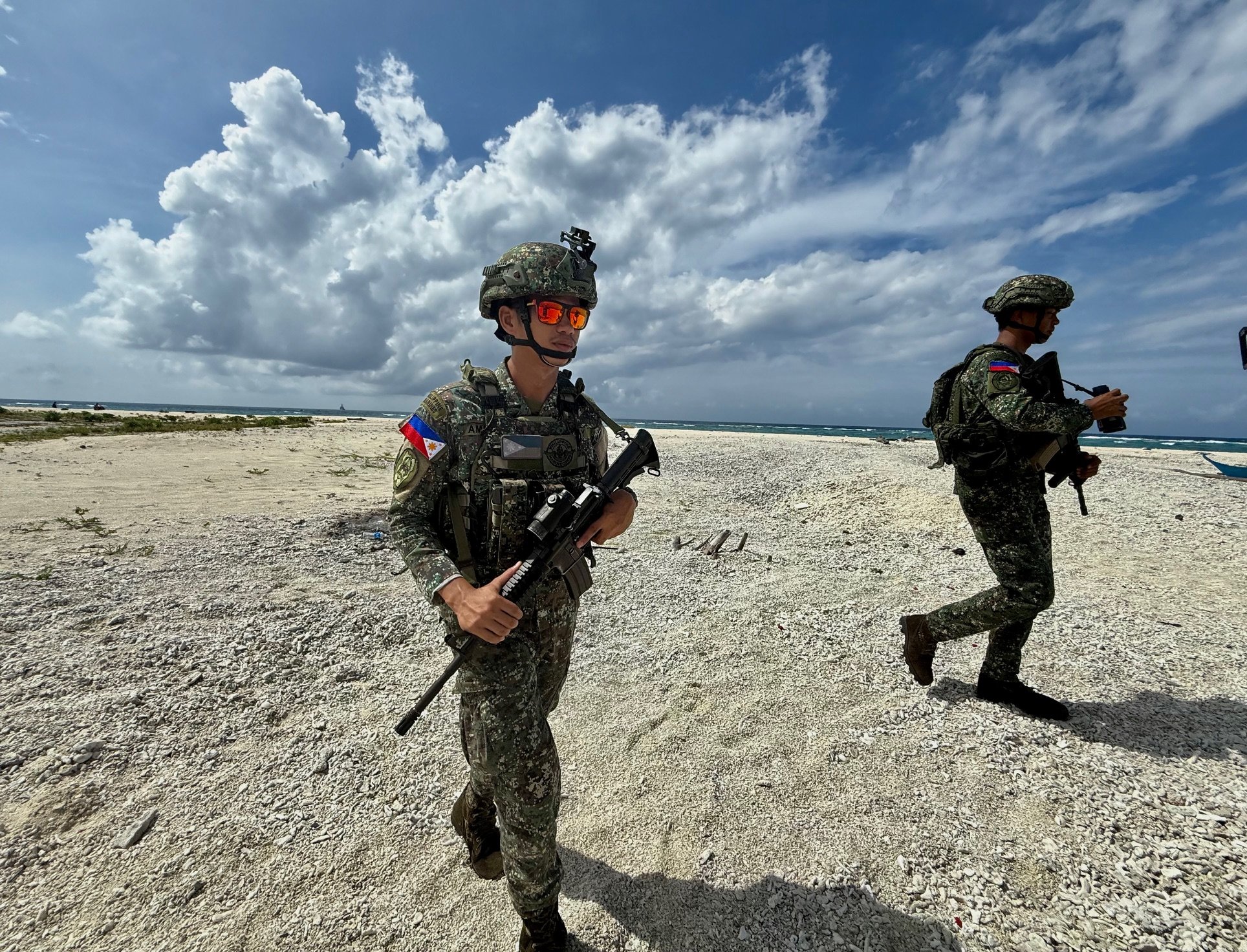
In late September, China and Laos inaugurated a Beijing-funded training and support center and an aviation academy at Ban Keun airport, roughly 50 kilometers north of Vientiane. China's Ministry of National Defense described the facility as a training hub for Lao Air Force pilots, adding that it is “not directed against any third party.”
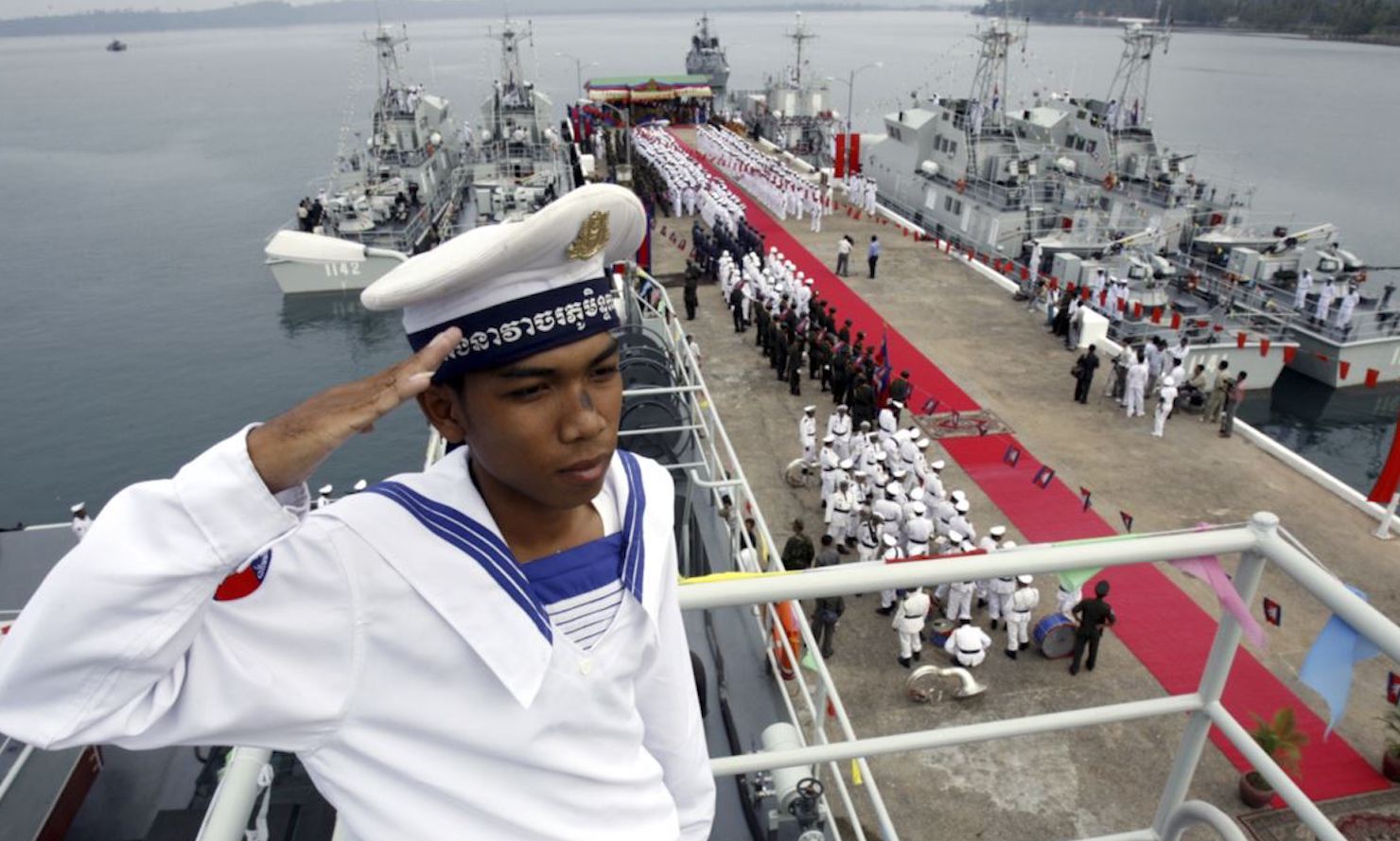
Yet much of the commentary has linked Ban Keun to Cambodia's Ream Naval Base, which Beijing helped finance and where it also funded a joint training center. The two are often read as part of a Chinese effort to encircle Vietnam from the west. The evidence so far supports a more cautious view.
Satellite imagery shows the Ban Keun runway at about 2,000 meters—long enough for most Chinese fighters and the Y-20 transport, but well short of the roughly 3,000 meters needed by long-range bombers such as the H-6. Reuters has reported eight K-8 light attack jets at the site, a type flown by both the Chinese and Lao air forces. Some analysts note the airfield appears designed to accommodate a longer runway later. The site deserves close monitoring, but nothing yet shows it is a Chinese forward base.
Ream has inspired similar predictions for years. Yet the first foreign warships to dock at the upgraded base, in April 2025, were Japanese, followed within days by a Vietnamese patrol vessel. A US Navy ship called in January 2026, and Phnom Penh and Washington have agreed to resume the Angkor Sentinel exercise, suspended since 2017, early next year. Some Chinese military commentators have speculated that Beijing turned to Laos partly because Cambodia had opened Ream to other navies.
Vietnam's concerns, and a flawed remedy
Vietnam's concerns are understandable. Hanoi already faces Chinese pressure on its northern border and in the South China Sea, and it will naturally watch any Chinese military presence to its west. The trouble lies in some of the remedies being proposed now.
An essay published in The Diplomat in June 2025 argued for a Thai-Vietnamese entente to manage Chinese influence in Laos and Cambodia. It called the two countries “inherently weak,” able to threaten Vietnam only with the backing of China or Thailand, and proposed quiet Thai and Vietnamese pressure to make Lao and Cambodian development decisions “more transparent and accountable to Thailand and Vietnam's security interests.” One of its authors recirculated the argument after the Ban Keun announcement.
The essay's timing also matters to Cambodian readers. Within weeks of its publication, Thailand and Cambodia were fighting their heaviest border clashes in more than a decade, and the hostilities flared again in December. Few Cambodians will see a framework that makes Bangkok a co-manager of their country's security choices as a neutral proposal.
Such commentary reflects a wider unease, at least in parts of the region's strategic community, about smaller neighbors growing more capable. Vietnam has become one of Asia's fastest-growing economies and has steadily modernized its armed forces. Phnom Penh has not treated that rise as a threat to be contained, and it is fair to ask why comparable growth in Cambodia or Laos should be.
A history of being managed
For Cambodians, the proposal has a familiar ring. Vietnamese settlement gradually absorbed the Mekong Delta from the 17th century onward. Siam took Battambang and Siem Reap in the 1790s, and Cambodia recovered them only in 1907. In the 1830s, Emperor Minh Mang administered Cambodia as a Vietnamese province and imposed Vietnamese administrative and cultural practices on its people. Siam and Vietnam then fought two wars over the kingdom before settling in 1845 to an arrangement in which the Cambodian king paid tribute to both courts.
The entente essay itself acknowledges that this made Cambodia a buffer state. Historians such as David Chandler have suggested that the kingdom might not have survived the 19th century intact without the French protectorate established in 1863. The 1845 settlement was a bargain between two stronger neighbors over how to manage a weaker one, and a Thai-Vietnamese entente meant to shape Lao and Cambodian decisions would rest on the same premise.
Nor is the pattern confined to the 19th century. Under the 1977 Treaty of Friendship and Cooperation, Vietnam kept troops in Laos for more than a decade, and its advisers wielded wide influence over the Lao army. Mainland Southeast Asia has known several hierarchical orders, Angkor's among them, and none is a model the region should wish to revive.
A double standard
The argument also applies a double standard. If close ties with major powers and new military infrastructure are a worry when Cambodia or Laos pursues them, the same test should apply to Vietnam and Thailand. Vietnam has expanded land reclamation across all 21 features it controls in the Spratly Islands, adding harbors and airstrips. Chatham House analysts judge that the scale of this work is rapidly overtaking China's. Hanoi maintains comprehensive strategic partnerships with China, the United States and Russia, and in March 2026, it signed an agreement with Russia to build the Ninh Thuan 1 nuclear power plant.
Thailand is a US treaty ally that co-hosts Cobra Gold, one of Asia's largest multinational exercises, while also seeking to buy submarines and other arms from China. These are ordinary hedging choices, and Cambodia has never claimed a right to approve them. It expects the same treatment. Yet when Cambodia upgrades a naval base or Laos trains its own pilots, the decision is too often judged solely by what it means for someone else, as if both countries were meant to stay militarily weak.
As Southeast Asia's China strategy shows, smaller states are not passive objects. They make calculated choices to diversify their partnerships and build their own capabilities. The region's future depends on respecting that agency, not on resurrecting old hierarchies.