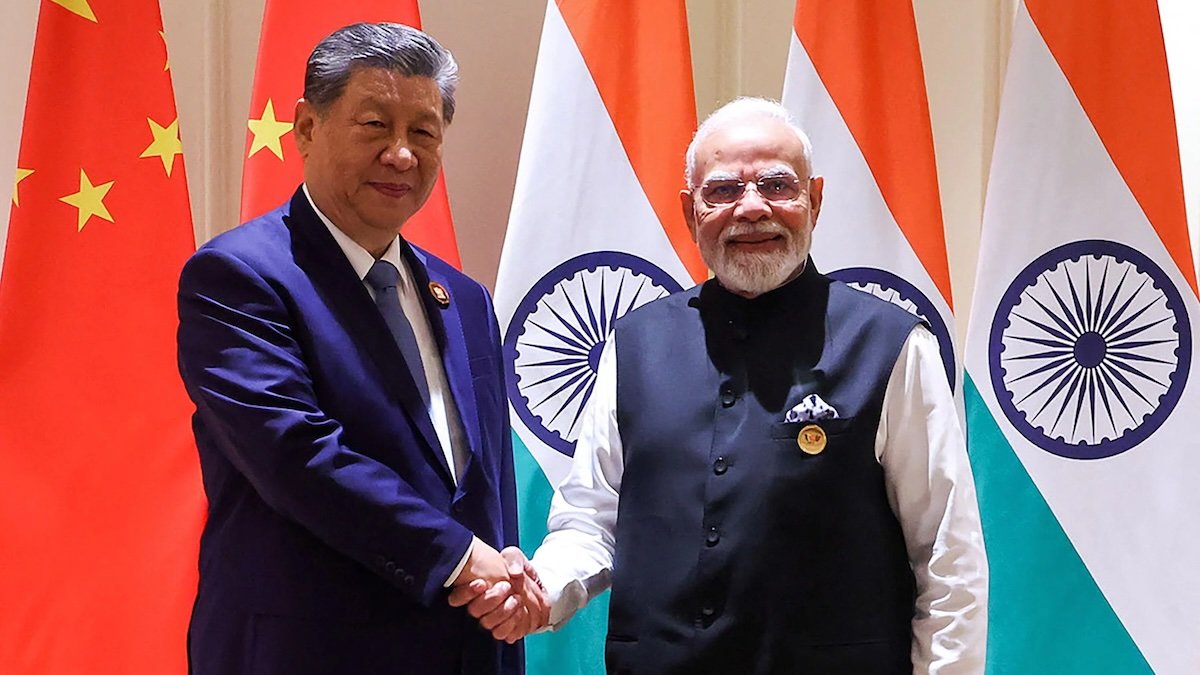
At the 18th BRICS Summit in New Delhi, Chinese President Xi Jinping proposed that China take the lead in establishing a BRICS-wide open-source AI community. The initiative would cover joint development of large language models, training programs, and a more open AI ecosystem, alongside a broader push for international AI governance.
India has not yet formally endorsed the China-led plan, but the conceptual overlap is hard to miss. New Delhi has long championed the principle of “AI for All,” and the summit's New Delhi Declaration stressed the need to widen access to AI resources while ensuring safety, security, and reliability—especially for the Global South.
Why open source matters for the Global South
Today's AI landscape is dominated by a handful of countries and corporations that control the most advanced chips, cloud infrastructure, and foundation models. For developing economies, this concentration creates a structural barrier to entry. Open-source AI offers a way around that: countries that cannot spend billions on frontier research can still adapt existing models to local languages, train their own engineers, and build domestic capabilities.
India has already made this case on the world stage. Its 2026 AI Impact Summit, which drew endorsements from 92 countries and international organizations, called for collaborative, trusted, and inclusive AI development. The New Delhi Declaration from that summit echoed the same themes: democratize access, build human capital, and use AI for economic growth and social good.
China's BRICS proposal fits neatly into that vision. Xi's plan explicitly mentions cooperation on large language models, specialized training, and the construction of an open AI ecosystem—all of which could lower the barriers for developing nations.
Complementary strengths, shared ambitions
China and India are often cast as rivals, and their political systems and governance models could hardly be more different. Yet both are massive developing economies with deep tech talent pools and serious ambitions in AI. That shared foundation makes them natural partners in an open-source framework.
India brings software engineering prowess, a vibrant startup scene, and proven digital public infrastructure—from payments to identity systems—that can be adapted for AI applications. Its multilingual, highly diverse society offers a real-world testing ground for inclusive AI. China, for its part, contributes manufacturing muscle, hardware ecosystems, computing infrastructure, and experience deploying AI at industrial scale.
Together, they could build something neither could achieve alone. India's software and entrepreneurial energy could combine with China's hardware and scale to create AI tools tailored for the Global South. Such a partnership would not be limited to the two giants; it could extend to other BRICS members and developing economies across Asia and Africa.
Rather than treating AI purely as a zero-sum geopolitical contest, India and China could explore selective co-development in areas that serve broader developmental goals. That would be a meaningful departure from the current narrative of great-power competition.
Strategic autonomy through open AI
For countries outside the dominant tech blocs, overdependence on any single AI ecosystem carries strategic risks. India has been explicit about wanting to avoid that trap, emphasizing strategic autonomy in its AI diplomacy. The New Delhi BRICS Declaration similarly calls for international cooperation that enhances access while ensuring safety, security, and reliability.
An open AI ecosystem could give developing countries an alternative pathway—one that does not tie them to Washington or Beijing. But there are legitimate concerns that replacing one dependency with another would defeat the purpose. For the initiative to be genuinely inclusive, participation must be broad and governance transparent.
The stakes are high. As US-China AI hotlines and calls to treat AI risks like a pathogen show, the superpowers are already managing their own rivalry. A BRICS-led open-source community could offer the rest of the world a seat at the table.
Whether India will formally join Xi's initiative remains an open question. But the logic of cooperation is strong. If New Delhi and Beijing can set aside their differences in this arena, they could reshape the global AI landscape—and give the Global South a real voice in how the technology evolves.