NEW YORK – The American stock market is scaling new peaks, and corporate balance sheets have never looked healthier. Yet beneath this glittering surface, a different story is unfolding for the country's workers, and its consequences are set to ripple far beyond US borders.
Over the past several decades, corporate profits, asset values, and productivity have all climbed steeply. But most American workers feel they are capturing only a small fraction of these gains. This disconnect is often treated as a purely domestic political issue. Increasingly, it is an international one, with profound implications for Asia's export-driven economies.
If US household spending power continues to erode, the American consumer – the engine that has powered Asian growth for generations – may no longer be able to play that role. From Seoul to Hanoi, policymakers are watching anxiously.
Labor's shrinking slice of the pie
The root causes are complex, but one trend stands out: the long-term shift in national income from labor to capital. In the second quarter of 2026, labor's share of income fell to 52.8%, down from 65.5% in 1947. The decline accelerated during the Reagan-era supply-side policies of the 1980s and has continued through recent political upheavals.
The Democratic victory over Donald Trump's Republicans on November 3 was initially seen as a turning point. But in the weeks since, it has become clear that Trump's embrace of Silicon Valley's AI utopianism backfired spectacularly. His administration's enthusiasm for unregulated AI, coupled with rising costs from the Iran war, struck a nerve with voters worried about data centers driving up utility bills and AI models displacing entire industries.
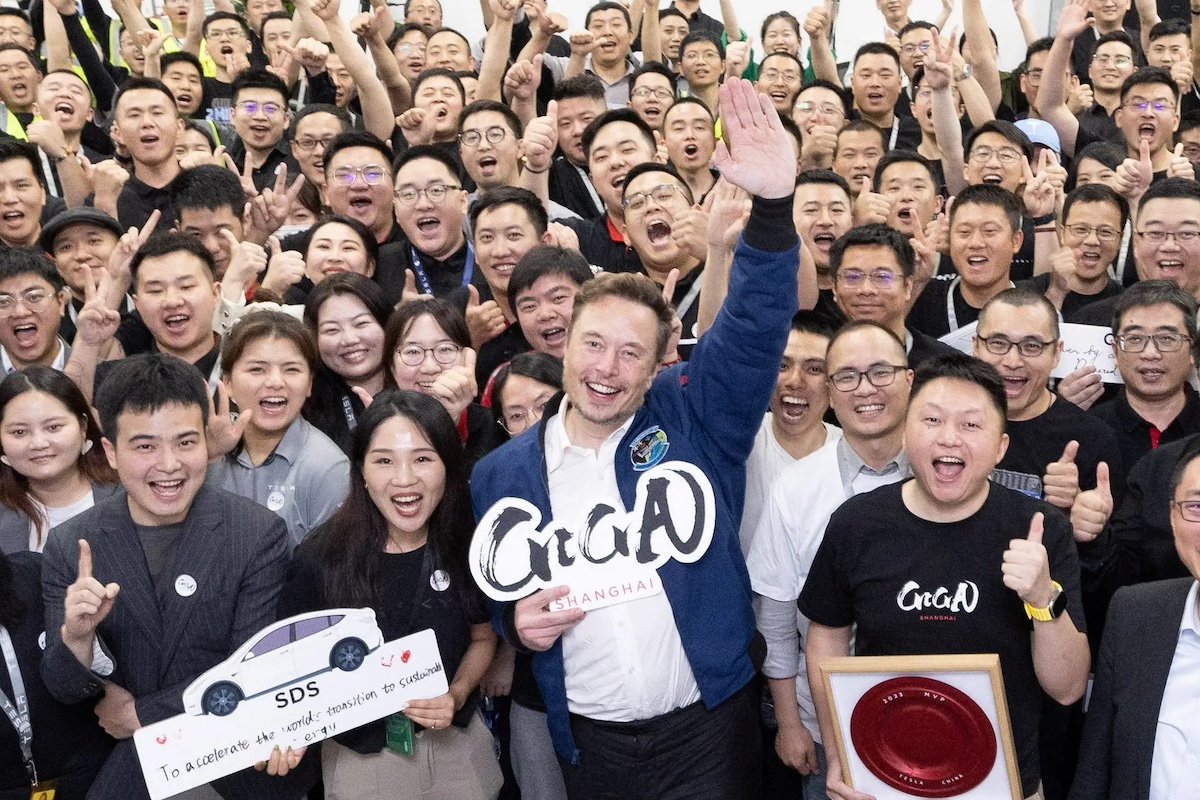
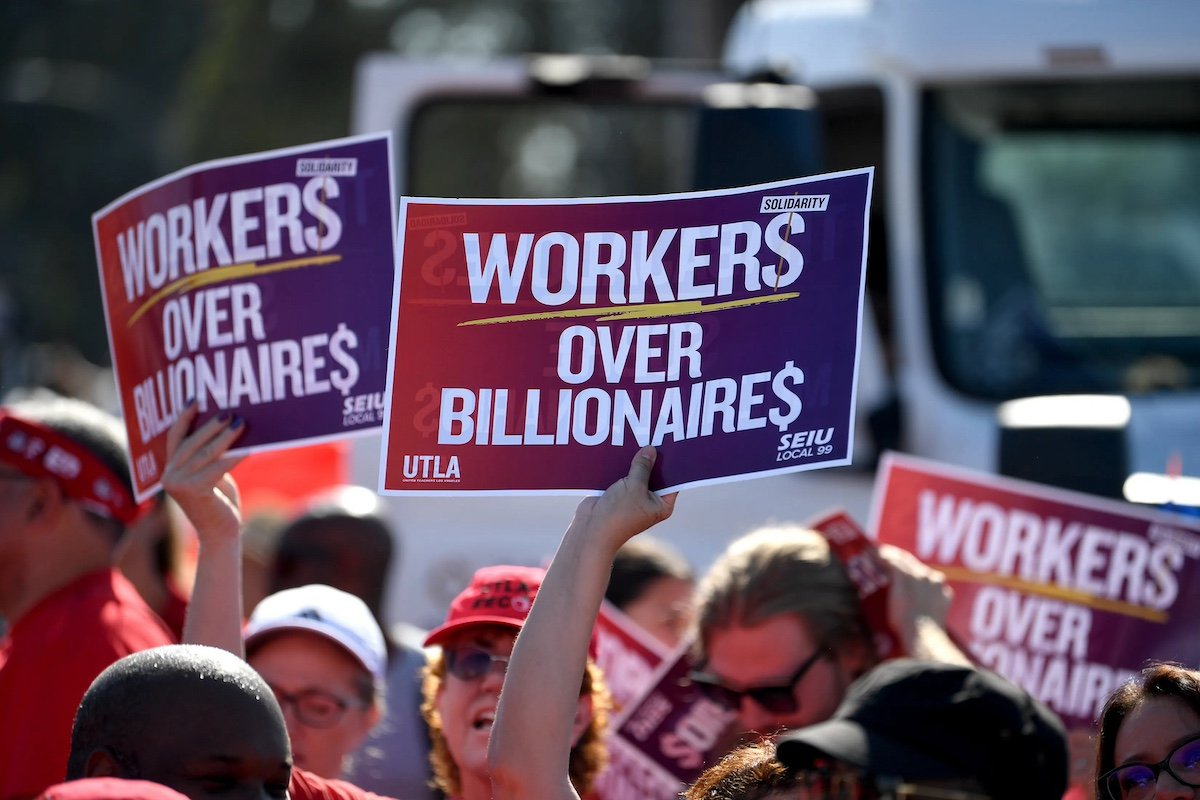
Trump has been the most vocal global leader championing unregulated AI. Yet the working class is not buying the promises of a coming "age of abundance" from billionaires like Elon Musk. Musk's vision, with its talk of universal basic income, sounds more like Karl Marx than Adam Smith, a fact not lost on voters who cast a powerful anti-AI, anti-war, anti-inflation, anti-tech-oligarch ballot.
The Federal Reserve's latest Survey of Consumer Finances confirms the wealth gap remains stark. While median net worth rose 2% over the last three years, the top 10% holds more than 50 times as much wealth, on average, as the bottom 20%. The sentiment behind the election results was years in the making, but it was turbocharged during Trump's second term, which began in January 2025.
Trumponomics is largely a replay of Reagan's supply-side playbook, with an added dose of anti-immigration fervor. The results have been disappointing: workers who once received two-thirds of their income from the non-farm business sector now receive barely half. The productivity-pay gap is equally telling. The Economic Policy Institute (EPI) finds that typical worker pay grew about 33% from 1979 to 2025, while net productivity grew about 90.2%. Lower-wage workers lost ground in 2025 as affordability strains worsened and tariffs boosted inflation.
"Our estimates attribute this increase to the tariffs," said Mary Amiti, an economist at the Federal Reserve Bank of New York. By February 2026, even before the Iran war began, "tariffs had contributed 2.9 percentage points to goods price inflation, and without them goods prices would have fallen slightly."
Francis Genéreux, economist at Desjardins Group, noted that "for many voters, the economy is now synonymous with inflation, as rising prices outweigh job reports, housing affordability and stock market performance."
An acceleration year for inequality
The rich-poor gap has been widening for decades, but 2025 was an acceleration year. "Since Trump took office, the ultrawealthy – top 0.1% – gained more than 8,000 times as much wealth per household as those in the bottom half of the wealth distribution," said Cristina Tello-Trillo, chief economist at the Center for American Progress. To illustrate the extremity, she noted that the 10 wealthiest Americans saw their real fortunes grow by a combined $259 billion over the same period, according to the Bloomberg Billionaires Index – about $26 billion per person, or 22 million times more than the bottom half's $1,200 per household.
During three consecutive quarters in 2025, the share of total wealth held by the top 0.1% and the top 1% reached the highest levels since the Fed began tracking the data in 1989. Since the fourth quarter of 2024, the top 1%'s share has grown from 31% to 31.6%, while the bottom half's has stagnated at 2.5%. "This gap," Tello-Trillo explained, "has been driven wider by things such as soaring stock valuations and tax policy changes in the congressional Republican-passed Big Beautiful Bill that favor the wealthy, as well as persistently high debts for the middle and bottom of the wealth distribution."
Her analysis of Fed Board data finds that top 1% households saw their net worth rise by an average of $1.8 million, top 0.1% households by an average of $9.6 million, and households in the bottom 50% by roughly $1,200.
In Europe, social and transfer payments now exceed 40% of government spending, with the EU spending 19.6% of GDP on social protection. "Behind these figures lie deep, long-term changes," said Elisabeth Krecké, an economist at Geopolitical Intelligence Services. "Europe's welfare systems were designed for the postwar era – a time when societies were young, jobs were stable and well-paid, and growth felt endless."
For Asia, the message is clear: the American consumer, long the region's most reliable customer, is increasingly squeezed. As Washington and Beijing hit different walls in the same AI race, the economic fallout from US inequality could reshape trade dynamics across the Indo-Pacific. The midterm rebuke of Trump signals a shift in American priorities, but the underlying structural problems remain. Asian economies that have relied on US demand must now diversify or face a future of diminished returns.