On June 24, 2025, US Commerce Department officers conducted a voluntary post-shipment verification at Megaspeed, a data-center company, to check whether restricted chips were where buyers said they would be. That same day, Singapore police interviewed Alice Huang, a central figure in the investigation, and impounded her passport. Singapore's Ministry of Home Affairs confirmed these details this week, underscoring that a chipmaker's assurance is no substitute for a regulator's check.
Alice Huang, a Hong Kong businesswoman, is described by Singapore's government as Megaspeed's then-chief executive, chairperson, and key controller. Bloomberg notes she never held that title on paper, and Fortune reports that corporate filings list her as a director and managing director in 2023. US intelligence officials suspect her of being a Chinese intelligence asset, a claim China calls “entirely groundless.” Singapore's findings cut both ways: police and prosecutors found insufficient evidence in February to charge her over the company's declarations, yet assessed that she had knowingly given inaccurate information to downplay her role, earning her a stern warning and a bar on re-entry. She was not investigated for espionage, and no one has been charged with spying.
Nvidia's assurances under scrutiny
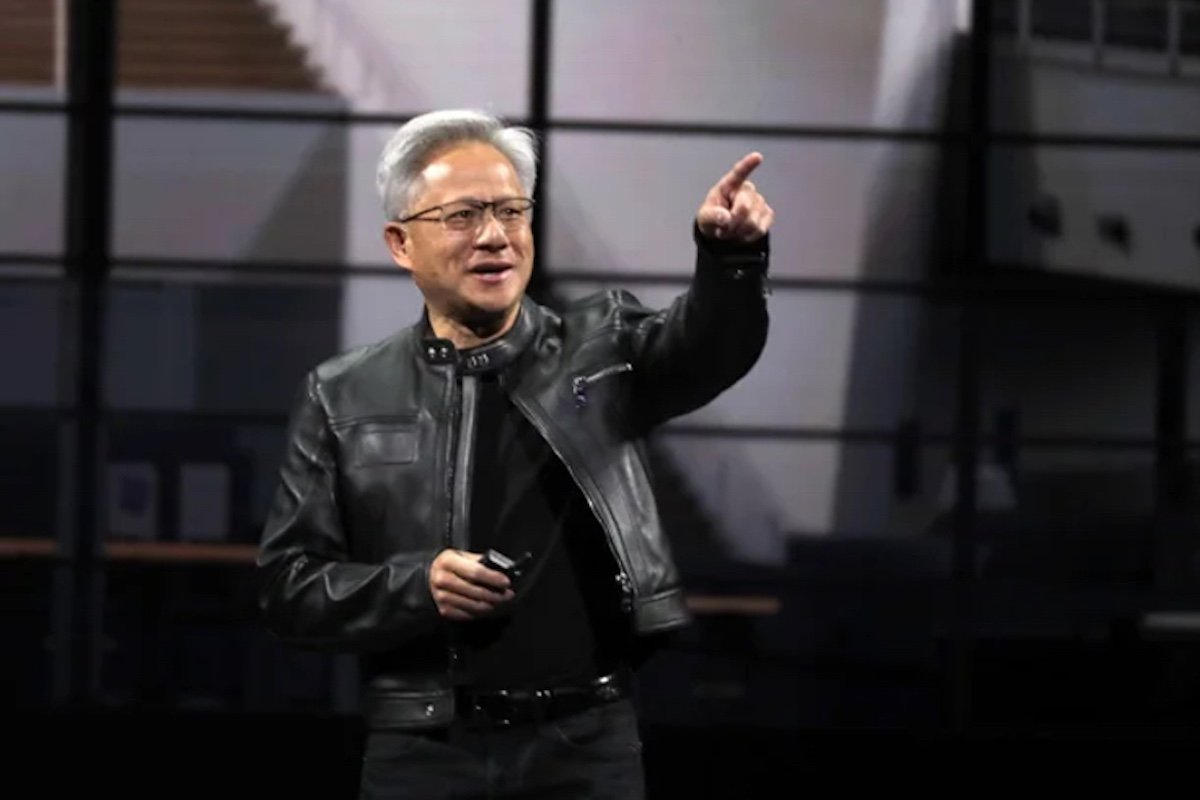
On Thursday, Jensen Huang resigned as president, chief executive, and director of Nvidia, effective immediately. He had run the company since co-founding it in 1993 and never named a successor. The finance chief, Colette Kress, becomes interim CEO, and the board has appointed its first-ever chairman. The company's statement offered no reason for the move. The news coverage will dwell on the affairs—the one Huang confessed to employees on Sunday (“I was unfaithful to my wife… there is no excuse for what I did”), after previously lying about the relationship's nature, and a second, reported by the New York Times on Wednesday, involving a senior Nvidia executive who reported to him.
Huang has answered for himself, on the record, in the language of shame and through resignation. The company he leaves behind has a different accounting to make. For a year, the company at the center of the world's most important supply chain assured its government that it had accounted for its chips. But the assurances kept failing.
Consider what failing looked like. In mid-November 2025, after visiting 12 Megaspeed data centers across three countries, Nvidia told Bloomberg that “everything was where it should be.” However, Bloomberg's analysis of trade records found that Nvidia's inventory reports to the Bureau of Industry and Security had undercounted chips sold to Megaspeed through hardware partners by 50,000 units. Nvidia's response, a month later, was that the hardware had been located in additional warehouses—a claim not publicly itemized. On Nvidia's own account, it asked the government whether to stop selling to Megaspeed and was reportedly told it could carry on.
That November, Malaysian trade records show, Megaspeed imported at least 17,544 flagship GB300 processors worth roughly US$787 million. About three months ago, Bloomberg reports, Nvidia's general counsel told a White House official that the company had stopped doing business with Megaspeed altogether. Yet Megaspeed, which categorically denies diverting chips to China, remains an official Nvidia Cloud Partner today. Nvidia has called its contacts with government officials routine requests for guidance.
Enforcement stalls
The enforcement file is worse. In August 2025, the same general counsel emailed Commerce Department investigators running the probe, the New York Times reports. The agents declined to meet. By late 2025, the Justice Department had asked Commerce to pause the probe. Bloomberg reports that BIS has made no progress since the DOJ-requested pause. Its unnamed sources say investigators believed they had enough evidence to proceed with a charge. The status of the DOJ's own criminal inquiry is unknown. BIS, for its part, told Bloomberg that it conducts all enforcement “strictly by the book” and enforces aggressively across the board.
By the book, twice over—and what the book has produced is a pause no one has publicly explained. To be sure, a pause is not proof of political interference. The reports cited here do not explain why that pause was requested. Other agencies proposed entity-listing Megaspeed, but it never happened.
Nvidia's board's public position has changed in the last four days. On Sunday, it announced its inquiry, said it had “no reason to believe that either national security or Nvidia secrets were compromised,” and declared its “confidence in Jensen and his leadership team.” On Thursday, though, Nvidia announced his resignation. The sequence does not prove the Sunday statement was dishonest, as new reporting landed midweek. The board seemingly gave its reassurance before its inquiry was complete.
Washington had honored Huang barely a month earlier. On October 8, the president hung the National Medal of Science around his neck. “The entire world is now running on Nvidia,” Trump said. Even on Monday, Trump said Huang had assured him he knew of no intelligence connection, and predicted: “he'll be in good shape.”
The demands for Nvidia's accountability are now on the calendar. On Wednesday, Senators Warren and Coons gave three senior officials until November 17 to confirm that preservation directives have been issued for records touching Nvidia's China exports. The Democrats who won both houses of Congress on November 3 have promised inquiries; three House committee chairs have asked Huang to testify on November 18.
All in all, the reassurances have not matched the reality. As the scandal around Huang unfolds, the deeper issue remains: the integrity of export controls that are meant to keep advanced chips out of China. The affair could cost Nvidia billions in reputational and regulatory terms, and the scandal may tighten US chip export curbs. For now, the world's most important chipmaker faces a reckoning that goes beyond one man's resignation.