As the global order fragments into competing blocs, a new class of states is gaining outsized influence: middle powers that can talk to everyone without belonging to anyone. Pakistan, long dismissed as a source of instability, is quietly emerging as one of the most useful actors in this category.
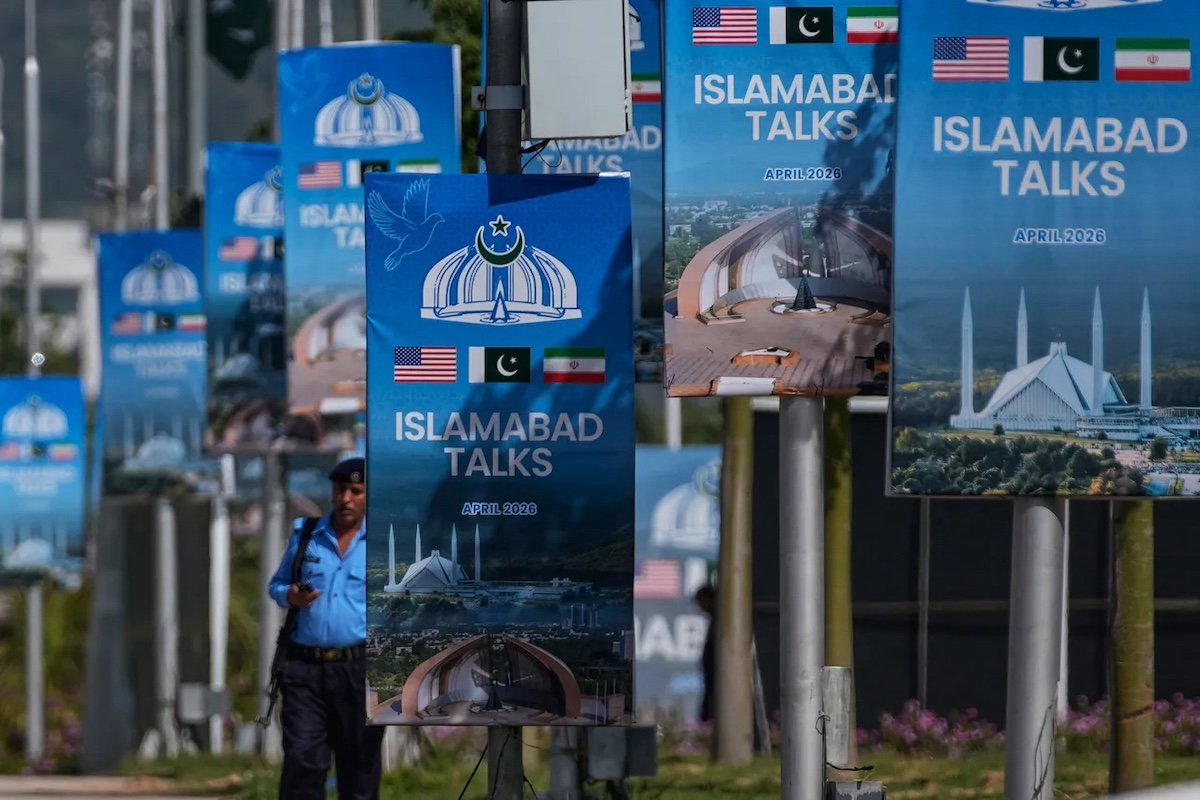
For years, Islamabad was defined by terrorism, political turbulence, and economic fragility. Yet recent developments suggest a recalibration. Pakistan has positioned itself as a credible intermediary in the US-Iran conflict, facilitating communication between two bitter adversaries. This role has earned it broad international backing and highlighted a rare diplomatic asset: the ability to maintain trust across hostile camps.
In an era of deepening polarization, that flexibility is increasingly valuable. As political scientist Joseph Nye argued, influence derives not just from hard power but from diplomatic credibility and soft power. Pakistan’s recent mediation efforts reflect this broader definition of power—one that Robert A. Dahl described as the capacity to shape others’ behavior.
Multi-Alignment as Strategy
Pakistan’s core advantage lies in its multi-aligned foreign policy. Unlike states locked into rigid alliances, Islamabad sustains working relationships simultaneously with the United States, China, Iran, and Gulf monarchies. This network allows it to act as a bridge during crises.
For Iran, Pakistan’s geographic proximity and historical ties made it a natural mediator. For Washington, decades of military and intelligence cooperation provided institutional familiarity. The result: a channel that neither side could easily replicate. As competition among major powers intensifies, countries capable of communicating across geopolitical divides are becoming indispensable.
Pakistan’s diplomatic activism also serves a domestic purpose: reshaping its international image. A brief but intense military confrontation with India challenged assumptions about conventional asymmetry in South Asia and reinforced Pakistan’s reputation as a capable security actor with credible deterrence. This shift strengthened its standing among Gulf partners, who view Islamabad as a reliable security provider.
Geography amplifies these advantages. Positioned at the crossroads of South Asia, Central Asia, the Middle East, and the Indian Ocean, Pakistan occupies one of the world’s most strategic locations. The development of Gwadar Port and the growing importance of Karachi Port position the country as a potential hub linking Asia, the Gulf, and Africa. Yet geography alone is insufficient; strategic relevance now depends on diplomatic autonomy and the ability to maneuver between competing centers of power.
Pakistan’s balanced approach—maintaining ties with both Washington and Beijing while preserving relations across the Muslim world—demonstrates a flexibility increasingly rare in the polarized global environment. This is not mere opportunism but a deliberate strategy to maximize leverage.
However, internal constraints remain significant. Political instability, governance uncertainty, and economic inconsistency undermine long-term planning and investor confidence. Persistent militancy, instability linked to Afghanistan, and insurgency in Balochistan continue to pose challenges. Diplomatic visibility can elevate standing temporarily, but sustaining influence requires institutional continuity and economic modernization.
Pakistan’s emergence as a middle power also has implications for regional security. Its deepening ties with China, including the potential acquisition of J-35AE fighters, could destabilize the nuclear balance with India, as noted in our analysis of the J-35AE export. Similarly, its Hangor-class submarines, built with Chinese assistance, challenge India’s naval dominance in the Indian Ocean, as explored in our piece on Pakistan's submarine program.
In a world where networks, not nations, increasingly define power—a theme we examined in our analysis of the post-Pax era—Pakistan’s ability to connect rival blocs makes it a uniquely useful actor. Whether it can sustain this role depends on its capacity to address internal weaknesses and maintain diplomatic credibility. For now, Islamabad has carved out a niche that few other middle powers can claim.