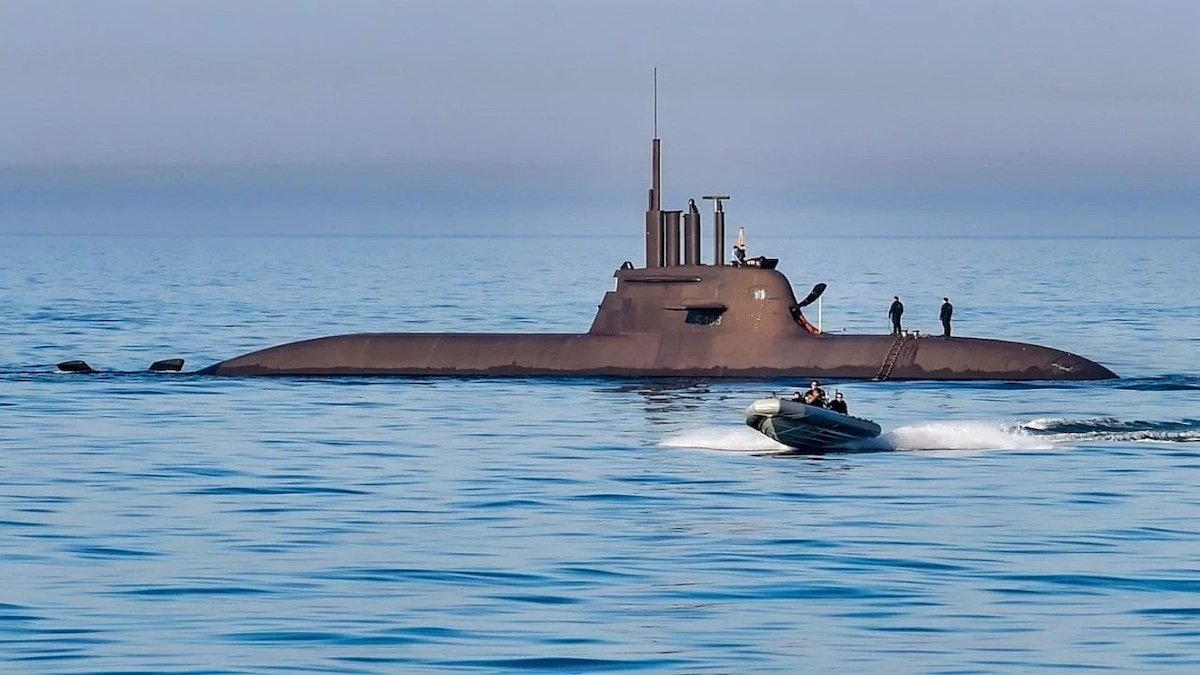
At the July 2026 NATO summit in Ankara, Canadian Prime Minister Carney announced that Germany's ThyssenKrupp Marine Systems (TKMS) would supply 12 diesel-electric Type 212CD submarines to replace Canada's aging Victoria-class fleet. The choice passed over a competing bid from South Korea's Hanwha Ocean, which had offered its KSS-III Batch II submarines. While Carney framed the deal as a boost to NATO interoperability and Atlantic maritime presence, the strategic implications for the Indo-Pacific are stark.
Canada's decision to opt for Arctic-optimized submarines—designed in partnership with Norway for shallow, icy waters and anti-Russian operations—effectively sidelines its stated ambitions in the Pacific. The Type 212CD uses air-independent propulsion for extended submerged patrols but lacks the long-range strike capabilities and Vertical Launch System (VLS) of the KSS-III, which can launch cruise missiles for land attacks. As Canada's German Submarine Deal Reflects NATO Priorities Over Pacific Ties, the procurement signals a quiet retreat from being a major Pacific player.
Strategic Mismatch with Operation HORIZON
Canada's Indo-Pacific strategy, Operation HORIZON, aims to enhance stability through joint military exercises like Valiant Shield and RIMPAC. Yet the new submarines are ill-suited for sustained deployments in the South China Sea or East China Sea, where China's growing submarine fleet demands persistent deterrence. The Type 212CD's transit time across the Pacific would be prohibitively slow, and its lack of missile payload offers minimal strategic value against Chinese naval assets. As of July 2026, Canada has only one operational submarine, and the first new boats are not expected until 2034—leaving a critical gap in Pacific coverage.
This move contrasts with the working assumptions of frameworks like AUKUS and the Quadrilateral Security Dialogue, where allies were expected to gradually increase maritime presence near China. Instead, Canada has signaled it will not be a first-order contributor to Pacific deterrence. The choice aligns Ottawa more closely with European security concerns, particularly countering Russia in the Arctic and Atlantic, at the expense of its Indo-Pacific commitments.
South Korea's Strategic and Economic Loss
The rejection of Hanwha Ocean is a blow to South Korea's defense export ambitions. Seoul has been seeking to expand its naval partnerships, especially in submarine sales, after failing to secure India's Project-75I contract. The Canada deal's collapse sent Hanwha Ocean's stock down over 20%, highlighting the economic stakes. More importantly, the lost opportunity undermines South Korea's goal of building interoperability with Western navies in the Indo-Pacific—the same kind of interoperability Carney cited for NATO. A contract with Hanwha would have reinforced allied submarine presence against China, not Russia.
As Japan's Frigate Sales: A Strategic Bid to Reshape Indo-Pacific Security shows, other regional players are actively pursuing defense cooperation. Canada's pivot away from such partnerships weakens collective deterrence in the Pacific.
Broader Implications for the Region
Canada's submarine deal is the latest example of a Western ally prioritizing NATO over the Indo-Pacific. While the Arctic-optimized Type 212CD will enhance Canada's ability to monitor Russian activity in the North, it leaves a gap in the Pacific that China is likely to exploit. Beijing's expanding submarine fleet and recent missile tests, as covered in China's Submarine Missile Test: Routine Drill or Pacific Provocation?, underscore the need for sustained allied presence. Canada's decision suggests it will rely on partners like Australia, Japan, and the United States to shoulder the burden in the Pacific—a risky bet as regional tensions rise.
In the end, Canada's commitment to the Indo-Pacific remains sincere in rhetoric, but its procurement choices tell a different story. The Type 212CD submarines are tools for a European theater, not the vast, contested waters of the Pacific. As the region watches, Ottawa's strategic retreat may have lasting consequences for security dynamics from the South China Sea to the Korean Peninsula.