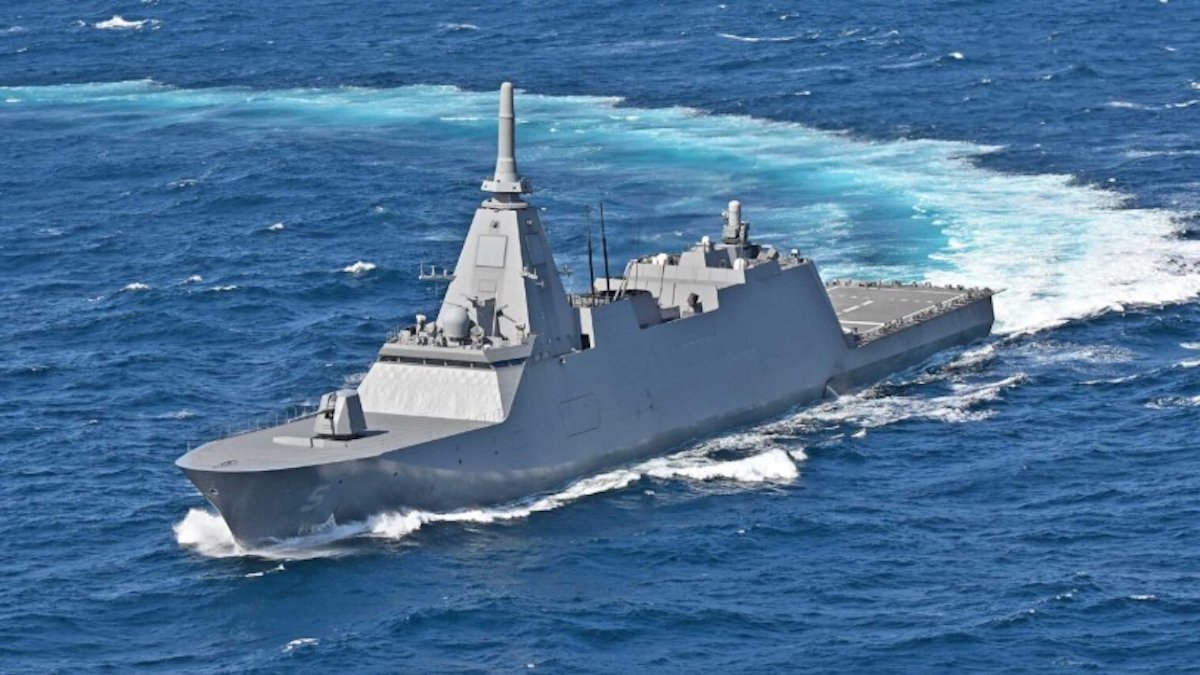
Japan is not merely selling warships; it is quietly constructing a new security architecture in the Indo-Pacific, driven by China's military expansion and doubts about long-term US commitments. The Mogami-class frigate, built by Mitsubishi Heavy Industries, is at the center of this effort.
According to a recent report in the Wall Street Journal, Tokyo has begun actively marketing the advanced, stealthy vessel to international buyers. This marks a significant shift from decades of strict arms export restrictions, as Japan seeks to bolster its defense industry and regional partnerships.
A Cost-Effective Alternative to US Platforms
The Mogami frigate is a highly automated warship capable of hunting submarines, deploying underwater drones, and operating with a crew of just 90 personnel. This lean manning is a key selling point for navies facing personnel shortages, though critics argue it may compromise damage control in combat. Priced at roughly US$710 million per vessel, according to Japan's 2025 defense budget, it offers a stark contrast to the US Navy's troubled Constellation-class frigate program, which has been plagued by delays and cost overruns, with a unit price of $1.4 billion.
Japan's push is driven by Prime Minister Sanae Takaichi's overhaul of national defense policy amid what Tokyo describes as the region's most volatile security environment since World War II. In April, Japan secured a landmark US$6.5 billion contract with Australia to deliver three upgraded Mogami variants by 2029, including technology transfer for local manufacturing. Other nations, including New Zealand and Indonesia, are actively evaluating the frigate to modernize their fleets.
The Mogami may be less a naval platform than a vehicle for knitting together a network of regional partners through shared technology, logistics, and industrial cooperation. This approach targets a capability gap among US allies that Washington is increasingly unable to fill on its own. Smaller Indo-Pacific navies rely on affordable, general-purpose frigates, but the US does not build such ships at scale or competitive cost.
If Japan's frigate sales materialize, they would streamline interoperability, training, and supply chains. For example, New Zealand's navy could integrate into Australia's modernization plans, with both forces already highly interoperable. This could minimize capability gaps while enabling shared training and a common spare parts pool.
Beyond the sale itself, Japan's marketing push signals an effort to build a coalition of like-minded partners to address uncertainties about US security commitments. The frigates could serve as a focal point for defense diplomacy, as high-end military sales involve not just the ships but a sustainment package—spare parts, maintenance, training, and software updates—that cements long-term defense relationships.
Rather than supplanting the US-led alliance system, Japan's frigate push may reinforce it by creating horizontal links among allies that have traditionally relied on the US as the sole hub. Such links could make regional security cooperation less dependent on American resources and political attention. However, the challenge for Japan is to broaden these relationships beyond defense into related fields and strengthen them from transactional to institutional levels.
Japan's possible frigate sales could also bolster partners' economic resilience, addressing a gap in the traditional US-led hub-and-spoke security architecture. The US-led order has often struggled to translate security ties into equally robust economic relationships, leaving allies seeking deeper economic engagement. China has demonstrated how economic relationships can reinforce strategic influence, most visibly through the Belt and Road Initiative in Southeast Asia and export dependencies on its large market.
China's economic investments in Indonesia, for instance, may be a factor in Jakarta's restraint on issues like the Natuna Islands dispute. Similarly, Australia and New Zealand's dependence on China as a top export market for minerals and agricultural produce gives Beijing a possible lever of influence. In response, Japan's frigate marketing aims to fuse the economic and defense spheres into a holistic package to counter China's growing naval might and economic clout.
This approach could also address a disconnect between military planners and politicians. While planners focus on security challenges, politicians think in terms of elections and popular support. By combining military capabilities and economic benefits into a single package, Japan's frigate sales may generate sufficient buy-in from both defense planners and politicians in potential customer nations.
However, the long-term success of Japan's frigate marketing push may depend on its partners' abilities to build the policy, institutional, and governance ecosystem that enables such cooperation. As Japan deepens its defense ties, it must also navigate its own identity debates and regional perceptions, as explored in Japan's Identity Debate: Culture, Not Creed, Defines Being Japanese. Meanwhile, the broader regional response to Japan's defense buildup has been notably calm, as discussed in Beyond Beijing: Asia's Calm Embrace of Japan's Defense Buildup.