Canada's decision to award its largest-ever defense procurement to a German-Norwegian submarine consortium signals a strategic choice that prioritizes NATO integration over deeper engagement with the Indo-Pacific. By selecting ThyssenKrupp Marine Systems' (TKMS) Type 212 Common Design (Type 212CD) over South Korea's Hanwha Ocean KSS-III platform, Ottawa has effectively chosen the alliance architecture that will define its security posture for decades.
The 12-boat purchase, estimated to start at US$24 billion with life-cycle costs exceeding US$70 billion over 50 years, will replace the Royal Canadian Navy's aging Victoria-class submarines. Formal negotiations are expected to begin shortly, with initial deliveries targeted for 2034. The new fleet, designed for ice operations, will bolster Canada's ability to patrol its Arctic waters and the North Atlantic.
NATO Interoperability vs. Proven Pacific Capability
On paper, both platforms offer formidable capabilities. South Korea's KSS-III, already in service with the Republic of Korea Navy, features a diesel-electric propulsion system augmented by fuel-cell air-independent propulsion (AIP), enabling 20-day submerged operations and speeds up to 37 kilometers per hour. According to Eric Wertheim in a June 2023 Proceedings article, the KSS-III carries six vertical launch system (VLS) cells for Hyunmoo 4-4 ballistic missiles with a 500-kilometer range, and its lengthened Batch 2 variants integrate lithium-ion batteries and a ten-cell VLS.
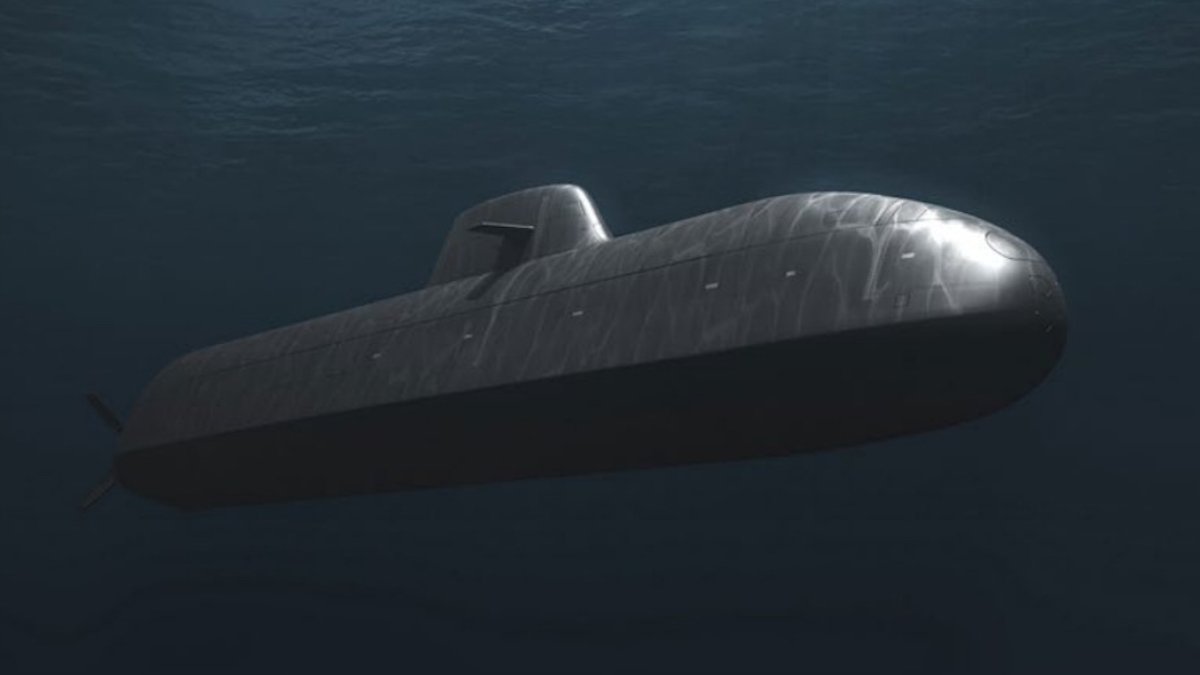
In contrast, the TKMS Type 212CD, still under construction for the German and Norwegian navies, features a diamond-shaped, non-magnetic steel hull and a crew of 28. It combines diesel generators with advanced fuel-cell AIP and lithium-ion batteries, designed around the ORCCA combat system. TKMS says the submarine is optimized for worldwide operations, including Arctic conditions.
Canada's choice is striking because it opted for an in-development design over a combat-proven submarine. The Type 212CD has not yet entered service with any navy; the first units are expected in 2029. This introduces first-of-class delivery risks, including potential technical setbacks common to new submarine programs. J. James Kim noted in a June 2026 Stimson article that Canada weighed the reduced acquisition risk of South Korea's proven KSS-III, which has an operational trans-Pacific track record, against the strategic alignment offered by the German-Norwegian design.
Ju Hyung Kim, writing in a May 2026 article for the Institute for Peace and Diplomacy, argued that the KSS-III excels at sustained, long-range patrols across Canada's extensive Arctic, Atlantic, and Pacific coastlines, whereas the Type 212CD is optimized for confined European littoral environments. The KSS-III's modular architecture and VLS also accommodate future upgrades like cruise missiles or unmanned underwater vehicles, with South Korea's high-volume naval production ecosystem eliminating first-of-class risks.
Strategic Calculus: 80% Politics, 20% Technology
Moon Keun-sik, writing in the South China Morning Post this month, estimated that technical factors accounted for only 20% of Canada's decision, with industrial, economic, diplomatic, and political considerations making up the remaining 80%. Vina Nadjibulla, in a Policy article, stated that the TKMS decision demonstrates the lasting influence of NATO, specialized Arctic capabilities, and transatlantic defense-industrial cooperation.
Jerome Brahy, in an Army Recognition article, noted that selecting the Type 212CD reinforces Canada's 2024 trilateral defense cooperation framework with Germany and Norway, aligning Arctic security, crew training, and North Atlantic infrastructure surveillance with trusted allies. The deal also promises major domestic industrial benefits, channeling investment into Canadian defense manufacturing, autonomous technology, and critical minerals.
This procurement comes amid broader shifts in Indo-Pacific security dynamics. As India and Japan deepen their strategic convergence, and as Australia and Fiji reshape Pacific security, Canada's choice to prioritize NATO over a proven Pacific partner like South Korea raises questions about its commitment to the region. The decision also contrasts with Japan's strategic frigate sales, which aim to reshape Indo-Pacific security through defense exports.
For South Korea, the loss is a setback in its ambitions to become a major defense exporter. Hanwha Ocean had positioned the KSS-III as a cost-effective, combat-proven alternative to European designs, with potential for technology transfer and joint production. The rejection may prompt Seoul to reassess its approach to Western defense markets.
Ultimately, Canada's submarine decision reflects a broader tension between Atlantic and Pacific security priorities. By choosing the Type 212CD, Ottawa has signaled that NATO solidarity and Arctic sovereignty remain its primary strategic drivers, even as the Indo-Pacific becomes increasingly contested. The choice will shape Canada's naval capabilities and alliance relationships for the next half-century.