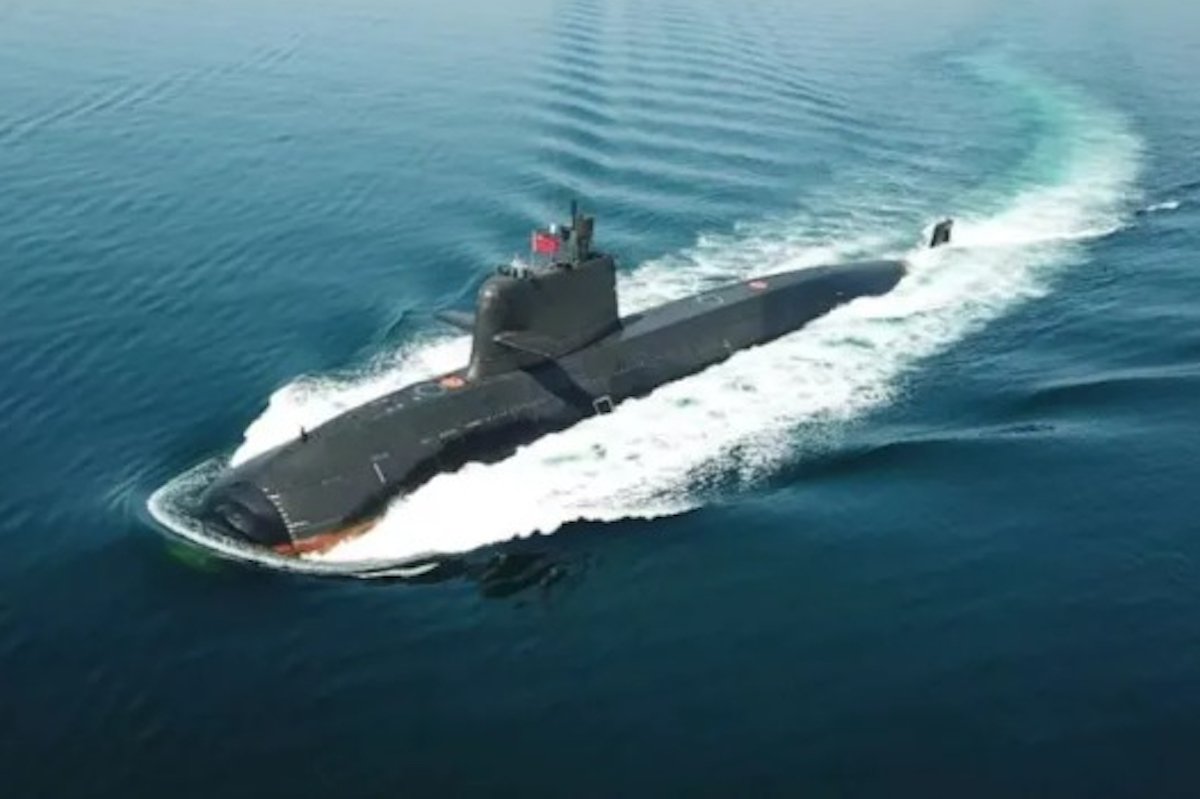
Pakistan has taken a significant step in its naval modernization with the commissioning of its first Hangor-class submarine, PNS/M Hangor, in a ceremony held in Sanya, China. The event, attended by President Asif Ali Zardari and Navy Chief Admiral Naveed Ashraf, underscores Islamabad's deepening defense integration with Beijing as it seeks to counter India's maritime advantages.
The Hangor-class program, an export variant of China's Yuan-class design, involves the acquisition of eight submarines: four built in China and four assembled in Pakistan under a technology-transfer agreement. These vessels feature air-independent propulsion, advanced sensors, and modern weapons systems, positioning them as a key component of Pakistan's anti-access/area denial strategy.
Asymmetric Strategy at Sea
Analysts note that the Hangor-class submarines represent an incremental but meaningful capability gain rather than a game-changer. Namita Barthwal, writing for the Manohar Parrikar Institute for Defense Studies and Analyses, argues that the boats will enhance Pakistan's ability to maintain an underwater presence, complicating crises and increasing the cost of India's maritime reassurance efforts. By replacing older vessels and increasing patrol frequency, Pakistan can monitor Indian ships during peacetime and threaten sea routes near Indian ports and naval bases during crises.
This approach aligns with a broader sea-denial doctrine, as outlined by M. Usman Askari and Mudassar Ali Iqbal in the journal South Asian Studies. Given Pakistan's limited resources, it cannot match India's superior conventional capabilities, which include two aircraft carriers and two nuclear-powered ballistic missile submarines. Instead, Islamabad relies on asymmetric tactics—submarines and coastal defense systems—to restrict India's operational freedom in the Indian Ocean.
Nuclear Ambiguity Concerns
While the Hangor-class could theoretically be armed with nuclear-tipped submarine-launched cruise missiles (SLCMs), experts suggest this is unlikely. Betzalal Newman of the Stimson Center notes that Pakistan's Babur-3 SLCM is suboptimal for nuclear deterrence due to its lighter payload and shorter range compared to ballistic missiles. Moreover, deploying nuclear SLCMs would create ambiguity for India, making it difficult to distinguish between nuclear and conventional strikes—a risk that could escalate conflicts. Newman concludes that Pakistan will likely use the submarines in conventional roles, focusing on torpedo and anti-ship missile operations.
The Nuclear Threat Initiative confirms that the Hangor-class is equipped with 53-millimeter torpedo tubes capable of launching Chinese Yu-6 heavy torpedoes and anti-ship cruise missiles. This arsenal supports a tactical focus on sea denial rather than strategic nuclear deterrence.
Deepening China-Pakistan Defense Ties
The submarine program is part of a broader expansion of Pakistan-China defense cooperation, following recent tensions with India and earlier arms transfers such as J-10C fighter jets. Chinese support—including training, spare parts, intelligence, surveillance, and reconnaissance—will be critical to the submarines' effectiveness. Saad Riaz of the Center for Strategic and Contemporary Research emphasizes that the Hangor-class acquisition is significant for deterring India's growing naval footprint in the Indian Ocean region.
However, the strategic balance remains heavily tilted toward India. A June 2025 report by the Australian Strategic Policy Institute highlights India's consistent conventional superiority across major equipment categories. Pakistan's strategy, therefore, is not about achieving parity but about offsetting structural disadvantages through targeted investments and alliances.
As the Hangor-class program progresses, it will test India's ability to maintain maritime dominance while navigating the complexities of a more capable Pakistani submarine fleet. The outcome will have implications for regional stability, particularly in the context of broader Indo-Pacific rivalries. For more on how great power competition shapes the region, see The Donroe Doctrine Is Becoming Everything China Feared.