On April 28, the U.S. State Department issued a joint statement “in solidarity with Panama,” condemning what it called a “blatant attempt to politicize maritime trade” after Chinese ports detained an increasing number of Panama-flagged vessels. The co-signatories—Costa Rica, Bolivia, Paraguay, Guyana, and Trinidad and Tobago—may seem like a random assortment, but they map precisely onto America’s long-term economic and security priorities in the region.
This move follows a targeted lawfare campaign by U.S. and Panamanian officials to dispossess Chinese logistics infrastructure at the Balboa and Cristobal terminals. Just months ago, Washington was threatening to retake the Panama Canal by force, a position that makes its current rhetoric about defending Panama’s “sovereignty” ring hollow. The Panamanian Supreme Court’s ruling against port operator CK Hutchinson, which led to its replacement by a Maersk subsidiary, was the predictable outcome of this pressure.
Energy and Minerals Drive the New Maritime Consensus
Guyana, the world’s breakout producer of sweet light crude, is benefiting from new downstream investments as the U.S. blockades the Persian Gulf. Trinidad is a major producer of petrochemicals like urea and ammonia. Costa Rica operates the most technologically advanced port in the Caribbean, and Paraguay is the only remaining South American country that recognizes Taiwan. But the most interesting co-signatory is Bolivia, a landlocked nation that sits atop the world’s largest lithium reserves.
Bolivia’s high magnesium-to-lithium ratio makes extraction capital-intensive and largely experimental. The logistical challenge of moving thousands of tons of lithium across rough terrain to Chilean ports, then through the Panama Canal, puts a massive premium on every ton bound for EV batteries and grid-scale storage. President Rodrigo Paz recently replaced the head of the state-owned lithium company, Yacimientos de Litio Bolivianos, signaling a willingness to break deals with China and Russia if Western capital offers a guaranteed market. For Paz’s foreign ministry, signing a U.S.-directed statement recognizing Panama as a “pillar of our maritime trading system” is a low-friction, transactional play.
Bolivia’s potential as a commodity export powerhouse depends on cooperation with its longtime rival, Chile, for port access—Chile has its own highly profitable lithium sector and is the reason Bolivia has no coastline. By aligning with the United States against China, Bolivia is signaling to Panama and Chile that it will play by American-directed rules in exchange for access to their logistics infrastructure.
From the Persian Gulf to the Caribbean
America’s diplomatic maneuvering in Panama and Bolivia cannot be understood in isolation. In the Persian Gulf, the U.S. military is blockading the flow of flagship light and heavy crude to Asian markets, a move that has reopened old rifts among Gulf states and spurred new rivalries, as our analysis of the Iran conflict shows. Meanwhile, the State Department is working diligently in the Caribbean to dispossess Chinese logistics capital through diplomatic coercion and lawfare.
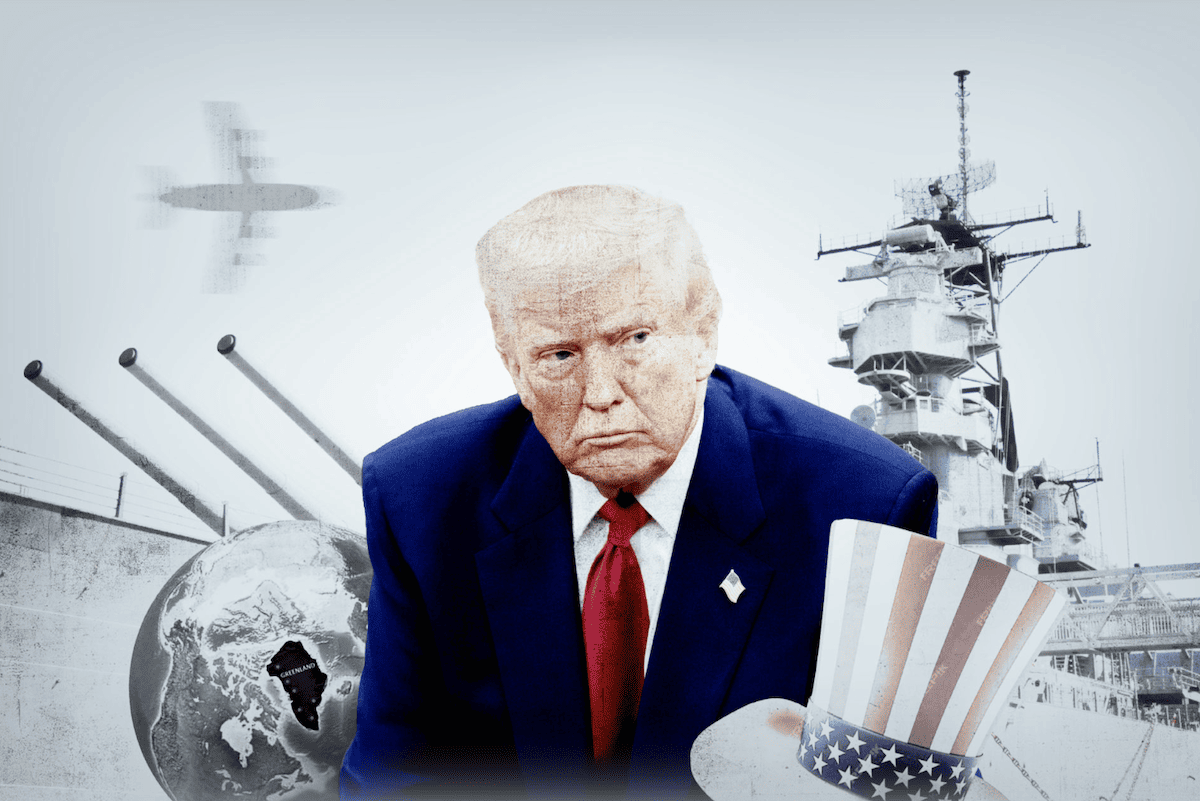
The objective of the so-called “Donroe Doctrine” is not to benevolently integrate the U.S. and Latin America’s economies, but to force capital out of West Asia and back to the Western Hemisphere by establishing new maritime trade routes. The U.S. is promoting a new maritime consensus with Latin American countries that produce the primary inputs for energy, agriculture, and “green” metal commodities—many of which have recently rebuffed Chinese investment offers.
Anyone who still views America as a neutral arbiter or policeman of global maritime trade is ignoring reality. The U.S. military is seizing ships in West Asia while the State Department demands that China play by its rules in Central and South America. The moment Trump abdicated America’s responsibility to defend the Persian Gulf under the Carter Doctrine, the romantic notion of a “free” global maritime commons died. In the long run, this is likely to benefit China and other coastal nations, but in the short term, it has created unprecedented instability—instability the State Department is fully prepared to capitalize on in the service of America’s energy, agricultural, and mining interests.