The United Arab Emirates announced on April 28 that it would withdraw from the Organization of the Petroleum Exporting Countries (OPEC), a move that underscores how the ongoing war with Iran is not only deepening enmity between Tehran and its Gulf neighbors but also driving a wedge among the Gulf states themselves.
OPEC, founded in 1960, has long been a rare success story for multilateral cooperation in the Middle East. Its policies enabled Gulf oil producers to amass the capital needed to nationalize their resources and fund rapid modernization. The cartel has weathered revolutions and regional wars, though Qatar left in 2019 after a blockade by its Gulf peers.
Saudi Arabia, OPEC's largest producer, wields considerable influence within the group. This has created friction with the UAE, which has sought higher production quotas to match its spare capacity—efforts that have repeatedly failed. But the UAE's departure is about more than quota disputes.
Diverging Paths: Saudi Arabia and the UAE
Once close allies in the mid-2010s, Riyadh and Abu Dhabi have drifted apart over several regional issues. Their strategies in the wars in Yemen and Sudan have diverged, as have their approaches to Israel. The UAE normalized relations with Israel in 2020 under the Abraham Accords, while Saudi Arabia insists it will only do so after a Palestinian state is established.
The two countries have also become serious economic competitors. The Iran conflict has accelerated this rivalry, even as both have suffered from Iranian retaliatory strikes. In February, Iran responded to US-Israeli attacks by launching strikes across the Gulf and blockading the Strait of Hormuz—a move that has reshaped regional dynamics.
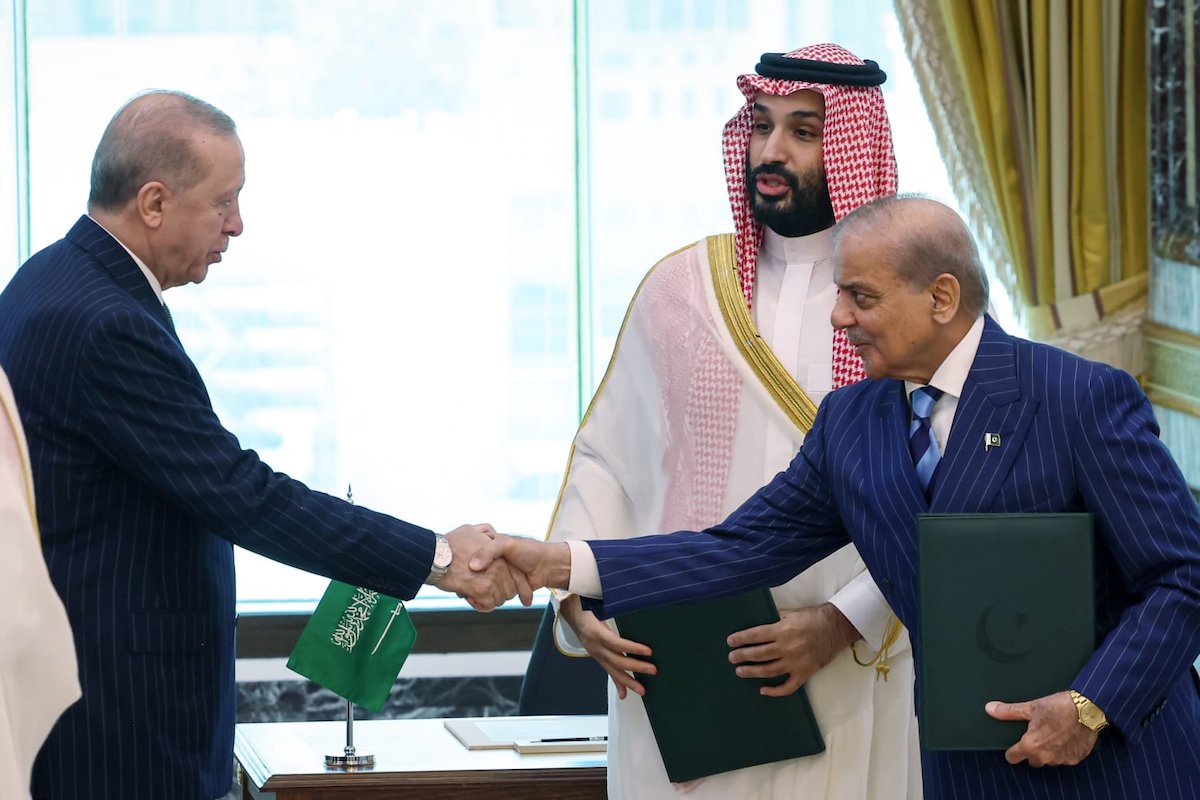
Saudi Arabia, the largest and wealthiest Gulf state, now finds its ambitious economic transformation projects—such as Vision 2030—dependent on political stability and high oil prices. The war has exposed the limits of its tentative outreach to Iran and its partnership with a United States closely allied with Israel. In response, Riyadh has strengthened defense ties with nuclear-armed Pakistan.
These deepening Saudi-Pakistan ties have dismayed the UAE, which maintains close relations with India. Abu Dhabi has criticized Islamabad for not condemning Iran more forcefully—a stance complicated by Pakistan's role as a mediator in peace negotiations. The UAE recently demanded that Pakistan repay a $3.5 billion loan, a move widely seen as frustration with Islamabad's response to the war. Saudi Arabia quickly stepped in to provide financial support to Pakistan.
The UAE's OPEC exit was announced during a Gulf Cooperation Council meeting in Riyadh, where members sought common ground on the Iran war—a clear affront to the Saudis.
Revived Territorial Disputes and Economic Strains
The conflict has also revived old tensions between the UAE and Iran over three islands—Abu Musa, Greater Tunb, and Lesser Tunb—occupied by Iran at the time of Emirati independence in 1971. These islands strengthen Iran's strategic position along Gulf shipping lanes. The UAE claims sovereignty, while Iran insists the islands have always been part of its territory. The dispute is believed to stem from a secret deal between Britain and the Shah of Iran around 1970, trading Iranian claims to Bahrain for control of the islands.
Other historic border disputes, including between the UAE, Saudi Arabia, and Oman, remain sensitive. For a forthcoming book on the rise of the Gulf states, one researcher has faced repeated denials of freedom-of-information requests for UK Foreign Office documents dating back to the 1960s.
Kuwait, in the northern Gulf, has been hit hard by attacks from Shia militias based in Iraq, reviving traumatic memories of Iran-linked political violence in the 1980s and the 1990 Iraqi invasion. States unable to bypass the closed Strait of Hormuz—such as Bahrain, Kuwait, and Qatar—have suffered the most economic damage. Bahrain, already dependent on aid from wealthier Gulf states, faces a strained budget.
In contrast, the UAE, Saudi Arabia, and Oman have the geographic means to bypass Hormuz. Oman, which controls one side of the strait, may benefit long-term, either through a new toll arrangement with Iran or by boosting its Arabian Sea ports—potentially resurrecting some of its former regional power. This prospect alarms both the UAE and Saudi Arabia.
The reckless US-Israeli attack on Iran has thus reopened old faultlines and created new ones among Gulf states, undermining the few remaining avenues for regional cooperation. As the Iran conflict strains Asian energy importers, the Gulf's fragmentation makes an already dangerous region even more volatile.