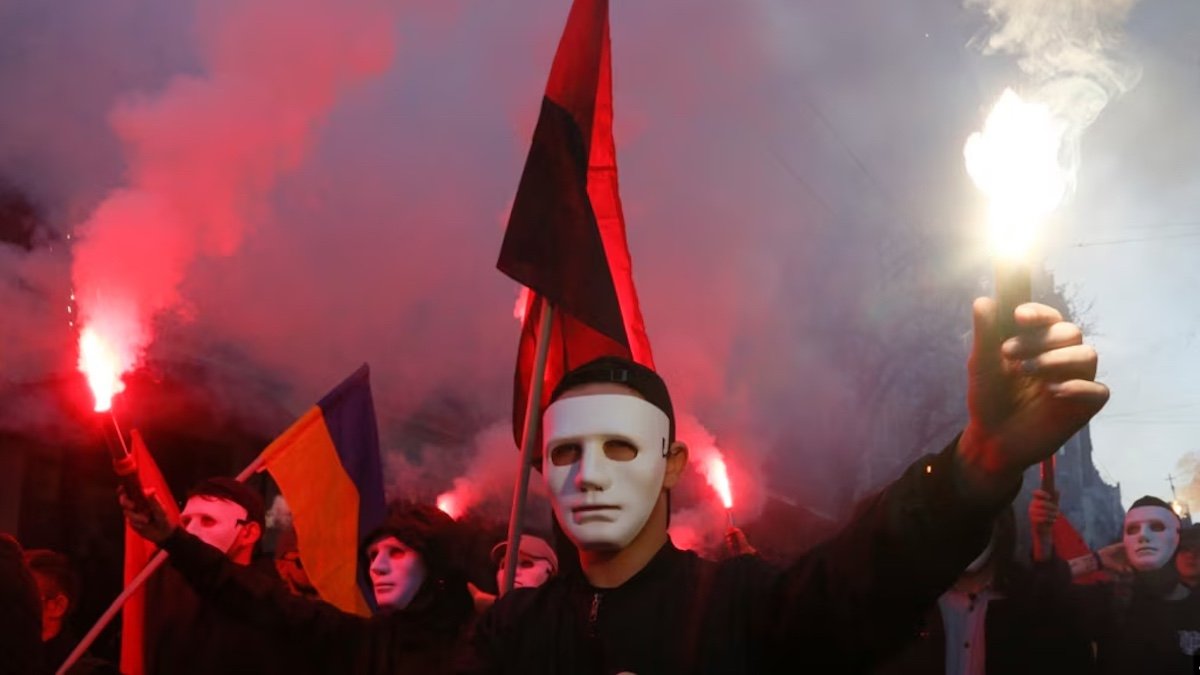
For decades, the dream of an ethnically pure Ukraine animated the country's most ardent nationalists. The Organization of Ukrainian Nationalists (OUN) and its militant wing, the Ukrainian Insurgent Army (UPA), pursued this vision through violence, including genocide against ethnic Poles and others. After the 2014 Maidan uprising, many nationalists saw the war with Russia as a chance to finally realize that vision. Kyiv's bans on the Russian language, elements of Russian culture, and the Ukrainian Orthodox Church seemed to signal progress.
That fantasy has now been shattered by hard demographic reality. Ukrainian President Volodymyr Zelensky's Chief of Staff, Kirill Budanov, stated in late June that the country must attract more migrants, bluntly noting, "There are significantly fewer of us now. I don't want to scare anyone, but significantly fewer." This echoed his earlier remarks in spring, confirming that Ukraine's population crisis is no longer deniable.
The Numbers Behind the Crisis
Ukraine's Minister of Social Policy, Denis Uliutin, revealed in early May that only 22-25 million people still live in the country. Of those, at least 10 million are pensioners, according to an early April estimate by the Pension Fund of Ukraine. UNICEF estimated last year that 6.6 million children under 18 remain, leaving just 6-9 million working-age adults. The World Bank's 2024 data shows males make up 46% of the population, meaning Ukraine has roughly 2.76 million to 4.14 million working-age men—a significant but unclear percentage of whom have been killed or permanently disabled by the conflict.
If one accepts the Center for Strategic and International Studies' early 2026 figure of 500,000-600,000 Ukrainian casualties, the number of working-age males drops to between 2 million and 3.5 million. Budanov was not exaggerating. Of the 4.3 million Ukrainians in the European Union, only 26% are adult men—slightly more than 1 million—and not all will return even after the war ends.
Ukraine must therefore promote mass migration of culturally distinct foreigners for economic survival and population replacement. These migrants are unlikely to assimilate quickly, if Western European precedents are any guide. Moreover, Kyiv cannot realistically ban their languages, as they do not speak Ukrainian and may not be fluent in English—which a 2024 law mandated across the state bureaucracy. This move must have flustered the nationalists.
Far from becoming the ethnically pure state they fantasized about, Ukraine is on pace to become as multicultural as the most extreme cases in Western Europe. English is likely to replace Ukrainian as the everyday lingua franca among its diverse population. Just as troubling from the nationalists' perspective, Zelensky offered his Western partners "patronage over a particular region of Ukraine, city, community or industry" at the World Economic Forum in May 2022.
The result is that Ukraine has lost both its identity and its sovereignty over the course of the conflict—the opposite of what the nationalists expected their sacrifice to preserve. A split between the nationalists and the state seems likely. Given how predictable this outcome is, Ukraine's SBU security service is probably already monitoring them to preempt any signs of dissent, especially those that could turn violent.
This demographic collapse has broader implications for the Indo-Pacific region. As Ukraine rises as a middle power while Russia's great power ambitions fade, the country's need for foreign workers could reshape migration patterns across Eurasia. Meanwhile, ASEAN deepens Russia ties as G7 tightens isolation over Ukraine, creating new geopolitical dynamics. The nationalist dream of an ethnically pure Ukraine is dying, replaced by a multicultural reality that no amount of ideology can reverse.