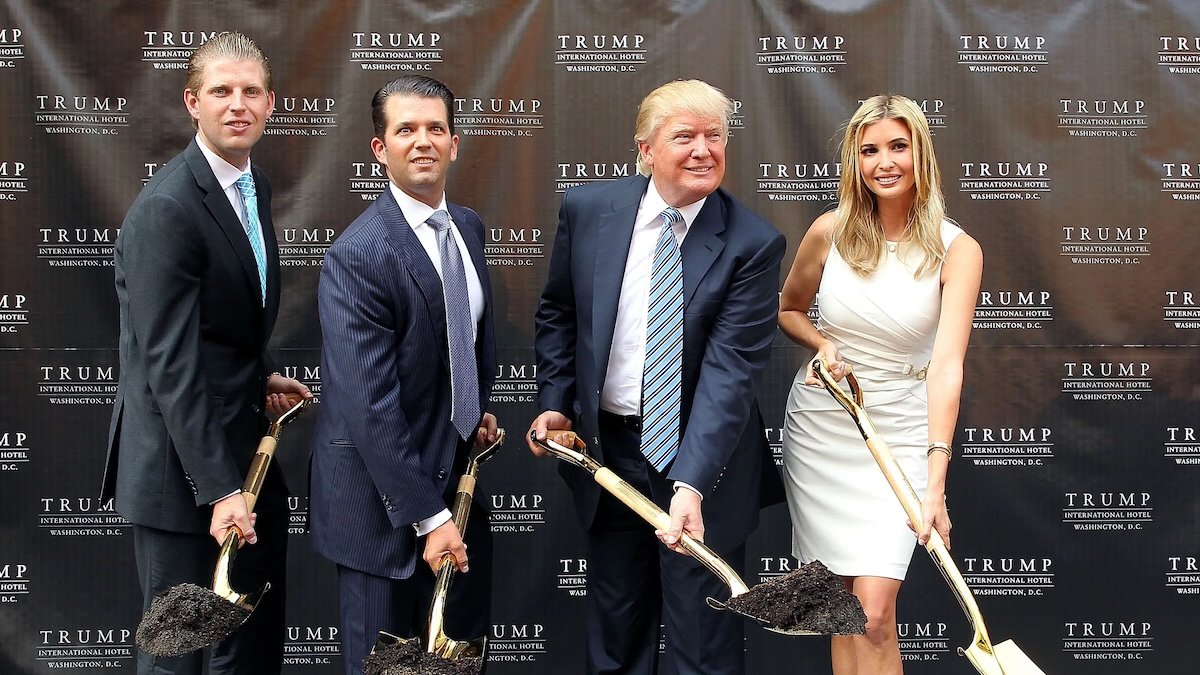
A detailed report by The New York Times has revealed that President Donald Trump's eldest sons, Donald Trump Jr. and Eric Trump, are positioned to benefit financially from a tungsten mining project in Kazakhstan, a deal brokered by the Trump administration and backed by up to $1.6 billion in US taxpayer funds. The revelation has prompted Democratic lawmakers to accuse the administration of unchecked corruption, as the project involves a little-known American company gaining access to one of the world's largest untapped tungsten reserves.
Tungsten is a critical metal used in the production of missile warheads, fighter jets, and computer chips—materials the United States urgently needs for its defense and technology sectors. According to the Times, Trump and his team, including billionaire Commerce Secretary Howard Lutnick, secured an agreement with Kazakh leaders to grant the company, now called Kaz Resources, access to these reserves. The deal was finalized in September 2024, following negotiations at the St. Regis hotel in New York.
Family Ties and Financial Stakes
The report details how Eric Trump and Donald Trump Jr., along with Lutnick's sons Brandon and Kyle, are poised to profit from the project. Within weeks of the St. Regis talks, investors from Dominari Securities—a firm housed in Trump Tower and partly owned by the president's two eldest sons—joined other partners to acquire a 20% stake in a corporate entity linked to the Kazakhstan project. Meanwhile, Brandon and Kyle Lutnick helped raise $210 million in new capital for a related entity, potentially generating millions for Cantor Fitzgerald, the investment firm they oversee.
The Times investigation found that at least 14 companies involved in critical mining deals with the US government have ties to either Cantor Fitzgerald or the Trump family. These include Kaz Resources, Perpetua Resources, and USA Rare Earth. The pattern raises questions about the intersection of private profit and public policy, particularly as the Trump family has already amassed significant wealth from other ventures since the president's return to the White House.
Democrats on the House Oversight Committee have maintained a "Trump Family Digital Grift Wealth Tracker," which estimates that crypto projects spearheaded by the president's older sons have netted the family over $2.4 billion in profits. The Kazakhstan deal adds another layer to what critics describe as a systematic blurring of lines between governance and personal enrichment.
The project is set to break ground in rural Kazakhstan, a Central Asian nation that has sought to balance its ties with major powers like China, Russia, and the United States. For Kazakhstan, the deal offers economic investment in a remote region, but it also places the country at the center of a US political controversy. The Trump administration's push for domestic supply chains for critical minerals, including tungsten, has been a key policy goal, but the involvement of the president's family has drawn sharp criticism.
This is not the first time the Trump family's business interests have intersected with US foreign policy. The president's sons have been active in promoting crypto ventures and other deals that benefit from their father's political position. The Kazakhstan tungsten deal, however, marks a direct link between a taxpayer-funded project and the personal finances of the president's family, a dynamic that Democratic lawmakers argue is unprecedented in modern American history.
As the 2024 election cycle heats up, the controversy is likely to fuel debates about ethics and accountability in the Trump administration. For now, the focus remains on the details of the deal and the extent to which the president's sons and their associates stand to gain from a project that relies on US government financing and a strategic metal critical to national security.