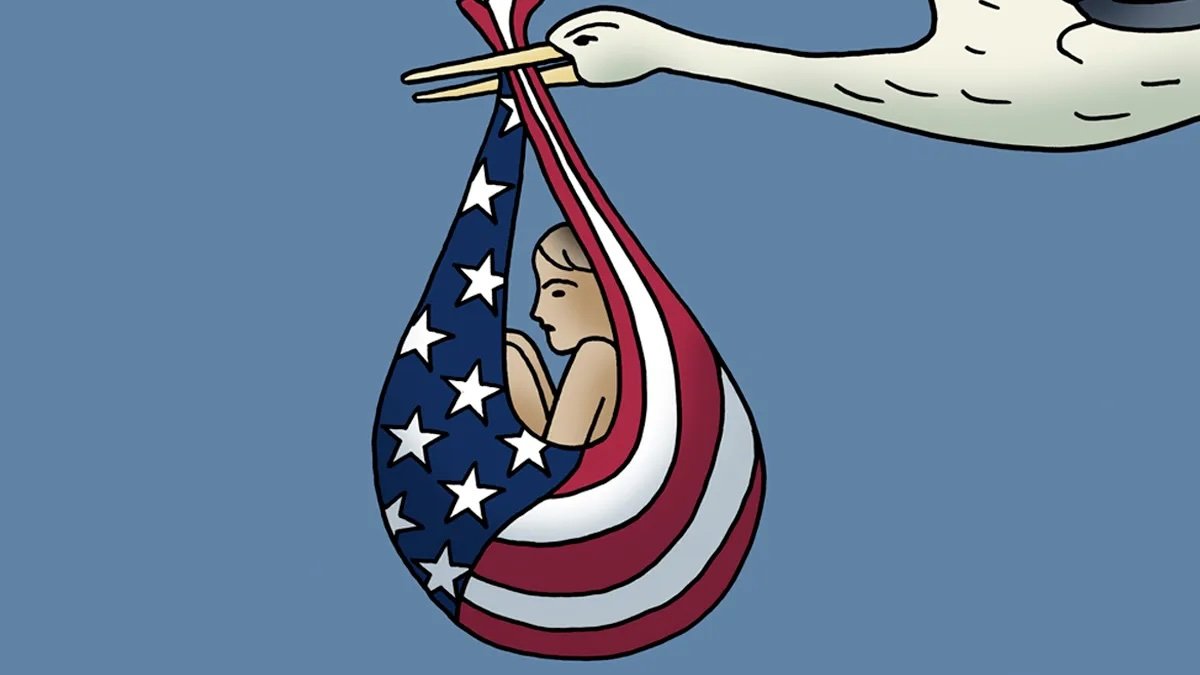
WASHINGTON — The United States Supreme Court on Tuesday delivered a decisive blow to President Donald Trump's immigration agenda, ruling 6-3 that the constitutional guarantee of birthright citizenship cannot be altered by executive order. The decision reaffirms that children born on American soil are citizens at birth, irrespective of their parents' legal status.
Chief Justice John G. Roberts Jr., writing for the majority, stated that the president's executive order violated the 14th Amendment's Citizenship Clause. "Arguments for limiting birthright citizenship to those domiciled in the United States fail," Roberts wrote. "Children born in the United States to parents unlawfully or temporarily present are 'subject to the jurisdiction' of the United States and are citizens at birth under the Fourteenth Amendment's Citizenship Clause. Under the Constitution, they are citizens at birth."
Implications for Asia and the Indo-Pacific
While the ruling is a domestic US matter, its implications ripple across the Indo-Pacific region. Many Asian countries, including China, India, Japan, and South Korea, have citizens living in the United States on temporary visas or without legal status. The decision ensures that their US-born children will retain American citizenship, a status that can affect family migration patterns, remittances, and bilateral ties.
For example, Indian nationals constitute a significant portion of H-1B visa holders in the US, many of whom have children born during their temporary stays. Similarly, Chinese students and professionals on temporary visas now have certainty that their children will not face statelessness or legal limbo. The ruling also impacts Filipino, Vietnamese, and other Southeast Asian communities, where family reunification remains a key driver of migration.
The decision comes amid broader debates in Asia about citizenship and migration. In Japan, where birthright citizenship is not automatic, the ruling contrasts with Tokyo's strict jus sanguinis policies. In India, the Citizenship Amendment Act of 2019 has sparked controversy over religious and ethnic criteria for citizenship. The US ruling may influence discussions in these countries about the merits of birthright citizenship.
President Trump, who attended oral arguments in a highly unusual move for a sitting president, had sought to redefine who qualifies as American as part of his broader immigration crackdown. A day before the decision, he told reporters in the Oval Office that he would accept the court's ruling, though he expressed hope it would go his way. "It's up to them, but in terms of for the good of the country, it'd be great if they … didn't allow it," Trump said.
The executive order, one of the first Trump signed at the start of his second term, aimed to deny citizenship to children born to parents who are either undocumented or hold temporary visas. Experts had warned that such a policy could create a class of stateless individuals and overwhelm hospitals and local governments. The Supreme Court's ruling effectively nullifies that order.
This decision follows two earlier rulings that expanded presidential authority over immigration, including allowing limits on asylum claims at the southern border and stripping legal protections for 350,000 Haitians and 6,000 Syrians. Tuesday's ruling, however, reins in that authority on a core constitutional question.
For Asian governments, the ruling provides a measure of stability. Countries like South Korea and Vietnam, which have large diaspora communities in the US, can now assure their citizens that US-born children will not face sudden loss of citizenship. This is particularly relevant as Washington's immigration policies have become a flashpoint in bilateral relations, with some Asian leaders criticizing Trump's approach as unpredictable.
The decision also underscores the enduring strength of US constitutional protections, even as the Trump administration has sought to reshape immigration law through executive action. For an international audience, it highlights the checks and balances that remain central to American governance, even amid political polarization.