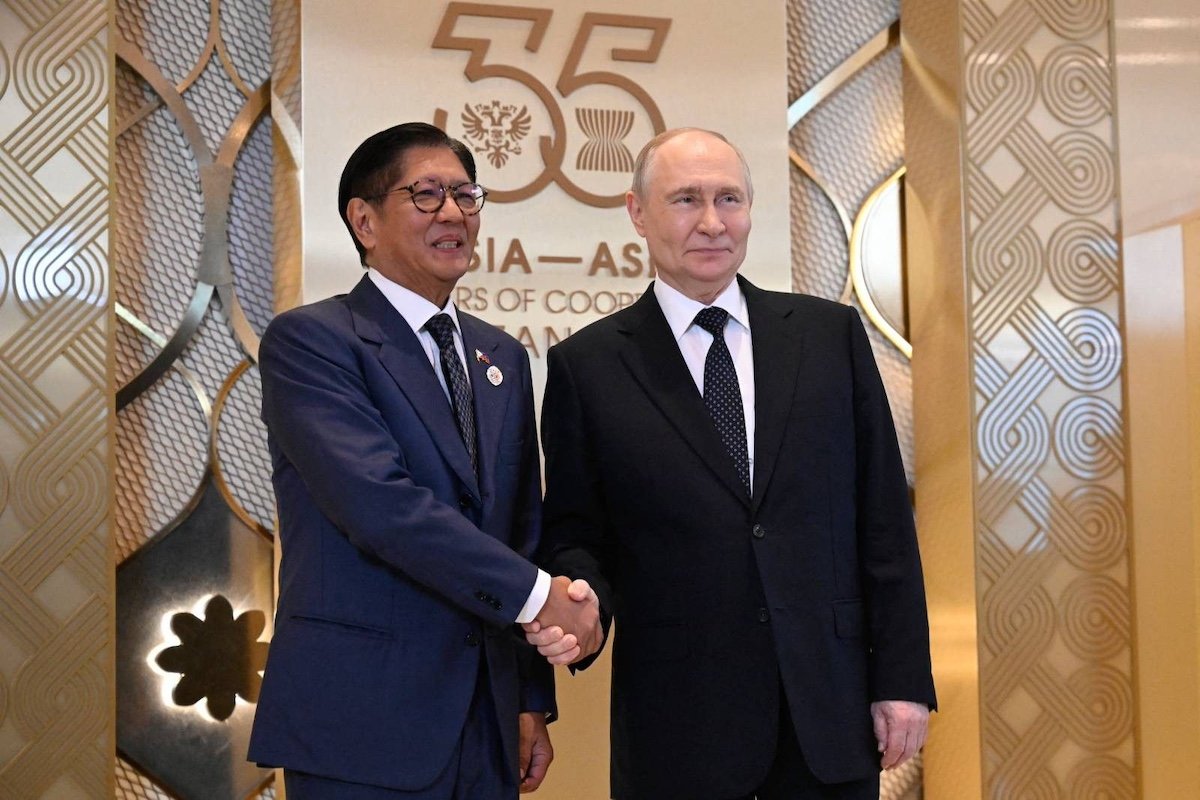
The arrival of leaders from across Southeast Asia in the Russian city of Kazan on June 17-18, 2026, for the ASEAN–Russia Commemorative Summit was more than a routine diplomatic gathering. It unfolded alongside a Group of Seven (G7) meeting in France, where leaders reaffirmed “unwavering” support for Ukraine in its defense against Russia’s invasion. This juxtaposition underscores the accelerating emergence of a genuinely multipolar international order.
While Western powers continue to seek diplomatic isolation of Russia over the war in Ukraine, many states in Asia, Africa, the Middle East, and Latin America are increasingly pursuing strategic autonomy. They maintain relationships with multiple centers of power simultaneously, reflecting a fragmentation of the international system into overlapping diplomatic networks rather than rigid ideological blocs.
ASEAN’s Strategic Hedging
ASEAN has become one of the clearest examples of this approach. Its member states maintain strong economic ties with the United States, China, Japan, the European Union, and increasingly India, while also preserving diplomatic and economic engagement with Russia. This strategic hedging reflects ASEAN’s longstanding commitment to non-alignment and regional autonomy.
While most ASEAN members supported United Nations resolutions criticizing Russia’s invasion of Ukraine in 2022, they have generally resisted efforts to sever relations with Moscow. Instead, they have sought to compartmentalize disagreements over the war while continuing cooperation in areas considered vital to national development. The attendance of leaders from countries with very different geopolitical orientations—including the pro-Western Philippines, sanctions-imposing Singapore, and traditionally Russia-friendly Vietnam and Laos—demonstrates that engagement with Russia is viewed by many Southeast Asian governments as compatible with broader foreign policy objectives.
Russia’s Strategic Calculus
For Russia, the summit serves several strategic purposes. First, it allows Moscow to demonstrate that it has not been diplomatically isolated despite extensive Western sanctions and political pressure. The presence of all ASEAN member states’ leaders provides symbolic evidence that many countries continue to regard Russia as an important international actor. Second, the summit offers opportunities to deepen economic relationships at a time when Russia is seeking to diversify trade away from Europe and toward Asia. Russian officials have repeatedly highlighted the potential for increased cooperation in energy, food production, technology, and infrastructure development.
The accompanying Russia–ASEAN Business Forum reflects Moscow’s ambition to translate political engagement into tangible commercial outcomes. Energy security is likely to emerge as a particularly significant area of cooperation. Many Southeast Asian economies remain highly dependent on imported energy resources and face growing demand as industrialization and urbanization continue. Russia possesses vast reserves of oil, natural gas, and nuclear technology, making it an attractive partner for countries seeking to diversify their energy sources. The disruption of global energy markets during the US-Israel war against Iran has further reinforced the importance of supply diversification, encouraging many governments to pursue pragmatic relationships regardless of geopolitical tensions.
Food security represents another critical dimension of the emerging multipolar landscape. Russia remains one of the world’s largest exporters of grain and agricultural products, while several Southeast Asian countries are major food importers vulnerable to supply disruptions and price volatility. The war in Ukraine exposed the fragility of global food supply chains and highlighted the risks associated with excessive dependence on a limited number of suppliers. Cooperation between Russia and ASEAN on agricultural trade, logistics, and food resilience can therefore be viewed as part of a wider trend toward diversification and strategic redundancy in global economic networks.
The summit also highlights the growing importance of technology and digital governance as arenas of geopolitical competition. Russian President Putin’s emphasis on artificial intelligence, digital platforms, and advanced technologies reflects a recognition that future influence will increasingly depend on technological capabilities rather than military power alone. For ASEAN countries, engagement with multiple technological partners offers opportunities to avoid excessive dependence on any single ecosystem. By cooperating simultaneously with the United States, China, Europe, and Russia, Southeast Asian states can build resilience against supply chain disruptions and geopolitical pressure. This is particularly relevant as the US tightens controls on semiconductor exports to China, as seen in the closure of loopholes used by Chinese firms to buy Nvidia GPUs via Southeast Asia.
This divergence does not necessarily indicate support for Russia’s actions in Ukraine, but it does reveal differing priorities and perceptions of global order. Rather than aligning exclusively with either a Western or a Sino-Russian bloc, many countries are adopting flexible, issue-based foreign policies that allow them to engage with multiple major powers simultaneously. As the international system evolves, ASEAN’s approach may serve as a model for other regions navigating the complexities of a multipolar world.