Washington's approach to Myanmar has become a study in fragmentation. The Trump administration's policy, if it can be called that, is a jumble of xenophobic measures—the gutting of USAID, a travel ban on most Myanmar citizens, and threats to those on Temporary Protection Status visas—with little strategic coherence. Congress, once a bipartisan pillar on Myanmar, has largely gone silent. Senator Mitch McConnell, long the most vocal defender of detained leader Aung San Suu Kyi, is now absent from public view, leaving a void in legislative attention.
The dominant lens through which Washington views Myanmar is that of a Chinese vassal state. This obsession with Beijing's role as puppet master has become one of the twin pillars of Myanmar discourse since the 2021 coup. The other is a narrative, pushed by a mix of foreign activists, Myanmar Christian leaders, and conspiracy-laden commentary, that the opposition National Unity Government (NUG) enjoys a monopoly on popular support and is close to military victory. Both narratives are dangerously unconvincing. As we've noted, the 'no single government' narrative aids the junta's agenda by oversimplifying a complex civil war.
The Min Zin case and the Rubio gaffe
The arrest of Min Zin, an American citizen and prominent Myanmar intellectual, in China on June 3, has exposed the administration's indifference. Min Zin was reportedly charged with espionage, but the US government has shown little public concern, granting only consular access. At a July 22 press conference, Secretary of State Marco Rubio displayed startling ignorance. When asked if Min Zin had been classified as wrongfully detained, Rubio initially confused him with a scientist, then admitted, "I don't believe so yet." He added that "some conditions have been shifting with regards to Myanmar or Burma over the last few months that we're keeping an eye on." It is a telling sign of how low Myanmar ranks on Washington's agenda.
Former US diplomat Dan Swift argued in Asia Times that Min Zin's arrest was "Beijing's offering to Naypyidaw—a public demonstration of loyalty" after Donald Trump's visit to China and meeting with President Xi Jinping. The logic was that China needed to secure energy pipelines from Kyaukphyu in Rakhine State, besieged by the Arakan Army for two years, to counter its vulnerability in the Strait of Malacca. A Georgetown Security Studies Review article similarly claimed that much of Myanmar's civil war is about China's need to secure those pipelines. But such analyses reduce a multifaceted conflict to a single geopolitical variable.
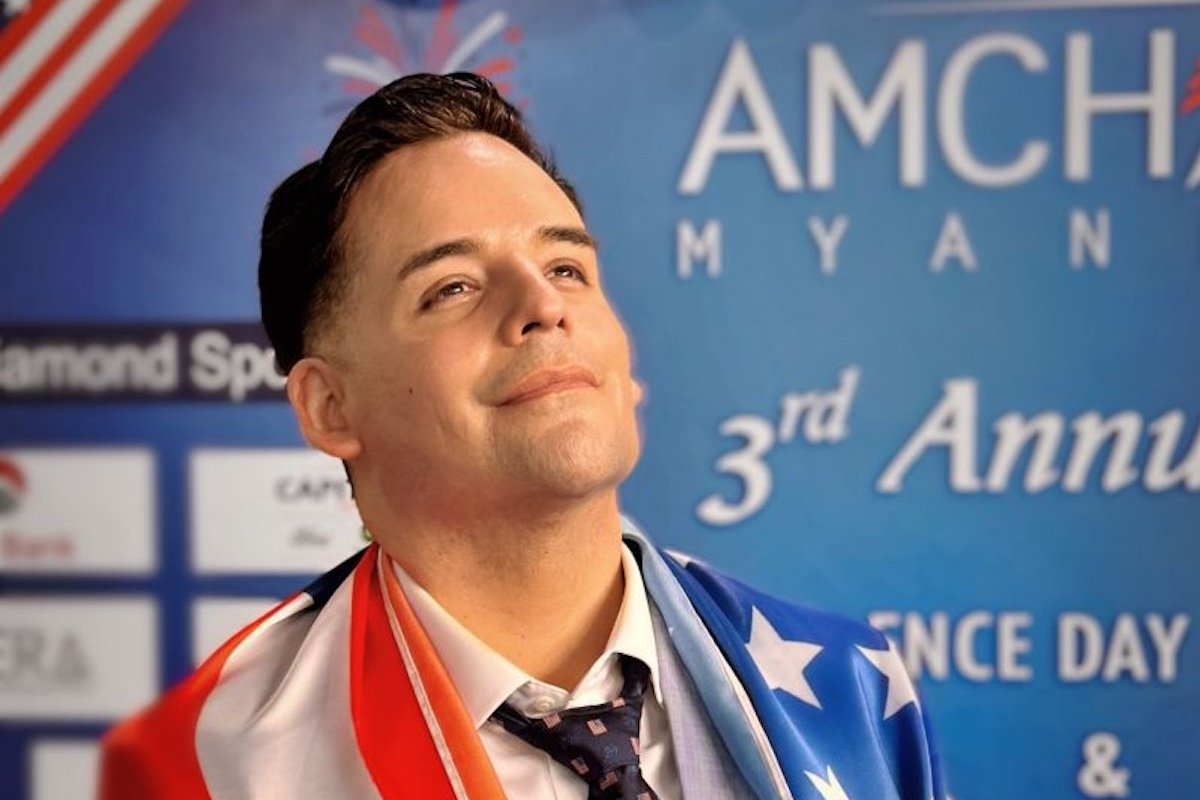
Meanwhile, the detention of American businessman Adam Castillo, former head of the American Chamber of Commerce in Myanmar, after flying into Yangon airport in mid-June, appears linked to a business dispute rather than politics. The Trump administration has shown little interest in his case either.
China-obsessed narratives and activist spin
The pro-NUG writing that dominates some circles is not just misleading but often laughable. One piece from the Southeast Asia Peace Institute sought inspiration from the American Revolution for Myanmar's post-coup resistance—a silly indulgence. Another from the conservative Cato Institute's Doug Bandow, writing in Responsible Statecraft, argued that it is in Beijing's interests to overthrow the Naypyidaw regime. The suggestion that China would act as a liberator in Myanmar is as fanciful as invoking the A-Team.
Even less prominent outlets like the Jamestown Foundation have made obvious points—that the Arakan Army is the most effective insurgency in Myanmar—as if this were a revelation. The reality is that Washington's policy vacuum is filled by a cacophony of voices, each pushing their own agenda. The US seems more obsessed with rare earth metals, trade, cracking down on scam centers, and increasing Sinophobia than with the humanitarian catastrophe unfolding in Myanmar. As Trump prepares to host Xi in September, the focus remains on great-power competition, not the fate of millions caught in a civil war.
The result is a Washington dissensus: no coherent strategy, no serious engagement, and a dangerous reliance on narratives that serve activists and conspiracy theorists rather than the people of Myanmar. Until the US government treats Myanmar as a country with its own dynamics—not merely a pawn in a China-centric game—its policy will remain as incoherent as the lunacy that currently defines it.