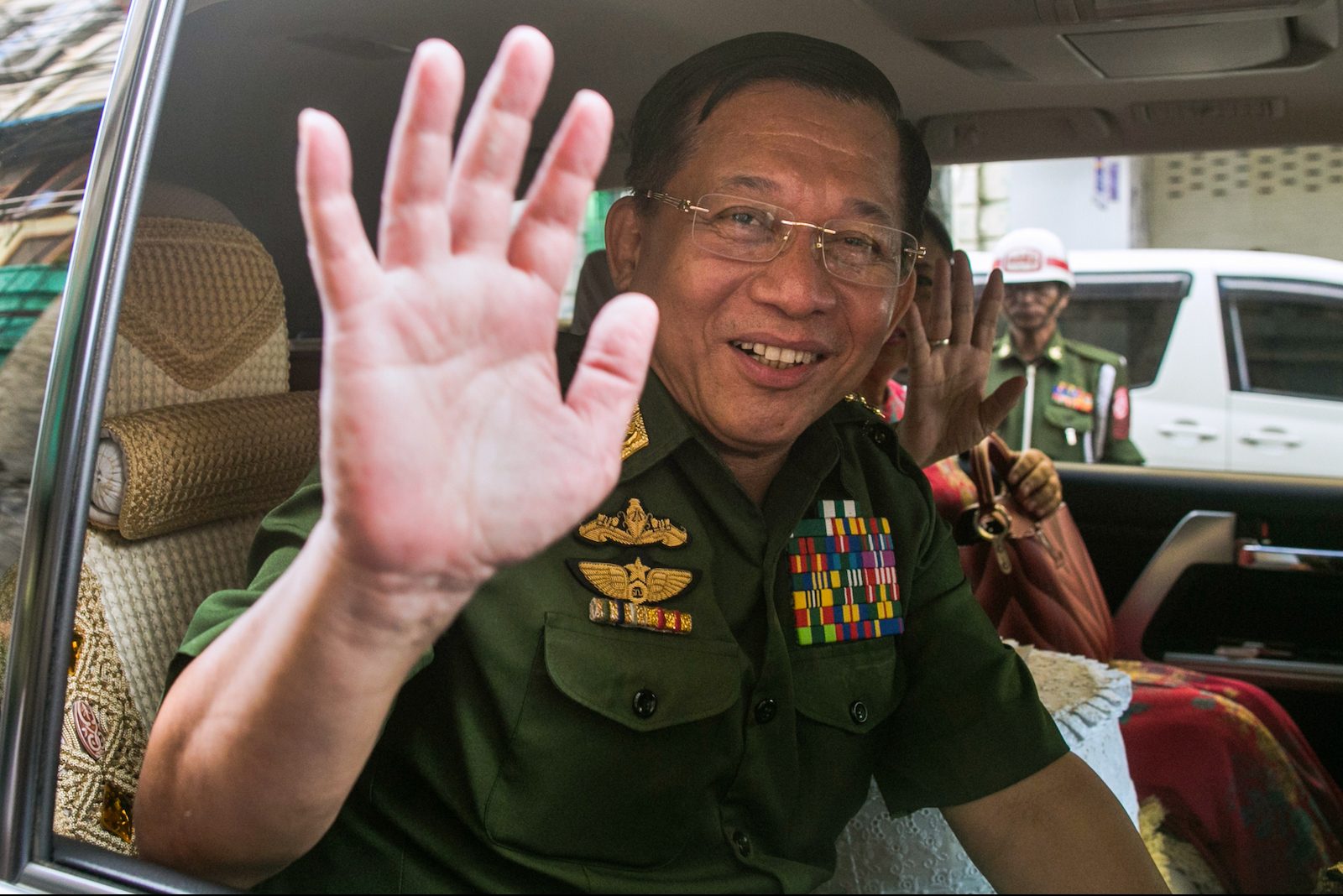
More than five years after the February 1, 2021 coup, Myanmar's military regime under Senior General Min Aung Hlaing is slowly but steadily gaining the upper hand in its multifaceted conflict. The coup did not merely halt the country's democratic transition; it triggered a collapse of domestic stability, spawning the civil disobedience movement, the rise of People's Defense Force militias, and intensified fighting with ethnic armed organizations. Yet the junta's brutal response—mass killings, arbitrary detentions, aerial bombardments of civilian areas, and humanitarian blockades—has not only crushed much of the opposition but also turned the crisis into a direct threat to Southeast Asian stability.
ASEAN's internal fractures undermine collective action
For the Association of Southeast Asian Nations, the Myanmar crisis has become an existential test of the ASEAN Charter and its principle of non-interference. From the start, the bloc's response has been crippled by deep internal divisions. Maritime states like Indonesia, Malaysia, Singapore, and the Philippines have repeatedly demanded an end to violence and a return to democracy. Mainland neighbors such as Thailand, Laos, Cambodia, and Vietnam, however, have shielded themselves behind non-interference, viewing the crisis as a purely domestic affair.
The result was the Five-Point Consensus of April 2021—a toothless agreement that demanded a cessation of violence, inclusive dialogue, a special envoy, and humanitarian access via the AHA Centre. It failed entirely, largely because the ASEAN Charter lacks enforcement mechanisms or sanctions. The Tatmadaw has shrewdly exploited this loophole, ignoring regional commitments while tightening its domestic grip.
In early 2026, the junta shifted tactics. It held a tightly controlled election, sidelined the opposition, dissolved direct military rule, and installed Min Aung Hlaing as president—a cosmetic move to manufacture constitutional legitimacy and coax ASEAN into restoring Myanmar's full participation. While most ASEAN members rejected this political theater, the bloc's conflicting perspectives still leave the junta room to maneuver.
Bangkok talks reveal asymmetric commitment
An informal ASEAN foreign ministers' meeting in Bangkok on July 12, 2026, hosted by Thailand and chaired by the Philippines, brought regional diplomats face-to-face with the junta's newly appointed foreign minister, U Tin Maung Swe, for the first time since 2021. The approach was framed as an olive branch—flexible, unconditional dialogue—while maintaining no political concessions on legitimacy. But the outcomes confirmed an acute asymmetry in commitment.
ASEAN refused to legitimize the January 2026 elections and continued to block Myanmar from high-level summits. Yet the bloc's core demands—a halt to offensive operations, inclusive dialogue with the National Unity Government, and physical access for the special envoy to meet Aung San Suu Kyi—were flatly rejected by the Tatmadaw. Instead, the junta offered minimal technical concessions: expanding the AHA Centre's humanitarian mission in limited areas, vague promises on medical care and possible house arrest for Suu Kyi, and cooperation on cross-border cybercrime.
This pattern reveals a consistent survival strategy: engaging regionally on a tactical level to ease international pressure while systematically sabotaging peace on the ground. The Tatmadaw exploits ASEAN's weak coordination to secure bilateral deals that bolster its position. As Myanmar's civil war nears a decisive phase, the junta's gains are increasingly evident.
External backers sustain the regime
The military's defiance of regional pressure is heavily backed by key external players. China, India, and Russia have acted as primary lifelines. China has deployed pragmatic diplomacy to secure its Belt and Road Initiative investments, particularly the trans-Myanmar oil and gas pipelines and the Kyaukphyu deep-sea port. A high-profile visit by Chinese Foreign Minister Wang Yi to Naypyidaw in April 2026 underscored Beijing's de facto recognition of the military-backed government.
India has pursued a dual-track strategy to safeguard its northeastern border, protect the Kaladan multimodal transit project, and secure access to critical minerals. Russia, meanwhile, has positioned itself as the primary supplier of heavy weaponry—fighter jets and attack helicopters that sustain the Tatmadaw's air campaigns—while offering a diplomatic shield at the UN Security Council.
Despite this external backing, ASEAN's regional isolation has inflicted severe economic damage. Being frozen out of the ASEAN Economic Community single market has compounded the crisis, though the junta's resilience suggests it can weather the pressure for now. The broader geopolitical landscape, including ASEAN's reclaiming of a central role amid shifting global alignments, may offer the bloc a chance to recalibrate its approach.
The multidimensional crisis has entered a new chapter—one where the junta's slow but steady consolidation of power, combined with ASEAN's internal fractures and external support, points to a grim trajectory for Myanmar's democratic aspirations and regional stability.