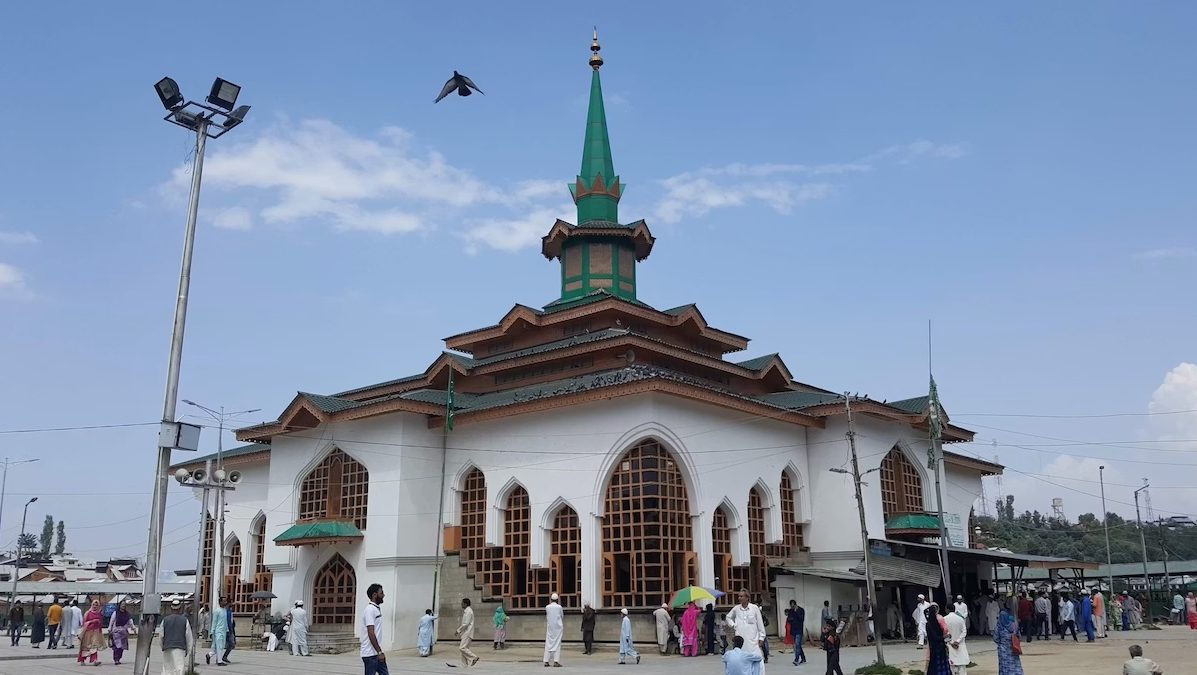
Kashmir's name in global headlines is almost synonymous with conflict. In April 2025, India and Pakistan, two nuclear-armed neighbors, edged toward a major confrontation after militants attacked Indian tourists near Pahalgam. Yet this narrow focus on violence obscures a deeper, more complex reality: a region that has been a crossroads of civilizations, where Hindu, Buddhist, and Muslim traditions have intermingled for over two millennia.
As a scholar of Sufism, I have spent years studying the life and work of Nund Rishi, a 14th-century mystic who founded the Rishi Sufi order. His teachings, rooted in simplicity, compassion, and devotion, drew heavily on Kashmir's Hindu spiritual past, creating a unique synthesis that continues to resonate today.
A legacy of learning and exchange
Kashmir's intellectual and artistic heritage predates the arrival of Islam. Under Emperor Ashoka in the third century BCE, it became a major center of Buddhist learning. Later, as royal patronage shifted, it emerged as a hub for Hindu philosophy, particularly Shaivism. The ninth-century Spanda Kārikās described consciousness as a dynamic vibration, while the 10th-century scholar Abhinavagupta developed theories of aesthetics that saw poetry and theater as paths to spiritual transformation.
This rich intellectual soil nurtured Nund Rishi, who was deeply influenced by the Shaiva mystic poet Lal Ded. Lal Ded's vakhs, short spiritual poems in everyday Kashmiri, encouraged seekers to find the divine within themselves, transcending religious boundaries. One of her verses famously declares: "Shiva abides in all that is, everywhere. Do not discriminate between a Hindu and a Muslim."
Nund Rishi continued this tradition through his own shruks, composed in the language of the people rather than the courtly Persian. His poems warned against greed and hypocrisy, rejected caste divisions, and celebrated the equality of all humans. In one striking verse, he wrote: "Caste is of no use in fancy gatherings. Caste is not written on one's face."
He also paid tribute to Lal Ded, calling her an avatār, a divinely inspired being. This mutual respect between Hindu and Muslim mystics was not an anomaly but a hallmark of Kashmiri spiritual culture.
Beyond the headlines
Today, as tensions simmer along the Line of Control, it is worth remembering that Kashmir's identity is not solely defined by geopolitics. The poetry of Nund Rishi and Lal Ded remains a living testament to a shared heritage that transcends religious labels. Their verses are recited by both Hindus and Muslims, a quiet counter-narrative to the forces of division.
This legacy is part of a broader pattern across the Indo-Pacific, where cultural exchange has often preceded or accompanied political friction. For instance, China's economic footprint in Indonesia has created new interdependencies, while Jakarta's strategic balancing act reflects the region's complex dynamics. Similarly, Japan's evolving security posture shows how historical identities are being renegotiated in the face of new challenges.
Kashmir's poet-saints offer a different kind of bridge—one built not on strategic calculations but on shared human experience. Their words remind us that even in the most contested corners of the world, there exists a reservoir of mutual understanding that can be drawn upon. As the region navigates its uncertain future, this spiritual inheritance may prove as vital as any political settlement.