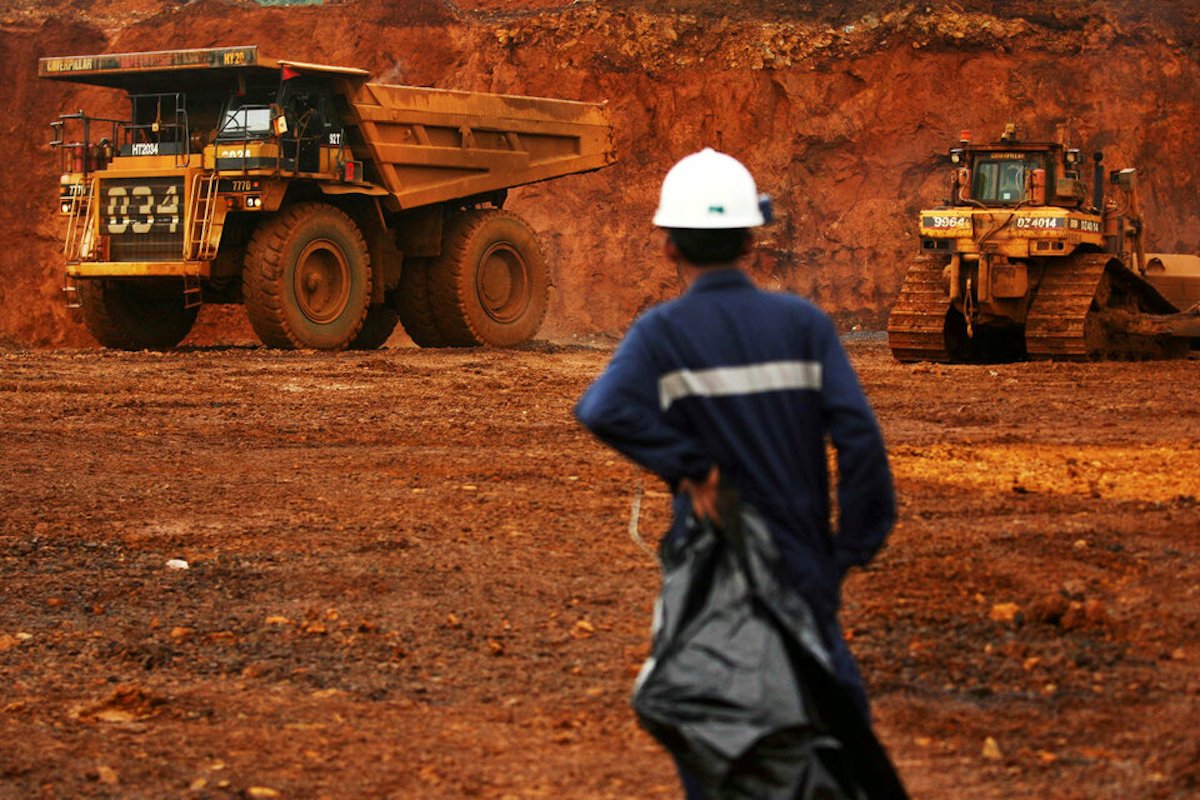
When PT Gunbuster Nickel Industry (GNI) began operations in North Morowali, it embodied Jakarta's ambitions for its nickel sector. Built with $2.7 billion in Chinese investment, inaugurated by then-President Joko Widodo in 2021, and designated a National Strategic Project, the smelter was meant to demonstrate Indonesia's transition from raw ore exporter to manufacturing hub.
Its current difficulties tell a different story. The Jakarta Commercial Court recently placed GNI under temporary debt restructuring after two shipping companies filed petitions over unpaid obligations. The timing is revealing: GNI is affiliated with Jiangsu Delong Nickel Industry, one of China's largest stainless steel producers, which has itself been under financial strain.
Whether GNI recovers is less significant than what its predicament signals about the broader trajectory of Indonesia's nickel industry. The temptation is to view this as another case of Chinese overreach overseas. But GNI's troubles are only the most visible symptom of a sector under pressure for months.
Stress Across the Sector
Earlier this year, the Indonesian Nickel Miners Association (APNI) identified three smelters facing serious operational difficulties: PT Huadi Nickel Alloy Indonesia in South Sulawesi, PT Wanxiang Nickel Indonesia in Morowali, and GNI itself. According to APNI secretary-general Meidy Katrin Lengkey, Huadi had ceased operations entirely, Wanxiang was left with only two active production lines, and GNI had shut down five of its 20 lines.
The downturn follows a period of rapid expansion fueled by Chinese investment. Indonesia's ban on raw nickel ore exports, implemented in 2020, spurred a wave of Chinese companies to build processing plants in the country. The strategy worked: Indonesia became the world's largest nickel producer, with output more than doubling between 2020 and 2023. But the global nickel market has since turned, with prices falling sharply due to oversupply and weaker demand from the stainless steel and electric vehicle battery sectors.
Chinese firms, which dominate Indonesia's nickel processing capacity, are now caught between high capital costs and falling margins. The situation echoes broader trends in China's overseas investments, where projects in sectors from infrastructure to rare earths have faced similar headwinds. For a deeper look at how Beijing's influence plays out in neighboring countries, see China's Embrace of Myanmar's Junta Chief Exposes Limits of Influence.
The Indonesian government has not signaled any shift in its nickel policy, but the stress in the sector raises questions about the sustainability of its industrialization model. Jakarta has sought to move up the value chain by attracting investment in battery-grade nickel processing, but the current downturn may deter new entrants. Meanwhile, Chinese companies are likely to reassess their exposure, potentially slowing the pace of new projects.
For Indonesia, the challenge is to maintain the momentum of its nickel boom while managing the risks of dependence on Chinese capital and technology. The GNI case is a reminder that the boom-and-bust cycle in commodity markets does not respect national boundaries or strategic ambitions. As the sector adjusts, the question is not just whether Chinese investors will stay for the bust, but whether Indonesia's broader industrial strategy can withstand the pressure.