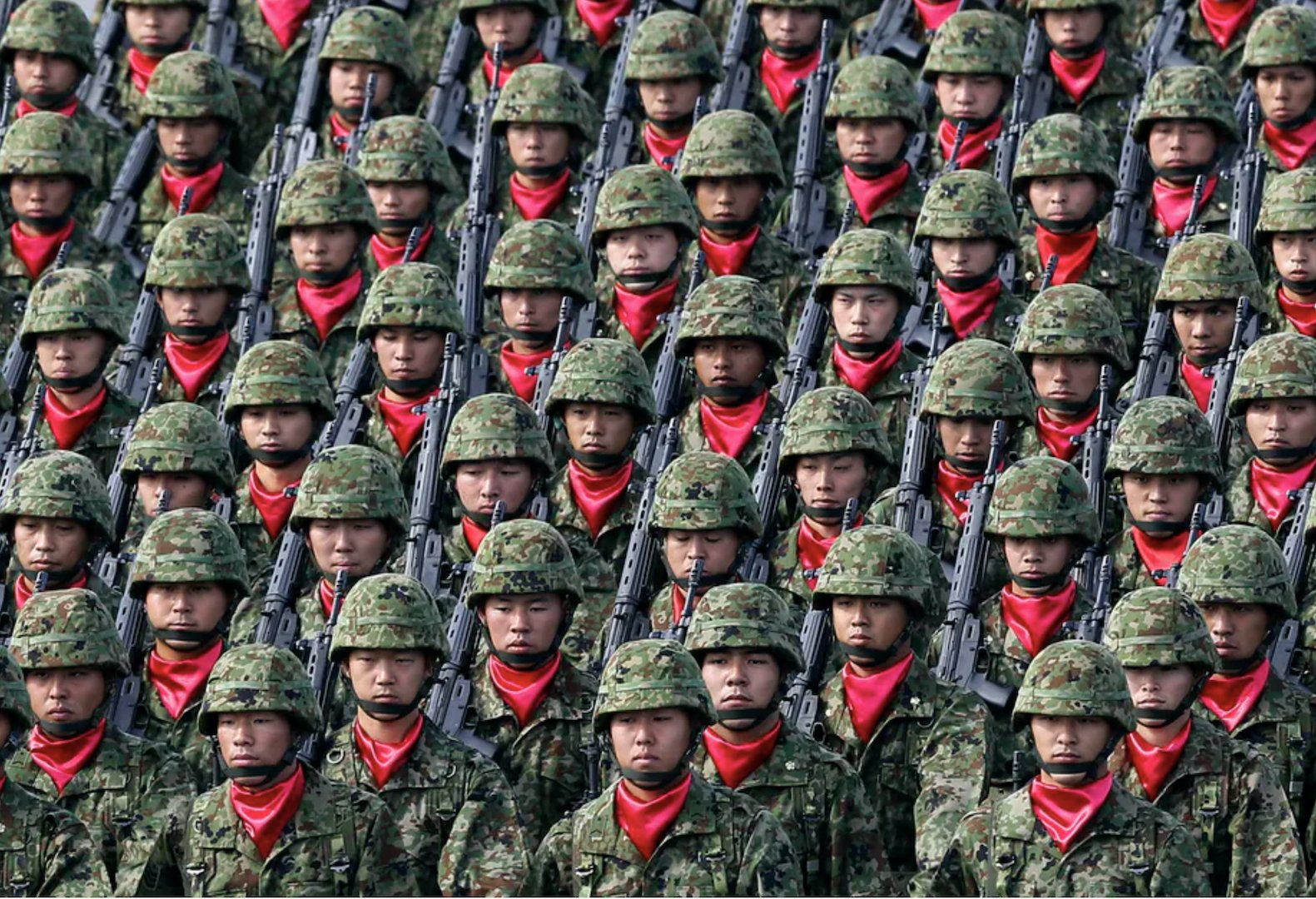
Japan's post-war constitution, which formally renounces war, is frequently presented as the definitive legal barrier shaping the security posture of the world's fourth-largest economy. This framework is now under intense scrutiny as regional tensions rise and allies demand greater contributions. The nation's heavy reliance on Middle Eastern energy, tested by disruptions around the Strait of Hormuz, highlights the strategic dilemma: Tokyo has a vital stake in global stability but often cites Article 9 as a reason for caution.
Prime Minister Sanae Takaichi has typified this approach, acknowledging the importance of securing vital sea lanes while emphasizing constitutional limits. This stance, however, belies a decades-long pattern of strategic adaptation where legal interpretations follow, rather than prevent, military deployments.
A History of Strategic Reinterpretation
The narrative of constitutional restraint began to fray after the 1991 Gulf War, when Japan faced criticism for its "checkbook diplomacy." In response, Tokyo dispatched minesweepers to the Persian Gulf, marking its first major overseas military deployment since 1945. This established a template: strategic necessity prompting legal reinterpretation.
This pattern accelerated after the September 11 attacks. Japan passed the Anti-Terrorism Special Measures Law, enabling nearly a decade of maritime refueling missions in the Indian Ocean in support of coalition operations in Afghanistan. Under Prime Minister Junichiro Koizumi, Japanese Ground Self-Defense Force personnel were deployed to Iraq under a specially constructed "non-combat" framework, a distinction that proved nebulous on the ground.
Subsequent governments have continued to stretch the boundaries. In 2015, the Shinzo Abe administration redefined the scope of self-defense, allowing for limited collective self-defense in "survival-threatening situations." Later changes to peacekeeping rules permitted "rush-and-rescue" missions, expanding the conditions for Japanese forces to use weapons to assist allies under attack.
The Current Reality: An Expanding Security Footprint
Today, the gap between pacifist rhetoric and military reality is stark. Japan is deploying long-range missiles with counterstrike capabilities across its southwest islands, including near Taiwan. It has significantly eased restrictions on defense exports, recently approving the transfer of Patriot missile interceptors to the United States to backfill stocks sent to Ukraine—an indirect but lethal form of support.
Regionally, Japan's role is expanding rapidly. Its forces now participate in complex exercises like Balikatan with the Philippines, signaling a deeper operational integration. Few countries beyond Japan's direct adversaries now oppose its evolution into what some term a "normal" military power. The constraints are increasingly domestic and political, not external or absolute.
The core issue is no longer capability, but mindset. A series of crisis simulations by a Japanese think tank revealed troubling ambiguity. In scenarios involving a Taiwan contingency, participants struggled to define the precise moment a "survival-threatening situation" legally occurred—a recognition that often came only when conflict was imminent. In a real crisis, such delayed clarity could prove catastrophic, undermining deterrence and costing critical response time.
External pressures are mounting in the opposite direction. Washington expects more from its allies as it manages global commitments. European nations are rearming swiftly, and Indo-Pacific partners increasingly look to Japan for security leadership. Meanwhile, economic vulnerabilities persist, as seen when regional conflicts strain Japan's critical supply chains.
Japan's postwar pacifism served a vital historical purpose, enabling economic recovery and reassuring neighbors. However, institutions can outlive their utility. When they do, they cease to provide stability and begin to impose strategic costs. The question for Tokyo is not whether Article 9 can be interpreted to permit action—the past thirty years have answered that. The real question is whether Japan is prepared to reconcile its self-perception with its actual responsibilities and the expectations of its partners in an increasingly contested region.