Kashiwa, a city of 435,000 in Chiba Prefecture, sits less than an hour by train northeast of Tokyo. It is a commuter town, home to families who trade the capital's relentless pace for a quieter life. Politics here, too, is subdued. In Tokyo, the national capital, debates often carry international weight—alliances with the United States, geopolitical maneuvering. In Kashiwa, the agenda is more concrete: building playgrounds, funding fire departments, managing local budgets.
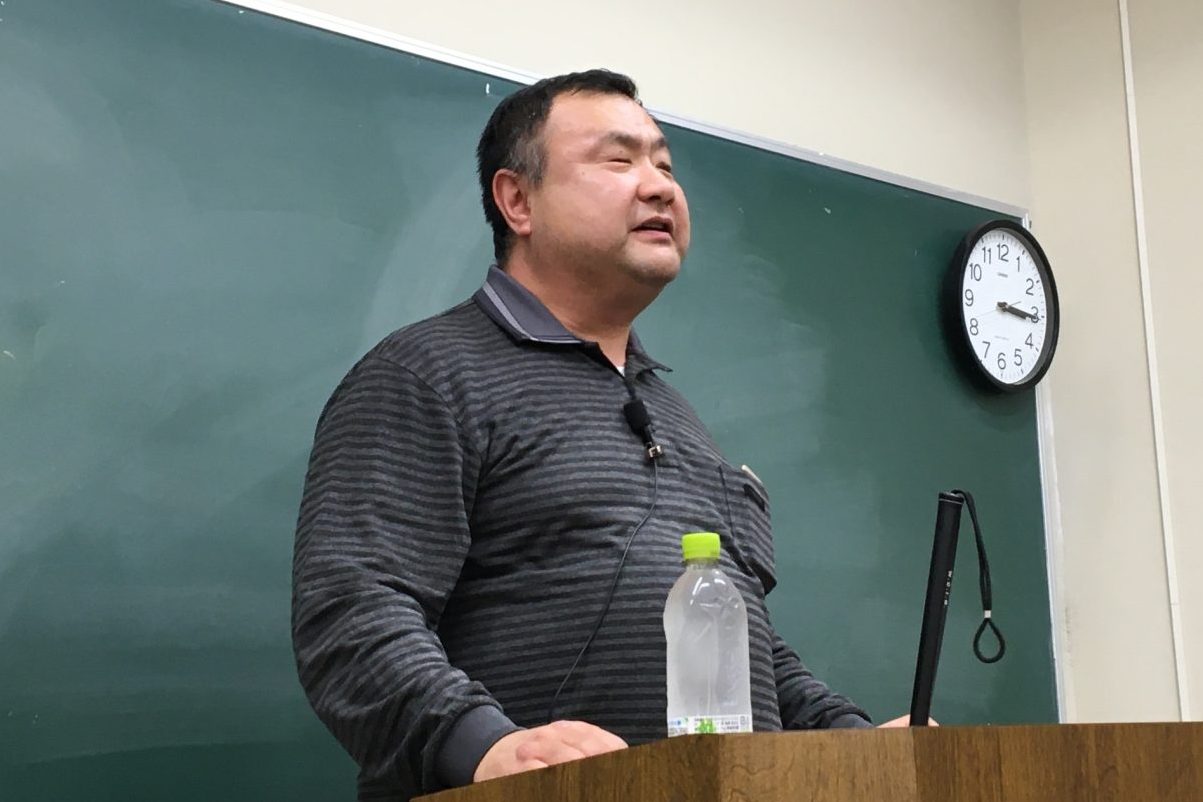
This relative calm creates space for a different kind of politics, one less constrained by partisan loyalties. Hiroki Uchida, a Kashiwa City Council member, embodies this approach. Blind since birth, he entered politics not for visibility but to be heard—and to amplify voices often silenced in the political arena. In a recent conversation, Uchida described his work as a fight for human dignity over party lines.
From Bullying to Activism
Uchida was born in 1971 in Noda, a neighboring city in Chiba. He was blind in his right eye from birth and had only weak vision in his left; today, he has no sight at all. His early education was marred by severe bullying from a teacher. In his fourth year of elementary school, the teacher held a mock funeral for him, placing his photo on the desk and burning incense as if he had died. Uchida stopped attending classes except for music lessons, which he loved.
Middle school brought some friends, but they drifted away as high school entrance exams approached. Uchida contemplated suicide and attempted it. Yet he persisted, entering high school in 1985. There, he met others with visual impairments, as well as people with hearing impairments, psychological conditions, and foreign backgrounds—all potential targets of the same cruelty he had endured.
The 1986 Chernobyl nuclear disaster galvanized him. Together with friends, Uchida began campaigning against nuclear accidents in Japan and for renewable energy. He also joined disabled liberation movements, fighting discrimination against hisabetsu burakumin (descendants of hereditary outcastes), women, people of African descent, and other marginalized groups. He came to see discrimination as a structural problem embedded in society.
After high school, Uchida worked in hospital rehabilitation and volunteered at a night school for students with disabilities and disadvantaged backgrounds. This experience solidified his commitment to eliminating discrimination. “Fighting for one’s rights is fighting for one’s survival,” he said.
A Local Tragedy with National Echoes
Uchida’s concerns are not abstract. In July 2016, Satoshi Uematsu, a former employee of the Tsukui Yamayuri En care home in Sagamihara, Kanagawa Prefecture, murdered 19 disabled residents. The killer said their lives had no value. The massacre underscored the lethal consequences of dehumanization.
Closer to home, Uchida points to the Fukudamura incident of 1923, a grim chapter in Kashiwa’s history. Five days after the Great Kanto Earthquake, baseless rumors spread that Koreans were poisoning wells. In Fukudamura, a village later absorbed into Noda City, militias rounded up 15 traveling medicine salespeople from Kagawa Prefecture, suspecting them of being Korean poisoners. The salespeople were actually hisabetsu burakumin, speaking a dialect unfamiliar to locals. They were killed. The incident, Uchida notes, was a product of layered discrimination—against Koreans, against outcastes, against the poor.
Uchida’s political work in Kashiwa is a direct response to such histories. He focuses on local issues—ensuring public facilities are accessible, advocating for inclusive education, and pushing for policies that protect the vulnerable. His approach is pragmatic, not ideological. “In Kashiwa, you can practice a politics of purpose,” he said, “rather than a high-profile act of national performance.”
Japan’s broader political landscape often centers on national security and economic strategy, such as the debate over civilian industry networks for gray-zone resilience or the Bank of Japan’s monetary experiment threatening the yen. But Uchida’s story is a reminder that dignity and purpose can be found in the local, the everyday. In suburban Japan, one councilman is proving that politics, at its best, is about listening—and acting—for those who have been silenced.