Japanese engineering conglomerate Kawasaki Heavy Industries (KHI) has opened a Physical AI development center in San Jose, California, signaling a strategic push to embed artificial intelligence into real-world industrial and medical applications. The facility, announced on May 21, will collaborate with technology partners including Nvidia, Analog Devices, Microsoft, and Fujitsu to advance solutions in healthcare, mobility, and semiconductor manufacturing.
Speaking at the opening ceremony, KHI CEO Yasuhiko Hashimoto outlined the center's primary focus on healthcare and elder care, citing aging societies and labor shortages as global challenges. "At the Kawasaki Physical AI Center, we will first focus on healthcare and elder care," Hashimoto said. "We will establish a 'hospital one-stop solution' that covers the entire in-hospital experience from arrival, examination, diagnosis, and treatment, to surgery and post-care – through the integration of Physical AI and robotics."
Collaboration with Tech Giants
The center's partnerships span key players in AI and cloud computing. Nvidia will contribute its Jetson platform for AI training, simulation, and robot control. Analog Devices will integrate AI with voice recognition and sensing technologies. Microsoft will provide cloud and AI platform capabilities to ensure reliability and scalability, while Fujitsu will focus on healthcare domain integration of business systems, robotic systems, and AI.
Nvidia CEO Jensen Huang, in a congratulatory video message, predicted "a new generation of intelligent machines" leveraging Nvidia technology. "An Nvidia Jetson would be the computer to run the AI in your robotic systems," Huang stated. "The technology created in this lab will reach across Kawasaki's entire product line-up."
Dr. Jacques Marescaux, a professor of surgery at the University of Strasbourg and founder of the Research Institute against Digestive Cancer (IRCAD), also sent a video message. He noted that "within the next 10 or perhaps 15 years, the majority of procedures will be performed with a robot." Marescaux gained international fame in 2001 for leading the first successful trans-Atlantic telesurgery, removing a gallbladder from a patient in Strasbourg using robot arms controlled from New York.
Kawasaki's Robotics Legacy
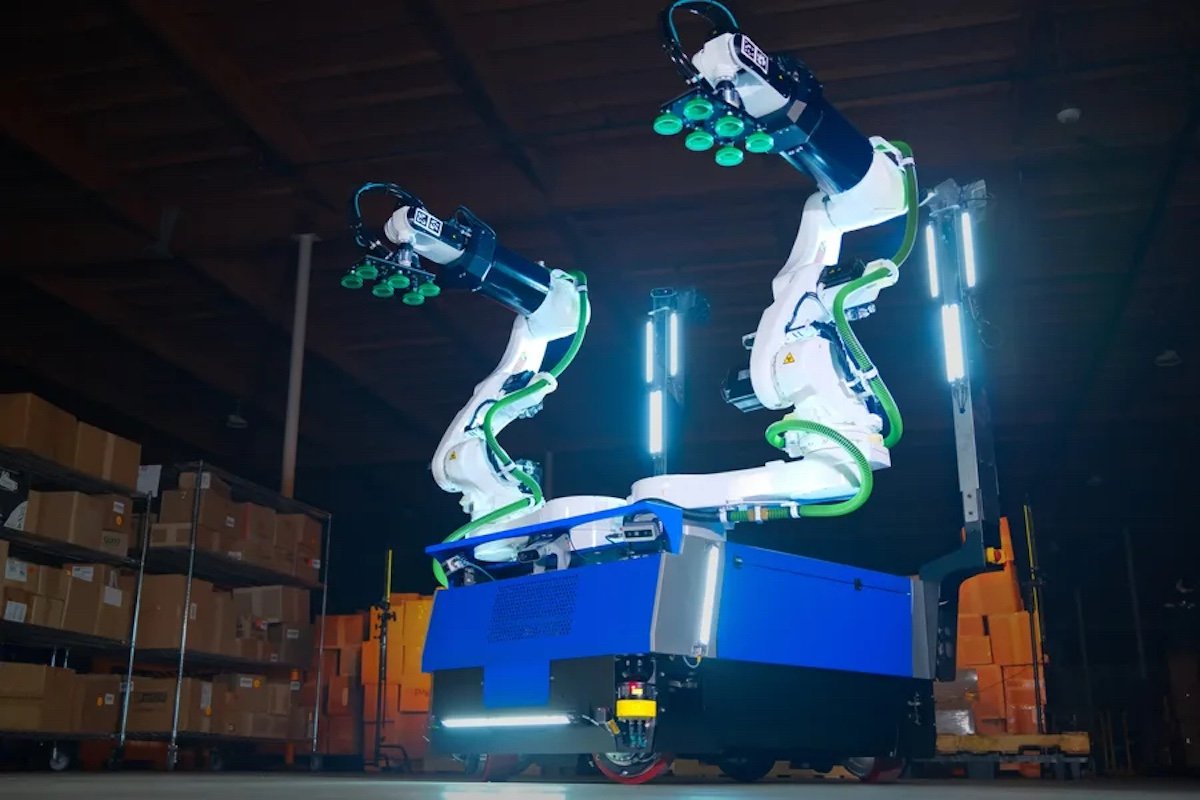
KHI's operations span aerospace, shipbuilding, power generation, plant engineering, industrial machinery, robotics, and motorcycles. Its robotics division, Kawasaki Robotics, produces general-purpose industrial robots, collaborative robots, and specialized systems such as silicon wafer handling robots for semiconductor fabs, the hinotori (Firebird) surgery support robot, and a four-legged mobility robot. The hinotori was developed by Medicaroid, a joint venture between KHI and Sysmex, a Japanese medical diagnostics company.
The Physical AI Center will also coordinate with KHI's research and development centers in Japan and Europe. KHI's first overseas R&D center, the Kawasaki Innovation Centre Europe SAS, began operations at IRCAD in Strasbourg in March 2026, focusing on efficient hospital procedures by combining surgical, service, and delivery robots with AI and remote operating technologies.
Hashimoto emphasized that the goal is not to replace humans but to support human judgment and action. "What matters most is that these solutions take root on site, are used continuously, and contribute to improving the quality of healthcare. This is what we call 'social implementation.' What we aim for is NOT to replace people, but to deliver Physical AI that supports human judgment and action – safely and efficiently."
The center's work underscores the stringent standards required for robotic surgery and hospital management, where hallucinations and factual errors are unacceptable. This commitment to reliability reflects the quality embedded in all KHI robotics, from industrial arms to surgical assistants.
For broader context on regional economic shifts, see UAE's OPEC Exit Opens Door for Asian Currency Shift in Oil Trade. Meanwhile, geopolitical tensions in the Middle East, such as those discussed in Iran Reopens Strait of Hormuz Following Israel-Lebanon Ceasefire, continue to impact global supply chains relevant to Japanese manufacturing.