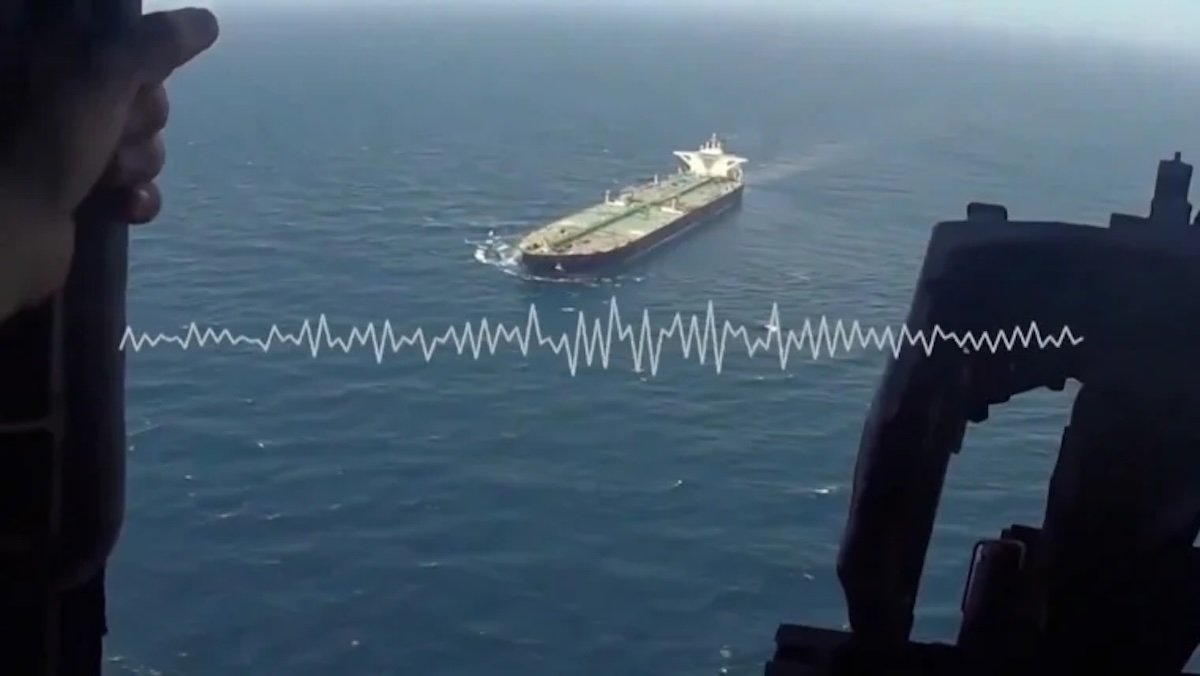
Iran announced on Friday that it has fully reopened the strategic Strait of Hormuz to international shipping, a decision it directly linked to a recently implemented ceasefire agreement between Israel and Lebanon. The move prompted a public acknowledgment from former US President Donald Trump, who nonetheless affirmed that a US naval blockade specifically targeting Iranian ports would continue.
Iranian Foreign Minister Abbas Araghchi stated, "In line with the ceasefire in Lebanon, the passage for all commercial vessels through Strait of Hormuz is declared completely open for the remaining period of ceasefire, on the coordinated route as already announced." The strait is a critical chokepoint for global oil shipments, with a significant portion of Asia's energy imports, including those for China, India, Japan, and South Korea, transiting its waters.
US Response and Regional Ceasefire Context
Former President Trump first thanked Iran on his Truth Social platform for reopening the waterway. Approximately twenty minutes later, he posted a follow-up clarifying the US position: "THE STRAIT OF HORMUZ IS COMPLETELY OPEN AND READY FOR BUSINESS AND FULL PASSAGE, BUT THE NAVAL BLOCKADE WILL REMAIN IN FULL FORCE AND EFFECT AS IT PERTAINS TO IRAN, ONLY, UNTIL SUCH TIME AS OUR TRANSACTION WITH IRAN IS 100% COMPLETE."
This development follows a broader, tentative two-week ceasefire between the US, Iran, and Israel that began on April 7, brokered after heightened threats. Officials from all sides have emphasized this truce does not signify an end to hostilities. The immediate catalyst was a separate 10-day ceasefire between Israel and Lebanon, halting nearly 50 days of Israeli bombardment that caused significant Lebanese casualties and displaced over a million people.
The role of Hezbollah, the Lebanon-based militant group, remains a pivotal uncertainty. Hezbollah, which was not a direct party to the ceasefire negotiations, has conducted retaliatory strikes against Israel throughout the conflict. The Lebanese government possesses limited capacity to restrain Hezbollah should the group decide to resume attacks, posing a direct risk to the truce's stability. Analysis suggests the US-Iran-Israel conflict may settle into a protracted stalemate, with flare-ups like this week's events defining the new status quo.
Ongoing Violence and Asian Implications
Despite the ceasefire announcements, violence persisted. Shortly after Trump's posts, Israeli forces conducted a drone strike in southern Lebanon, killing one person. Israeli officials cited provisions in the ceasefire allowing for "defensive" actions against imminent threats.
The conflict has taken a heavy toll since its escalation in late February, with thousands of Iranian casualties reported from US and Israeli strikes. A particularly deadly incident occurred on February 28, when a US cruise missile struck a girls' school in the Iranian city of Minab, killing 168 people, most of them children.
For Asian nations, the reopening of the Strait of Hormuz alleviates immediate concerns over energy security and shipping lane disruptions. However, the continued US naval blockade on Iran and the fragile nature of the regional ceasefires maintain a high level of risk for the global economy. Major Asian economies are deeply invested in the stability of this corridor. China, in particular, must navigate Iran's assertive control over the Strait of Hormuz while managing its complex relationship with the United States.
The situation underscores how Middle Eastern security dynamics directly impact Indo-Pacific economic and strategic interests. The precarious ceasefire and the selective blockade highlight the fragmented nature of the de-escalation, where one front closes while pressure is maintained elsewhere. Previous Chinese calls for US-Iran talks gain renewed context as Beijing watches Washington's dual approach of tactical de-escalation paired with sustained economic and military pressure.
Trump also indicated a separate US initiative regarding Lebanon, stating, "the USA will, separately, work with Lebanon, and deal with the Hezboolah [sic] situation in an appropriate manner. Israel will not be bombing Lebanon any longer. They are PROHIBITED from doing so by the U.S.A." The effectiveness of this prohibition was immediately tested by the subsequent drone strike.
The interconnected nature of these conflicts—spanning the Gaza Strip, Lebanon, Iran, and the vital maritime routes of the Persian Gulf—creates a volatile landscape. For Japan, South Korea, and India, which rely heavily on hydrocarbon imports from the region, the primary concern is the durability of the shipping lane reopening. The ongoing US blockade on Iran continues to complicate diplomatic efforts and market confidence, ensuring that regional tensions remain a top-tier concern for Asian foreign and energy ministries.



