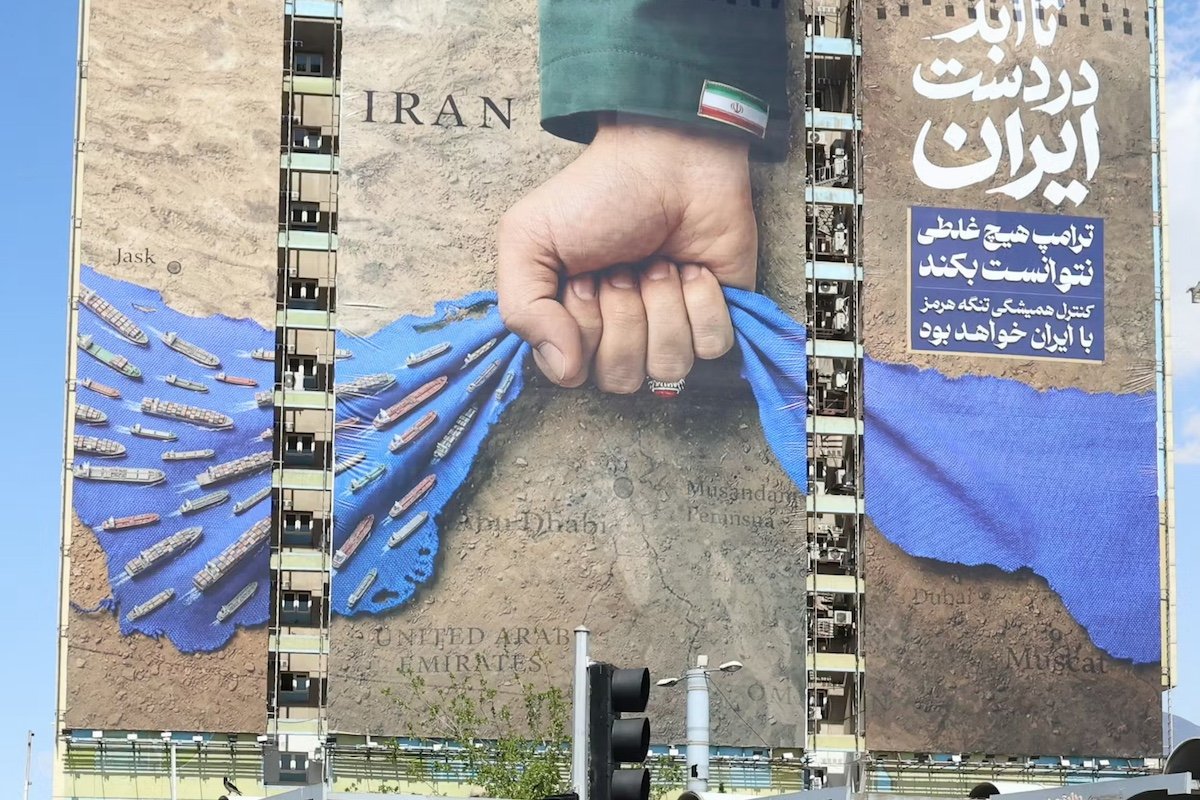
The United States administration asserts its naval blockade of the Strait of Hormuz is showing results, citing several vessels that have altered course. Among them was the Chinese-owned tanker Rich Starry, which reversed direction in the Gulf of Oman this week. Concurrently, Tehran insists it retains ultimate authority over the critical waterway, warning that threats to its ports would endanger all ports in the Persian Gulf and Sea of Oman. Analysts suggest that regardless of the immediate standoff, Iran is positioning itself for long-term strategic advantage in controlling this global energy chokepoint.
Iran's Strategic Leverage
For years, Iran has threatened to close the Strait of Hormuz but refrained from action until its current conflict with the United States and Israel, which it views as an existential struggle. Paradoxically, while Western powers aimed to degrade Iran's military programs, the confrontation has handed Tehran a potent new instrument: de facto control over the strait. This control is now central to Iran's strategic planning, having been included as a demand in recent negotiations with Washington.
Iran's leverage serves multiple purposes. First, it provides a substantial revenue stream. By imposing transit fees—estimated near $1 per barrel—Tehran could generate hundreds of millions monthly from oil and gas shipments. Economists project Persian Gulf states would shoulder most of this cost, potentially paying billions annually.
Second, the strait acts as a security guarantee. By demonstrating the capacity to disrupt a vital energy artery, Iran raises the economic and political costs of any military action against it, creating a form of deterrence. Third, it grants Tehran geopolitical influence, particularly with energy-dependent nations in the Global South. Control allows Iran to bargain, encouraging states to circumvent US sanctions in exchange for reliable transit access.
The US effort to counter this leverage faces significant hurdles. Maintaining a prolonged blockade in international waters is militarily and economically taxing, whereas Iran's control from its coastline is more sustainable. This situation risks becoming a strategic vulnerability for Washington, highlighting the limits of its power in the region.
China's Calculated Response
As the destination for over 80% of Iran's oil exports, Beijing holds considerable economic influence. However, it has not used this to pressure Tehran over the strait. Instead, China has publicly condemned the US blockade. Foreign Ministry spokesperson Geng Shuang recently labeled the American actions "dangerous and irresponsible."
While the Rich Starry turned back, other Chinese vessels have reportedly transited under Iran's new toll system in recent days. This indicates a pragmatic, if temporary, acceptance of Tehran's rules. China is vulnerable, with roughly 40% of its oil imports passing through the strait, but it has prepared contingencies. It has diversified suppliers and is believed to hold strategic petroleum reserves sufficient to cover seven months of imports.
The long-term acceptability of a toll regime to Beijing remains uncertain. Despite its current cautious stance, China has consistently called for a return to "normal passage." The conflict's economic fallout is already being felt, as noted in our analysis of how the Iran conflict exacerbates China's export slowdown and strains regional economies.
Shifting Regional Alignments and China's Role
The war has prompted Gulf Arab states to reassess their security dependencies, realizing that alignment with Washington does not fully guarantee stability. This has accelerated efforts to diversify partnerships, exemplified by high-level visits between Gulf and Chinese officials. Bilateral trade between the Gulf Cooperation Council states and China reached approximately $257 billion in 2024, rivaling their combined trade with major Western economies.
China is expanding its diplomatic footprint, having facilitated the 2023 Saudi-Iran normalization agreement and played an indirect role in recent talks. As explored in China's role emerges as key to reviving Iran nuclear deal, Beijing clearly envisions a larger part for itself in regional affairs. Looking ahead, Iran may seek to establish a regional security framework with Gulf states, potentially with China as a guarantor—a move that would significantly alter the US-led security architecture that has dominated for decades.
This evolving landscape presents a complex challenge for Beijing. It must balance its substantial energy interests and growing regional ties with a desire to avoid direct confrontation with the United States. China's approach to the Strait of Hormuz crisis will be a critical test of its ability to navigate the volatile geopolitics of the Middle East while safeguarding its own economic security. The outcome will resonate across the Indo-Pacific, where US and China compete for influence in emerging technological and strategic domains.