China is deploying a multi-front strategy to counter United States export controls on advanced semiconductor manufacturing equipment, particularly extreme ultraviolet (EUV) lithography machines. These efforts range from developing domestic EUV prototypes to stacking artificial intelligence chips for enhanced performance, while also pursuing patent workarounds that bypass ASML's dominant technology.
Washington, however, suspects that Beijing may have already obtained an EUV machine through illicit channels. US Commerce Secretary Howard Lutnick has held private meetings with ASML's senior executives since April 2026, questioning whether one of the Dutch company's EUV systems ended up in China in violation of export restrictions, as reported by Bloomberg. Several US officials claim to have information indicating that ASML exported equipment associated with EUV systems, including specialized transport gear, though they declined to provide evidence due to sensitivity concerns.
Such a scenario would represent a serious breach of the Wassenaar Arrangement, which prohibits ASML from shipping EUV lithography equipment to Chinese customers. ASML has denied these allegations, with a spokesperson stating that the company has "refuted several unfounded rumors regarding non-compliance with export controls concerning China, which were inaccurate and damaging to our reputation." After the April meeting, ASML circulated a document in Washington titled "No indication of any ASML EUV System in China," asserting that none of its 314 operational EUV machines worldwide, plus 26 decommissioned units, are located in China. The document also noted that ASML can automatically detect "any interruption, abnormal behavior, or loss of connectivity" in its EUV portfolio, and that customers "cannot remove, transport and relocate EUV systems without ASML involvement due to specialized handling procedures."
A Henan-based columnist writing under the pen name Cantonese Music Fountain argues that ASML has no business motive to take such a risk. "China was ASML's largest single market in 2025, accounting for 33% of its total revenue, and about 20% of its projected 2026 revenue is expected to come from sales to China. Only a fool would risk losing the entire Chinese market or having its global export license revoked over one illegal EUV sale," he wrote. He suggests the US allegations could stem from intelligence misjudgment—confusing deep ultraviolet (DUV) equipment or EUV-related parts with a complete EUV system—or tactical pressure, as Washington is unhappy with ASML's broader business activities. Another possibility is policy groundwork: the US Congress is reviewing the MATCH Act, a bipartisan bill introduced in April that would effectively bar ASML from exporting DUV lithography equipment to China. Shaping public opinion before pushing legislation is a familiar playbook.
Domestic EUV Development and Patent Workarounds
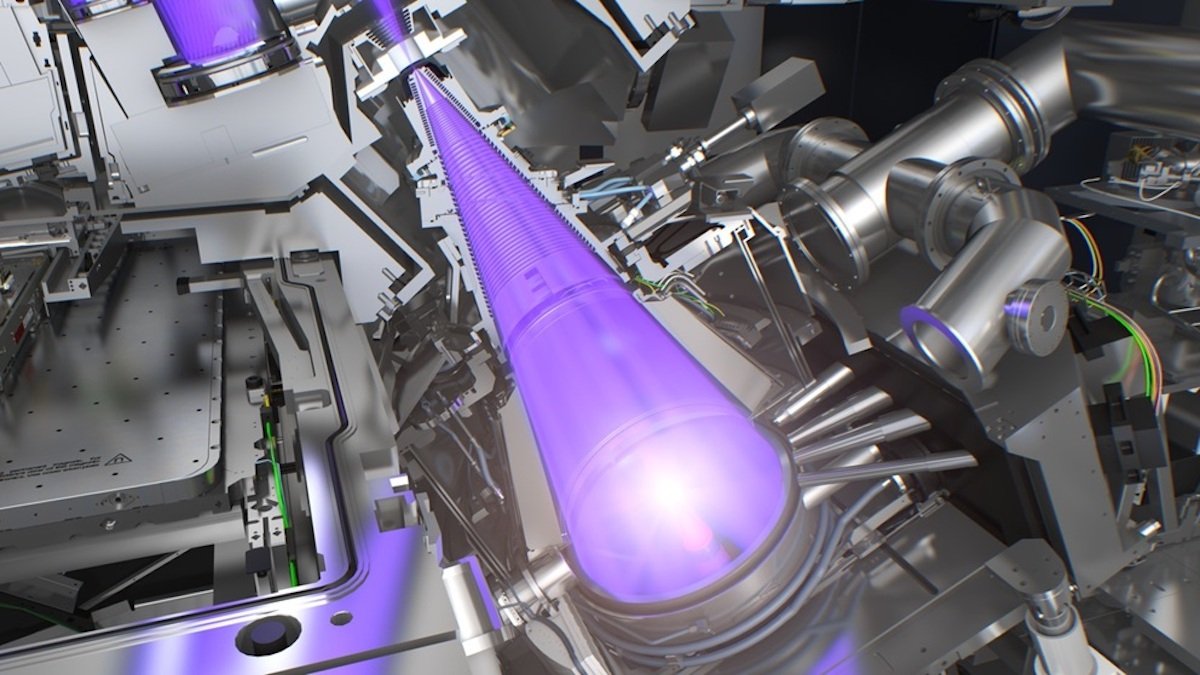
While the US investigates potential violations, China is pressing ahead with its own EUV development. Reuters reported in December that China had built an EUV prototype inside a high-security lab in Shenzhen, part of a nationally coordinated push to overcome a major chokepoint in chipmaking. The prototype, completed in early 2025, is described as operational but not yet producing functional chips. Huawei is coordinating a web of companies and institutes involving thousands of engineers, an effort compared to China's version of the Manhattan Project. The machine occupies much of a factory floor and was built by a team that includes former ASML engineers, with Beijing targeting 2028 for production, though 2030 looks more realistic.
The Global Times, a newspaper aligned with the Chinese Communist Party, published a commentary titled "There is no need for Reuters to be anxious about China's technological progress," arguing that the Reuters report reflected Western unease rather than facts, though it did not dispute that an EUV prototype was being developed in Shenzhen.
Chinese media reports indicate that Lin Nan, a former ASML engineer, is leading a team at the Shanghai Institute of Optics and Fine Mechanics (SIOM) that has built China's first laser-plasma EUV light source platform, which studies EUV radiation generated by a 1-micron laser striking a solid tin target. In a December 2024 paper, Lin and colleagues argued that solid-state lasers could replace carbon dioxide lasers as the next-generation source for traditional laser-produced plasma EUV (LPP-EUV) lithography, citing their compact size and high conversion efficiency.
Qiu Yanfang, a Liaoning-based writer, notes the strategic value of this approach: "Lin Nan's team chose a 1-micron solid-state laser to strike tin targets, and the cleverness of that route is that it sidesteps ASML's rare-gas discharge route, plus more than 2,000 of its patents. This patent workaround is not just a legal maneuver. It is genuine technical innovation." However, she cautions that "in the short term, solid-state EUV sources cannot shake ASML's dominance. The global semiconductor industry has already built its supply chains, patents and engineering experience around ASML's carbon dioxide laser route. Even if China's solid-state technology breaks through in the lab, it will still have to walk a long way before reaching mass production." She emphasizes that the value of Lin's achievements lies not in replacing ASML but in laying groundwork and forging a top research team spanning theory to engineering.
Betting on Chip Stacking
While it remains unclear whether China has set up a secret lab in Shenzhen to test an EUV machine prototype, or whether Lin is connected to that project, Chinese media have recently been promoting the country's plan to produce next-generation graphics processing units (GPUs) using stacking technology. Stacking technology has long been used in memory chips to increase storage capacity, with manufacturers typically layering 100 to more than 200 individual memory cells into a single chip. This approach could allow China to boost AI chip performance without relying on the most advanced lithography, offering a parallel path to circumvent US restrictions.
These developments underscore China's determination to achieve semiconductor self-sufficiency, even as the US tightens export controls. The outcome will have significant implications for global supply chains and the balance of technological power in the Indo-Pacific. For more on related geopolitical dynamics, see our analysis on Power Prevails but Law Still Matters in the South China Sea and China's Economic Crash: The Real Estate Bust That Beijing Couldn't Dodge.