Across the Indo-Pacific, defense budgets are rising, alliances are tightening, and deterrence is back in vogue. Strategic competition has returned as the central theme of international politics. In such an environment, it is tempting to conclude that military power has eclipsed international law. But the tenth anniversary of the 2016 South China Sea Arbitration Award—issued by a tribunal under the United Nations Convention on the Law of the Sea (UNCLOS), with the Permanent Court of Arbitration in The Hague serving as registry—offers a more nuanced lesson: law still shapes how power is exercised, even when it cannot compel immediate compliance.
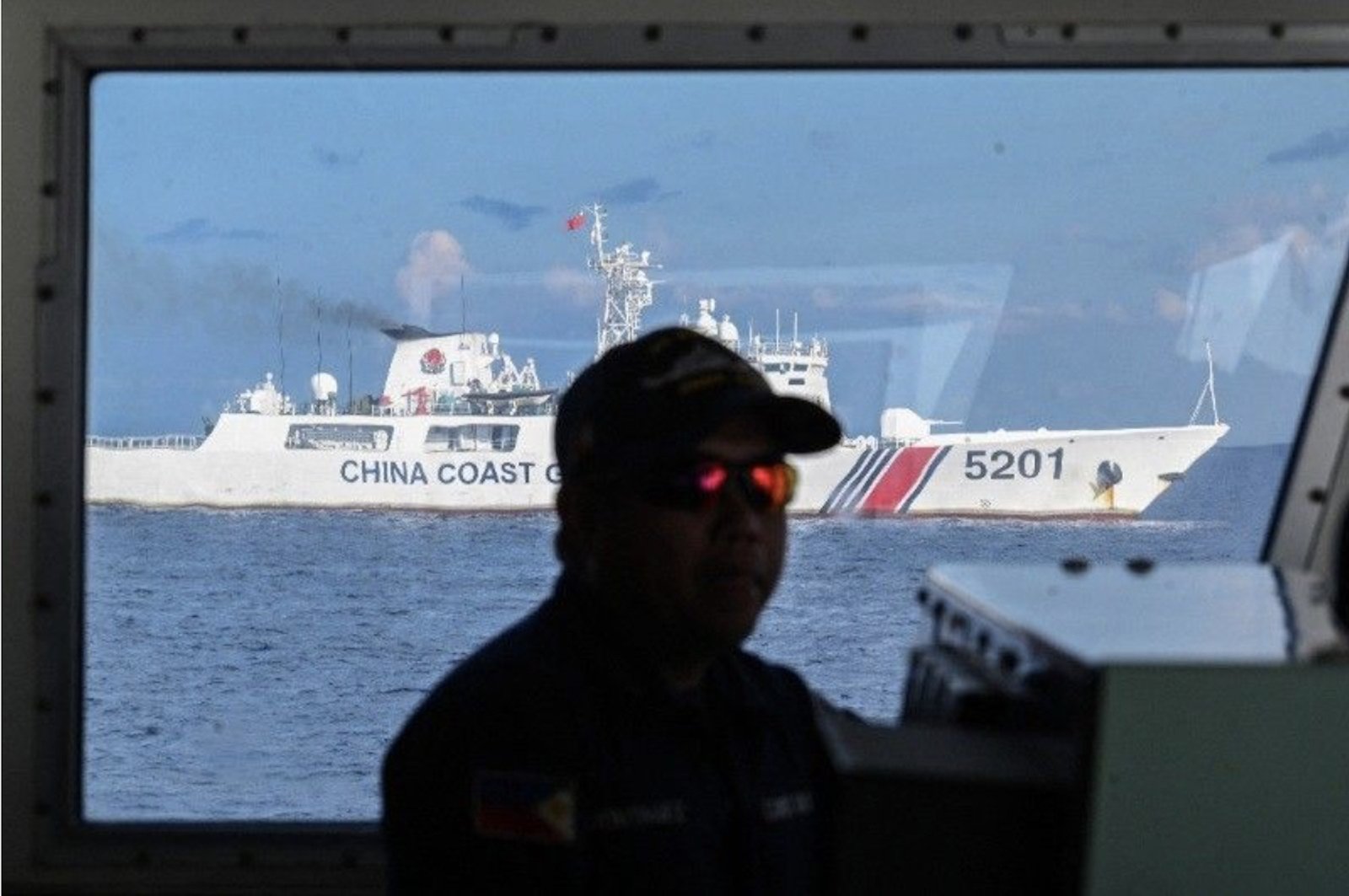
The dispute between the Philippines and China in the South China Sea remains the clearest test of this dynamic. Nearly a decade after the tribunal ruled, the region remains contested, and maritime confrontations persist. China continues to reject the award, while the Philippines invokes it to defend its claims. If judged solely by its ability to force compliance, the ruling—which lacked enforcement mechanisms—has fallen short. Yet that narrow measure misses the point.
Clarifying Rights, Not Ending Conflict
The tribunal was never expected to end strategic rivalry or coercion in the South China Sea. Its purpose was to clarify the law. By that standard, the award fundamentally altered the legal landscape. It rejected any legal basis for China's claim to historic rights within its nine-dash line, which covers nearly the entire South China Sea. It also ruled that none of the high-tide features in the Spratly Islands can sustain human habitation or an independent economic life under UNCLOS Article 121(3), meaning they generate no exclusive economic zone or continental shelf. The tribunal further found that China had violated the Philippines' sovereign rights within its EEZ and caused serious environmental damage.
The award did not resolve sovereignty over features or delimit maritime boundaries. Instead, it answered a narrower but more consequential question: what maritime claims are legally permissible under UNCLOS? That clarification remains its greatest achievement.
Law as a Living Benchmark
The award's significance lies less in whether it changed China's behavior than in how it shaped the conduct of other states. Too often, success is measured only through enforcement. Because China has not complied, some conclude the ruling failed. Yet international law does not function through enforcement alone; its influence is cumulative. Unlike domestic legal systems, it lacks a centralized authority. Its power derives from states' willingness to invoke legal rules, incorporate them into policy, and measure conduct against shared standards of legitimacy.
The familiar choice between law and power is false. International law has never aimed to replace power, but to shape how it is exercised. States build military capabilities because the system remains decentralized; they strengthen alliances because deterrence matters. But they also justify actions with legal arguments because legal legitimacy matters too.
The South China Sea illustrates this with striking clarity. The award narrowed the legal space for expansive claims like China's nine-dash line. It established a benchmark for assessing competing claims and provided the Philippines and other states with a durable legal language for defending their positions. That legal clarity has proven resilient over the past decade.
The Philippines' Consistent Strategy
Perhaps the clearest measure of the award's influence is not China's response, but the Philippines' own. Across three administrations—initiated under President Benigno Aquino III, retained despite President Rodrigo Duterte's engagement with Beijing, and given renewed prominence under President Ferdinand Marcos Jr.—the ruling has evolved from a single administration's policy into a lasting framework for Philippine maritime diplomacy. It has become embedded through diplomatic protests, official statements, and government practice. Rather than a judgment archived in The Hague, it is a practical reference point for explaining rights and responding to developments at sea.
For Manila, the objective is no longer simply to call on Beijing to abide by the ruling, but to preserve the award as a living legal benchmark that shapes Philippine diplomacy and international expectations.
Beyond the Philippines
The award's influence extends beyond the Philippines. Other states in the region—including Vietnam, Malaysia, and Indonesia—have referenced the ruling in their own maritime claims and diplomatic engagements. The award has reinforced the rules-based order that underpins stability in the Indo-Pacific, even as China's assertiveness grows. For a deeper look at how technology is reshaping regional security, see our analysis of China's AI focus on navigating change.
Meanwhile, the broader strategic landscape continues to evolve. As India sharpens its nuclear deterrence amid probes from Pakistan and China, the interplay of law and power remains central. Our report on India's nuclear buildup examines how deterrence operates below the threshold of conflict.
In the end, the South China Sea arbitration award reminds us that international law is not a substitute for power, but a framework for contesting it. Power prevails, but law still matters—because it shapes the terms on which power is exercised.