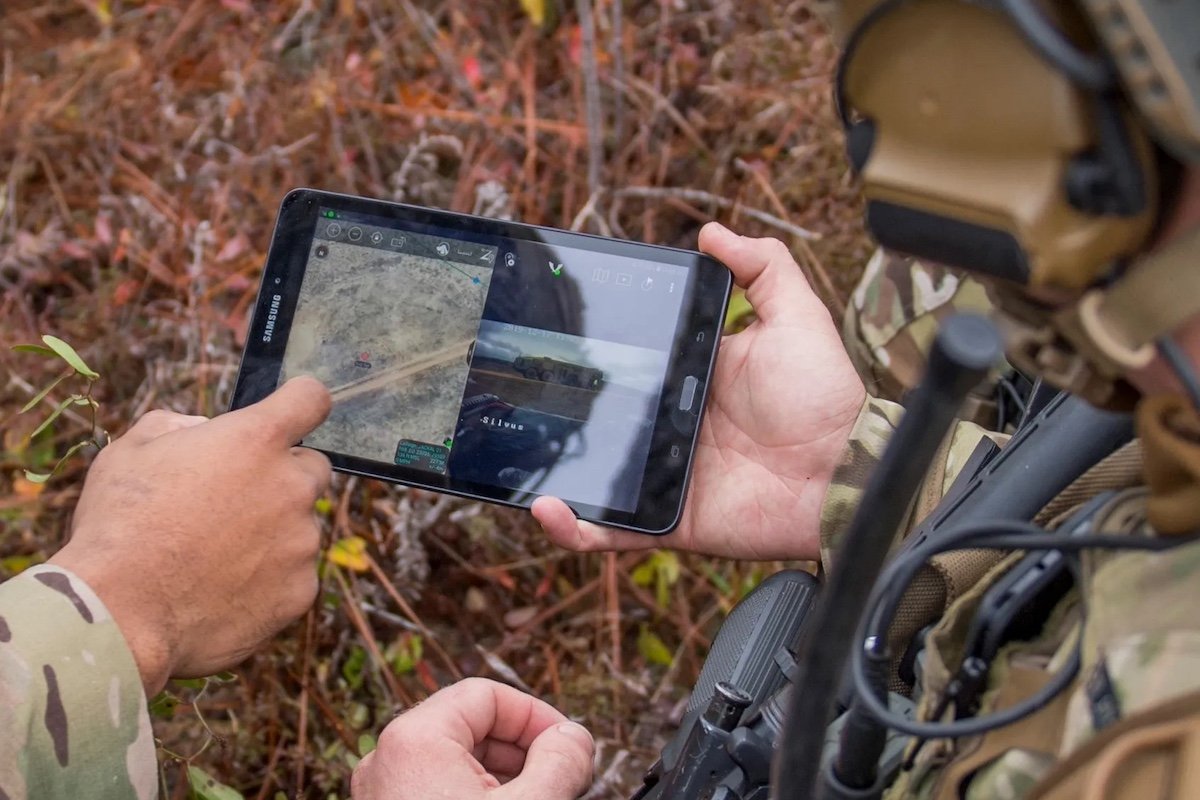
When the Pentagon designated Palantir's Maven Smart System a formal "program of record" in March, it did more than approve software. It institutionalized a platform that analyzes data from satellites, drones, radars, sensors, and intelligence reports to identify potential targets. Maven supported nearly all of the 13,500 US strikes in Iran. The designation secures funding and expands its use across the military.
That decision came while the United States was still investigating the February 28 strike on the Shajareh Tayyebeh girls' school in Minab, Iran. An initial US military inquiry found that US forces were likely responsible, but the Pentagon has not released a final public conclusion. Iranian authorities have reported between 155 and more than 175 deaths, most of them students and teachers.
The core question is why a military system designed to accelerate the path from information to action has no equally clear public requirement to slow down after grave civilian harm. In software engineering, an "error budget" protects users: when a service exceeds an agreed failure level, new releases stop until the problem is understood and fixed. War is not software, but in Washington's AI-assisted operations, civilian deaths do not automatically trigger a temporary suspension of the relevant tools, an independent review of the data, or a public account of the decisions that led to the strike.
Speed Over Scrutiny
Advocates of military AI argue that better data and faster analysis can make attacks more precise. That is possible in principle, but precision is not something software simply possesses. It depends on the quality and age of the data, what a system treats as suspicious, and whether people have enough time to challenge its output. AI does not turn stale or biased information into truth; it can make bad information travel faster.
Human Rights Watch has warned that Israeli digital tools used in Gaza relied on incomplete data and inexact estimates that could raise the risk of civilian harm. The lesson is not that every use of AI is unlawful, but that speed can magnify the consequences of a bad premise before anyone can catch it. The familiar assurance that a "human remains in the loop" does not solve this problem. A person who sees only a final recommendation, cannot inspect the data trail, and has seconds rather than hours to decide is not exercising meaningful independent judgment.
AI can shape lethal force without pulling a trigger. It can determine what appears urgent, which people or places rise to the top of a list, and which facts never appear at all. The Iran campaign makes this concern immediate. Maven and Anthropic's Claude were used to process classified intelligence, suggest coordinates, rank targets, and turn planning that once took weeks into real-time operations. Reuters later reported that Palantir faced the task of removing Anthropic technology from Maven, but the larger point remains: the Pentagon is institutionalizing systems built to compress the time for human deliberation before force is used.
The Minab tragedy represents the human cost of treating speed as a virtue in itself. The school had a public website, posted student photographs, and was visible in satellite imagery. Targeting officials appeared to have used outdated intelligence. The exact role of AI in the strike has not been disclosed, but information apparently did not distinguish the school clearly enough from the adjacent military compound, and the Pentagon has not publicly explained how that failure traveled through the targeting process. That is an accountability problem, not just a technical one.
Congress should establish a civilian stop rule for AI-assisted targeting. Credible evidence of grave civilian harm should trigger a temporary suspension of the relevant system in comparable missions, an independent review of the data and approval process, and a public explanation of the system's role. This would not treat every civilian casualty as proof of a crime or ban every military use of AI. It would mean families do not have to wait through months of secrecy to learn whether a database, a contractor, or a command decision helped turn a civilian site into a target.
Congress has begun to consider broader guardrails. The House Armed Services Committee's FY2027 defense bill would direct the Pentagon to extend its AI policy to systems that support or materially influence operational planning, target development, weaponeering, and engagement recommendations. That is a start, but it is not a civilian stop rule. It does not automatically pause a system after a devastating incident or guarantee a public answer.
Such a rule would reinforce the law of war. Customary international humanitarian law requires militaries to take all feasible precautions to verify targets and reduce foreseeable civilian harm. It also requires them to cancel or suspend attacks when it becomes clear that a target is not military or an attack would be unlawful. The Red Cross has recommended after-action reviews and re-testing or suspending AI systems when reliability, safety, or legal compliance concerns emerge. Recent scholarship points in the same direction. Renato Wolf emphasizes precaution throughout AI-assisted target verification, while Jessica Dorsey warns that over-reliance on computational systems can weaken the human judgment needed to protect civilians.
For a broader perspective on AI ethics, see Pope Leo XIV's Encyclical on AI and Human Dignity: A Vision for Asia's Digital Future. Meanwhile, the Pentagon's shift in focus is explored in Why Dropping 'Indo-Pacific' Sharpens the Pentagon's China Focus.
Palantir can say it supplies the platform. The Pentagon can say software only supports decisions. An operator can say the data arrived already ranked. But people grieving outside a destroyed school are left with no clear answer about who is accountable. Until Washington establishes a civilian stop rule, the burden of speed will continue to fall on those least able to bear it.