For years, policymakers in Tokyo, Washington, and Canberra have warned about China's stranglehold on rare earths—from mining and refining to magnet production. But a critical piece of the puzzle has often been overlooked: the specialized equipment used to make those magnets. Now, a Japanese manufacturer is taking a concrete step to reshape the supply chain.
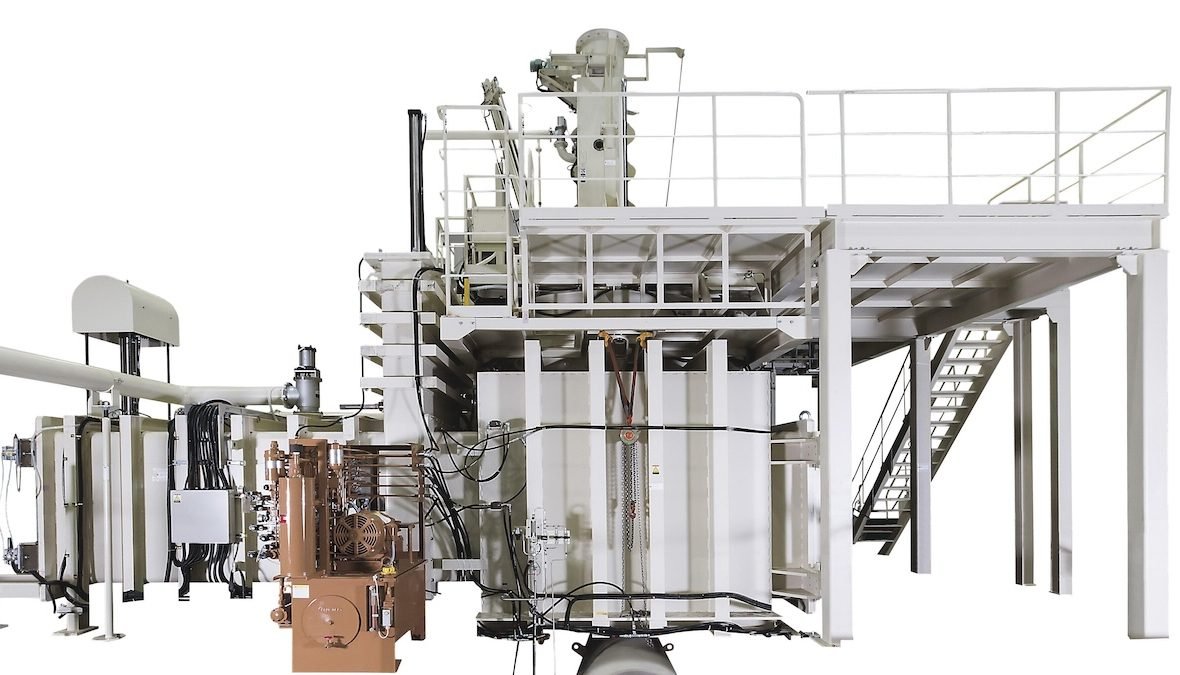
ULVAC, Inc., headquartered in Chigasaki, Kanagawa Prefecture, announced on May 7 that it will begin producing continuous vacuum melting furnaces for rare earth magnets at a new facility in Japan. The company expects orders for these furnaces to roughly triple year on year, driven primarily by magnet manufacturers in Europe and North America. The new factory, located west of Tokyo, is slated to start operations in September.
A Dual-Site Strategy, Not a Break with China
ULVAC currently commands about 70% of the global market for vacuum melting furnaces used in rare earth magnet production. Until now, all of these furnaces have been made by a subsidiary in Shenyang, China, with most sold to Chinese customers. The new Japanese facility will initially account for about 15% of total output by 2030, though the company says that share could rise if demand from non-Chinese clients continues to grow.
“The idea is to meet the requirements of non-Chinese customers, not to break ties with China,” a company spokesperson indicated. ULVAC has operated in China since 1983, with nearly a dozen joint ventures and subsidiaries across the country. Its current sales breakdown is roughly Japan 30%, China 35%, South Korea 13%, Taiwan 12%, and Europe and other regions 10%.
The melting furnace is the linchpin of rare earth magnet manufacturing. It melts and casts the rare earth alloy, creating a microstructure that determines the magnet's final performance. ULVAC also produces equipment for subsequent stages, including hydrogen decrepitation, sintering, and aging.
Strategic Implications for Defense and Industry
Rare earth magnets are essential components in fighter jets, missiles, drones, electric vehicles, wind turbines, and medical devices. A 2004 presentation by James B. Hedrick of the US Geological Survey detailed their use in Tomahawk missiles, F-35 radar systems, Virginia-class submarines, and Predator drones. Yet, despite decades of warnings, China now controls about 70% of global rare earth extraction and over 90% of processing and magnet production.
ULVAC's move is part of a broader trend. Japan, Australia, the United States, and European nations have been scrambling to reduce reliance on Chinese supply chains for critical minerals. However, the equipment side of the equation has received less attention. ULVAC's decision to add a Japanese production site offers a tangible, if modest, diversification option for magnet makers outside China.
The company itself is not a defense contractor, but its products are used in dual-use applications. This places ULVAC within Japan's civilian-military integration value chain, a topic of growing relevance as Tokyo reconsiders its defense posture. For more on Japan's strategic constraints, see our analysis on Japan's Rearming Ambition Hits Hard Limits.
ULVAC's annual sales stand at roughly ¥260 billion ($1.64 billion). Beyond rare earth magnets, the company supplies equipment for semiconductors, OLED displays, EV batteries, and industrial machinery. Its vacuum technology, developed since 1952, underpins production for advanced logic chips, high-bandwidth memory, and power devices.
The new factory in Chigasaki will not immediately shift the global balance. But it signals that at least one key equipment maker is willing to invest in alternative production bases. Whether that will be enough to ease the strategic panic over critical minerals remains an open question.