Tokyo is mobilizing its corporate giants to challenge American and Chinese supremacy in artificial intelligence. The Japanese government has announced funding for Noetra, a consortium bringing together SoftBank Corp., Sony, NEC, and Honda, to develop a national AI foundation model in partnership with the National Institute of Advanced Industrial Science and Technology (AIST).
The initiative underscores growing concern in Tokyo that Japan’s industrial competitiveness and national security could be compromised as AI advances rapidly in the United States and China. Hironobu Tanba, president of Noetra and a senior executive at SoftBank Corp., emphasized the strategic imperative: “Being a sovereign AI becomes even more important when AI plays a core role in business.”
Tanba warned of the risks of relying on foreign large language models (LLMs). “Dependence on overseas LLMs carries not only the concern of a company’s confidential information being unintentionally transferred abroad, but also serious risks related to business continuity itself. For example, if an AI is controlling a manufacturer’s production line, and its use is suddenly restricted due to changes in foreign laws or international affairs, the factory’s lines could be shut down.”
Physical AI: Japan’s Niche
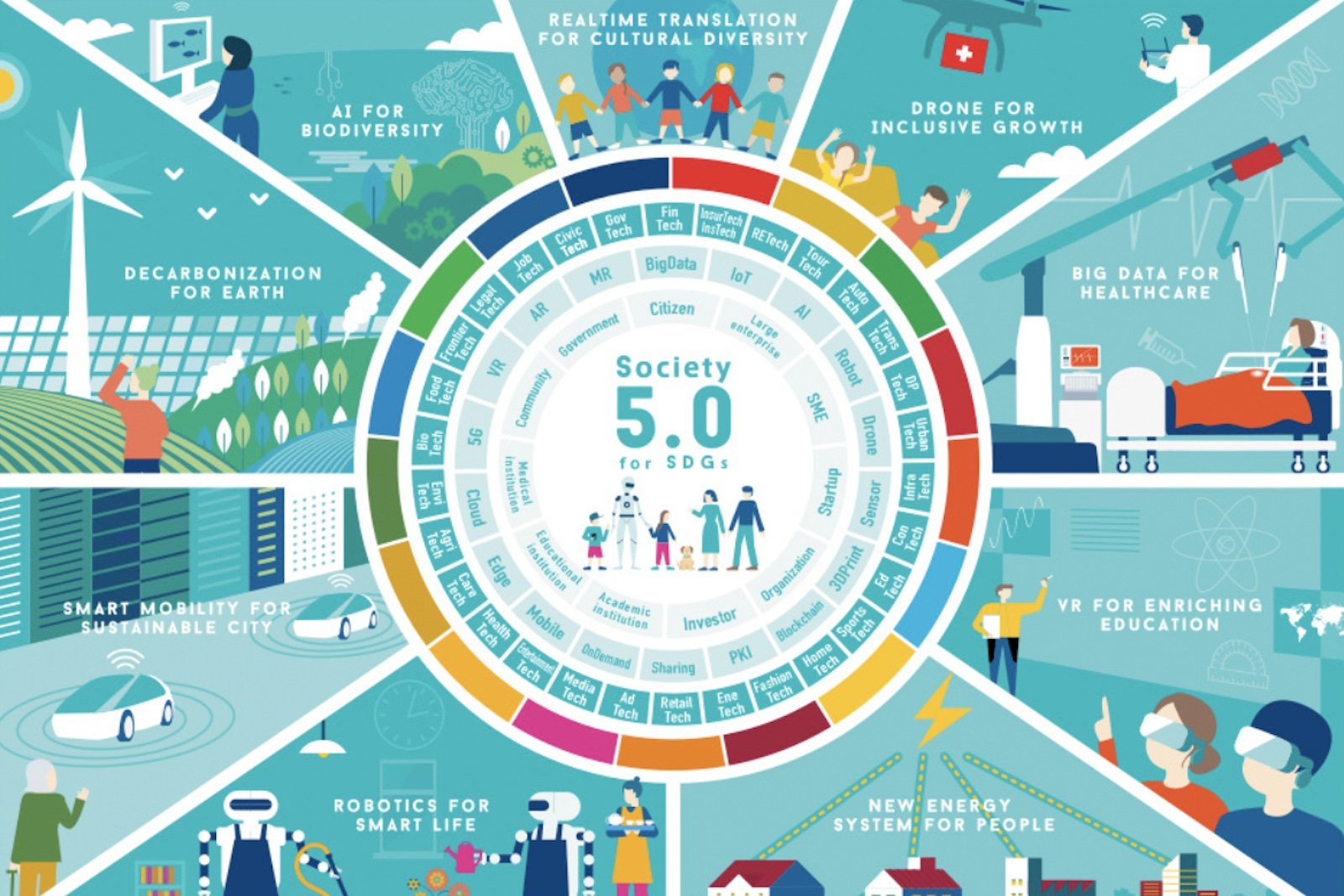
Noetra does not aim to compete directly with OpenAI or other developers of general-purpose AI. Instead, Minister of Economy, Trade and Industry Ryosei Akazawa outlined a focused strategy: “Japan’s path to success lies in leveraging data accumulated in areas such as health care for the elderly, disaster response, manufacturing sites and the decommissioning of the Fukushima No. 1 nuclear power plant. … By building and expanding data infrastructure for physical AI and robotics — fields in which Japan can capitalize on its strengths — we aim to take the lead globally.”
On June 30, Noetra and AIST announced that their proposal for “Research and Development of Physical AI Foundation Technologies for Real-World Native Applications” had been selected under a program run by the New Energy and Industrial Technology Development Organization (NEDO). The consortium will receive 387.3 billion yen (US$2.4 billion) in subsidies this fiscal year and about 1 trillion yen ($6.1 billion) over five years.
Beyond its four founding members, Noetra is seeking participation from around 40 companies across sectors including autos, electronics, logistics, telecom, IT, and finance. The goal is to create a cross-industry framework that extends from research and development to deployment in Japan and overseas. The foundation model will be multimodal, integrating data, images, video, audio, and physical properties for tasks such as recognition and reasoning. A key challenge will be integrating critical industrial data without compromising trade secrets.
The push comes as Chinese companies move up the value chain in multiple industries, making it imperative for Japanese competitors to advance in physical AI. Even Noetra’s leaders acknowledge they cannot go it alone, and the consortium is designed to pool resources and expertise.
Yet this is not the only game in town. Two other Japanese AI developers, Sakana AI and Preferred Networks, have recently made headlines. On June 22, Sakana AI released its Fugu LLM service, a “multi-agent orchestrator” that combines and coordinates other LLMs to deliver optimal results without single-vendor dependency. Sakana AI claims Fugu has outperformed Anthropic’s Fable 5, Google’s Gemini 3.1 Pro, and OpenAI’s GPT 5.5 in specific applications like planning and coding, and has beaten Anthropic’s Mythos Preview on graduate-level science questions. While Fugu is expensive—up to five times more than Claude Opus 4.8—and slower, its adaptive specialization and cross-checking reportedly reduce hallucinations and errors. Co-founded in July 2023 by former Google AI researchers, Sakana AI has backing from Nvidia, Khosla Ventures, NEC, Fujitsu, and ITOCHU.
Preferred Networks (PFN), established in 2014 by University of Tokyo computer scientists, has formed an alliance with Mitsubishi Heavy Industries (MHI), Japan’s largest defense contractor, to develop AI for national security and social infrastructure. PFN is a vertically integrated developer of AI semiconductors, computing infrastructure, and generative AI, including its PLaMo LLM trained on Japanese data. Its extensive domain knowledge from projects in manufacturing, energy, life sciences, and logistics positions it as a key player in Japan’s AI ecosystem.
Japan’s sovereign AI push also intersects with broader geopolitical dynamics. As China blacklists 40 Japanese firms, accusing Tokyo of militarization, the need for independent AI capabilities becomes more acute. Similarly, Japan’s frigate sales reflect a strategic bid to reshape Indo-Pacific security, and AI is increasingly central to defense and industrial autonomy. The success of Noetra and its peers will depend on whether Japan can translate its industrial strengths into a viable alternative to the dominant US and Chinese AI ecosystems.