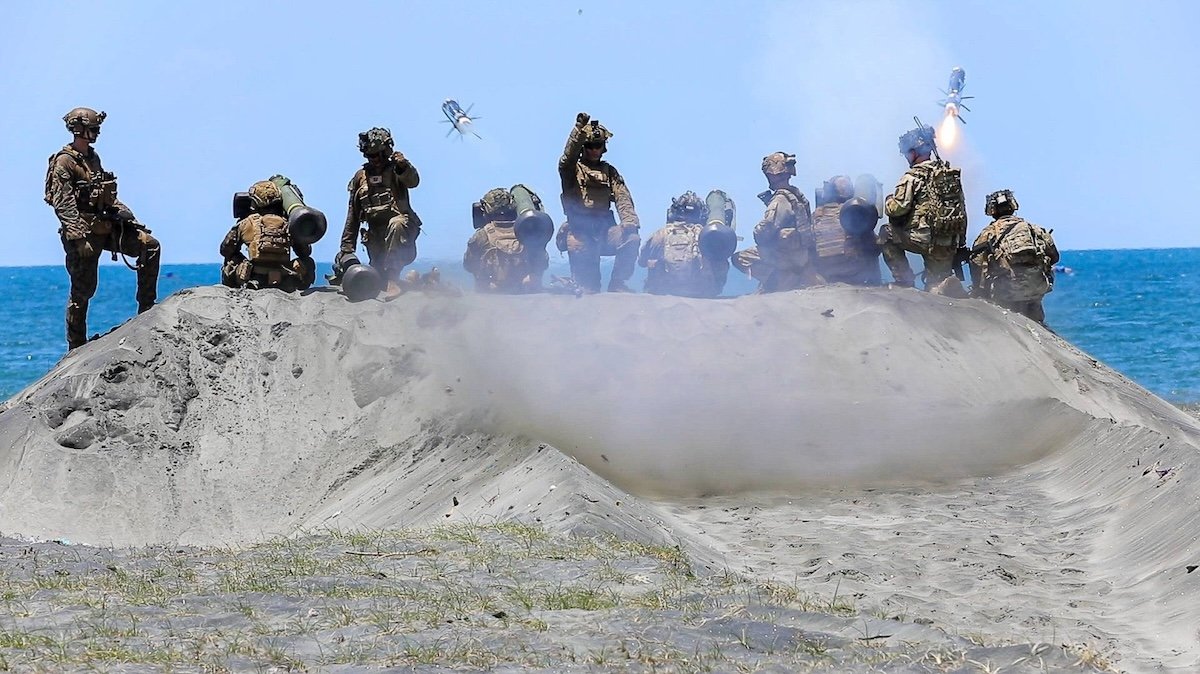
Japan's participation in this year's US-Philippines Balikatan military exercise represents a significant departure from its post-World War II security posture. For the first time, the Japan Self-Defense Force (JSDF) is deploying a substantial combat-ready force to train explicitly for warfare, rather than under the guise of humanitarian or disaster relief missions.
A Substantial Combat Deployment
The JSDF is committing approximately 1,400 personnel to the drills, forming what amounts to a full amphibious task group. This contingent includes two amphibious ships, a destroyer, ground troops with their equipment, and aircraft from the Air Self-Defense Force. The scale and composition mirror that of a US Marine Corps expeditionary unit, signaling Japan's serious intent.
Critically, the training agenda is explicitly combat-oriented. The Japanese Ministry of Defense has outlined participation in amphibious operations, maritime strike, counter-landing live-fire exercises, and integrated air and missile defense drills. A key event will involve the live firing of a Type 88 surface-to-ship missile during a sinking exercise against a decommissioned vessel.
This marks a notable shift for the Air Self-Defense Force, which has historically been reluctant in joint exercises with other Japanese services, preferring high-altitude interception training. Its involvement in this integrated, multi-domain exercise underscores a new level of operational cohesion.
Training in the Theater of Concern
The geographical location of these exercises is as significant as their nature. The drills are taking place in the Philippine archipelago, a region central to potential flashpoints such as the Taiwan Strait or Japan's southern island chain, the Nansei Shoto (Ryukyus). China has made expansive maritime claims in these areas. By training here, Japan is moving beyond symbolic exercises in distant locations like Australia or the United States and is instead preparing its forces in the actual environment where they might be called to operate.
The operational benefits are clear: improving interoperability between Japan's ground, maritime, and air forces, as well as with key allies like the United States and the Philippines. However, the psychological and political dimensions are equally transformative. This public demonstration builds confidence within the JSDF and begins to reshape domestic and international perceptions of Japan as a nation willing to back its formidable economic and cultural influence with credible military capability.
Perceptions matter. The sight of Japanese forces conducting advanced combat training alongside former wartime adversaries in the Philippines—where Imperial Japanese forces committed widespread atrocities—with minimal public backlash in either country is telling. It suggests a regional acceptance of Japan's evolving security role. Singapore's Prime Minister has recently noted that Southeast Asian nations welcome Japan playing a more active part in regional security.
This evolution did not happen overnight. As analysis of other protracted conflicts shows, security postures adapt to enduring threats. The JSDF of today is unrecognizable from the force of fifteen years ago, having steadily climbed a ladder of capability and legal authority that once seemed unreachable.
Limitations and Future Challenges
Despite this progress, challenges remain. Analysts consistently note that the JSDF is under-strength for its envisioned missions, requiring further expansion. More fundamentally, Japan's strategy for regional deterrence, particularly concerning Taiwan, appears to rely heavily on bolstering the Philippines. Tokyo has provided Manila with coastal radars, patrol vessels, and retired coast guard cutters, and is discussing the transfer of former Maritime Self-Defense Force destroyers. It has also invested in dual-use infrastructure.
While this support is important, it raises a critical question: is strengthening a partner sufficient, or will Japan need to take a more direct role in Taiwan's defense? The current JSDF possesses the capability for such a role, but the political decision to "bite the bullet" remains pending. As the United States reshapes its own carrier aviation future for potential conflict with China, it may increasingly look to its allies for concrete contributions.
Japan's economic tools remain vital, as seen in its push for technological sovereignty in areas like advanced AI processors. However, the Balikatan deployment demonstrates that Tokyo is now seriously integrating hard power into its strategic toolkit. The ghosts of World War II, while not forgotten, are being outpaced by the pressing strategic realities of the 21st-century Indo-Pacific.