DreamWorks' latest animated feature, Forgotten Island, released globally in September, is ostensibly a coming-of-age adventure about friendship. But beneath its vibrant surface lies a poignant meditation on separation, a theme that resonates deeply with the Philippines and its vast diaspora. For the first time, Filipino culture takes center stage in a major Hollywood animation, a milestone that has been met with both joy and reflection.
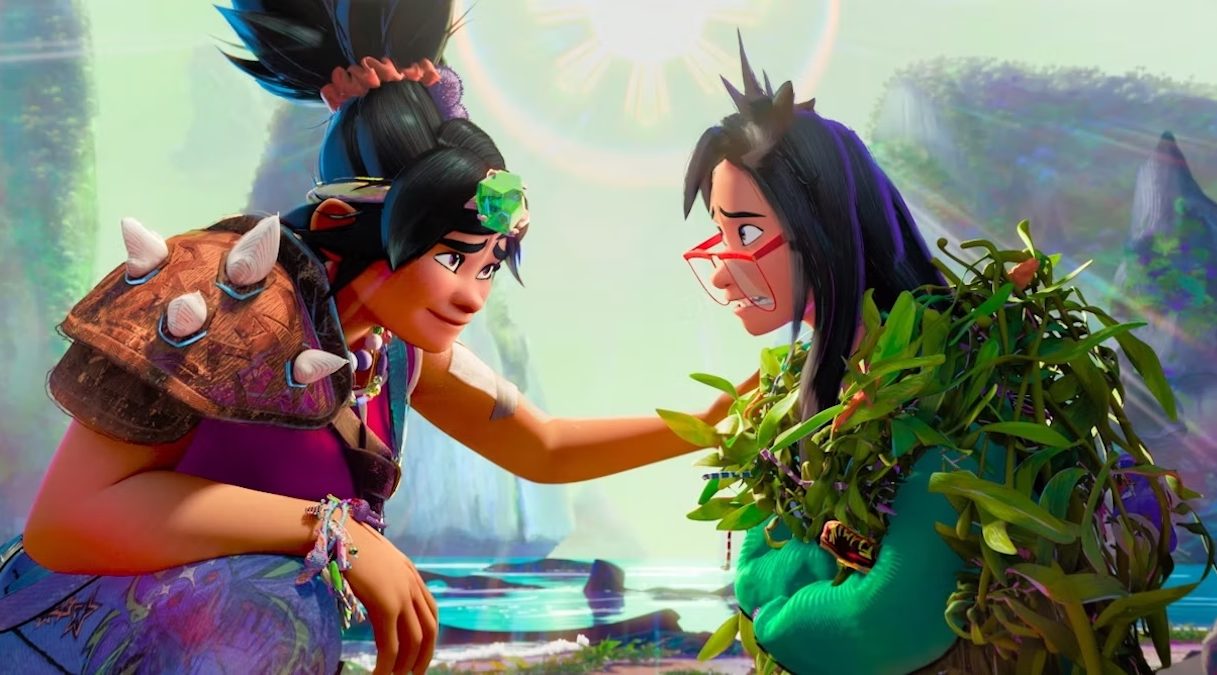
Co-directed by Filipino-American Januel Mercado and Joel Crawford, the film follows best friends Raissa (voiced by Liza Soberano) and Jo (voiced by H.E.R.), who grow up together in the Philippines. After high school, their paths diverge: Raissa, a bright and studious student, has been accepted into a prestigious university in the United States and will migrate, while Jo, who appears carefree but is secretly devastated, will remain behind.
Before they can say goodbye, the pair fall through a magical portal onto the fantastical island of Nakalimutan. There, they must evade mythical creatures drawn from Filipino folklore, including a terrifying manananggal (voiced by Lea Salonga), a shape-shifting ghoul that preys on sleeping humans. To escape, they must bargain with an even more formidable foe: a “memory demon” (voiced by Jenny Slate) that demands their most precious memories as the price for passage home.
As a Filipino-Australian and a mother, I felt both joy and pangs of sadness watching the story unfold. Seeing Filipino culture rendered on such a scale was moving, especially through the eyes of my seven-year-old daughter, who delighted in the film’s references to jeepney vehicles, karaoke, Tagalog phrases, Filipino music, and mythology. The cast also celebrates performers with Filipino background, including H.E.R., Soberano, Salonga, Dolly de Leon, and Jo Koy.
A story for a scattered people
What do we carry with us when we leave home, and what is at risk of being lost? These are the questions that animate Forgotten Island. It also speaks to the experience of migration that has become so deeply embedded in Philippine society. In search of work and a better life, close to 11 million Filipinos live outside the Philippines, making the Filipino diaspora among the top ten largest in the world, spread across more than 100 countries.
Filipinos have long migrated to North America as permanent settlers, reflecting the Philippines’ colonial ties to the US. But since the 1970s, migration destinations have expanded to the United Kingdom, Europe, and Australia. In Australia, Filipinos are the fifth-largest migrant group and third-largest Asian community after those born in India and China. Large numbers are also temporary migrant workers in the Persian Gulf states and across Asia.
Among the most prominent migrants are overseas Filipino workers (OFWs), who number around 2.5 million globally and continue to increase each year. Remittances from these migrants contribute tens of billions of dollars annually to the Philippine economy, amounting to around 8.5% of the country’s GDP in 2025. Raissa’s departure for the US reflects a deeply familiar trajectory for many Filipinos, for whom migration has become both an aspiration and a necessity. For a large number of Filipino youth, the question is not whether they will migrate, but where.
The toll of migration
The fear of forgetting that drives Forgotten Island echoes the social and emotional costs of migration. Many Filipino children grow up with one or both parents working and living overseas, and families sustain their relationships across borders through phone calls, video chats, and periodic reunions. In the film, Jo is a daughter of a migrant father working overseas, left behind for her lola (grandmother) to raise.
For some Filipino families, migration has fractured relationships. Children come to know their mothers and fathers primarily through the money they send home. While financial support may have become a proxy for care, it has not been able to replace the physical affection and intimacy lost through separation. Forgotten Island captures this tension with unusual sensitivity. Beneath its humor and frenetic adventure, it deals with the fragility of human connection.
As the film’s lead song, BRB, puts it: “If you’ve lost all the memories and can’t find your way / I might be gone tomorrow but I’ll be right back, it’s okay / I’ll never forget you / I’ll never forget you.” It’s a promise familiar to many Filipino families—even when return and reunion are uncertain.
Growing up in Australia in the 1990s, I never saw Filipino stories reflected on screen like this. I’m glad my daughter is seeing it in her time. Whatever its commercial fate, Forgotten Island has achieved something significant. In a story about remembering, loss, and what survives across distance, the film becomes part of the collective memory of a diaspora connected across generations and continents. For those interested in the broader dynamics of Asian diasporas, Vietnam's diaspora in Australia and New Zealand offers a parallel, while China's new law targeting diaspora critics highlights the political dimensions of migration in the region.