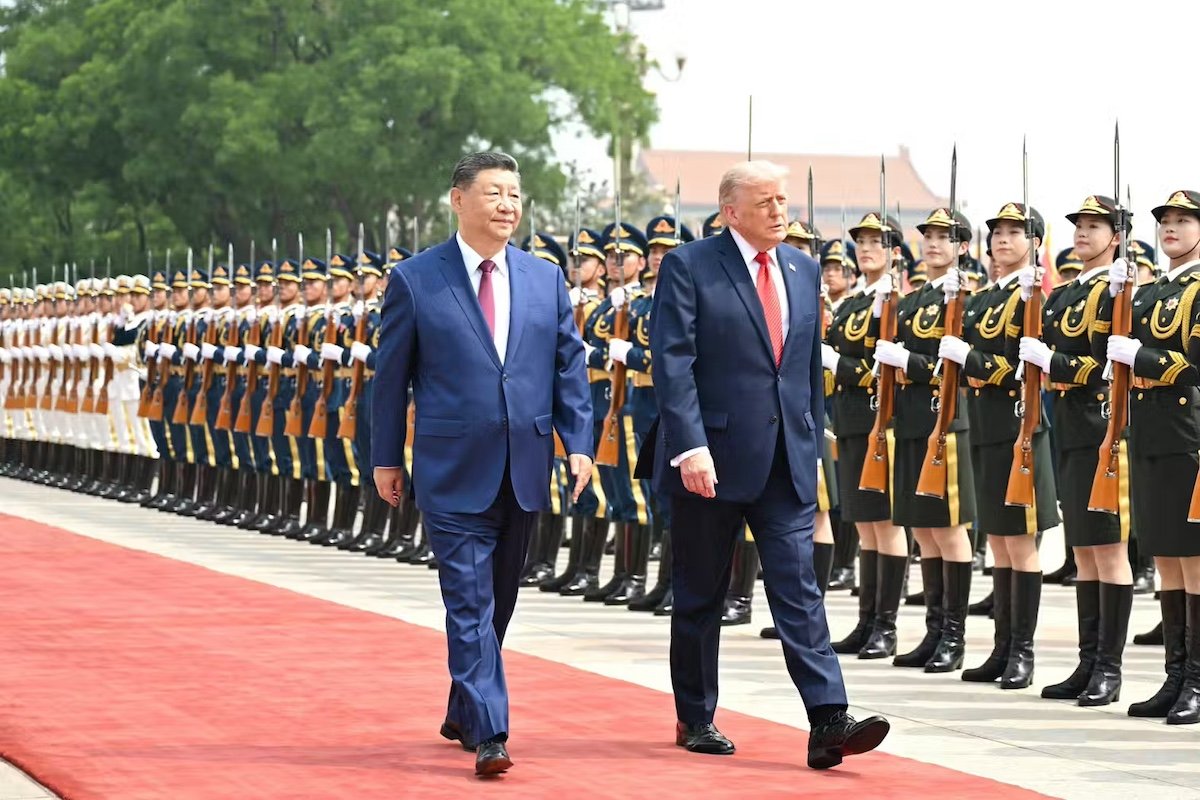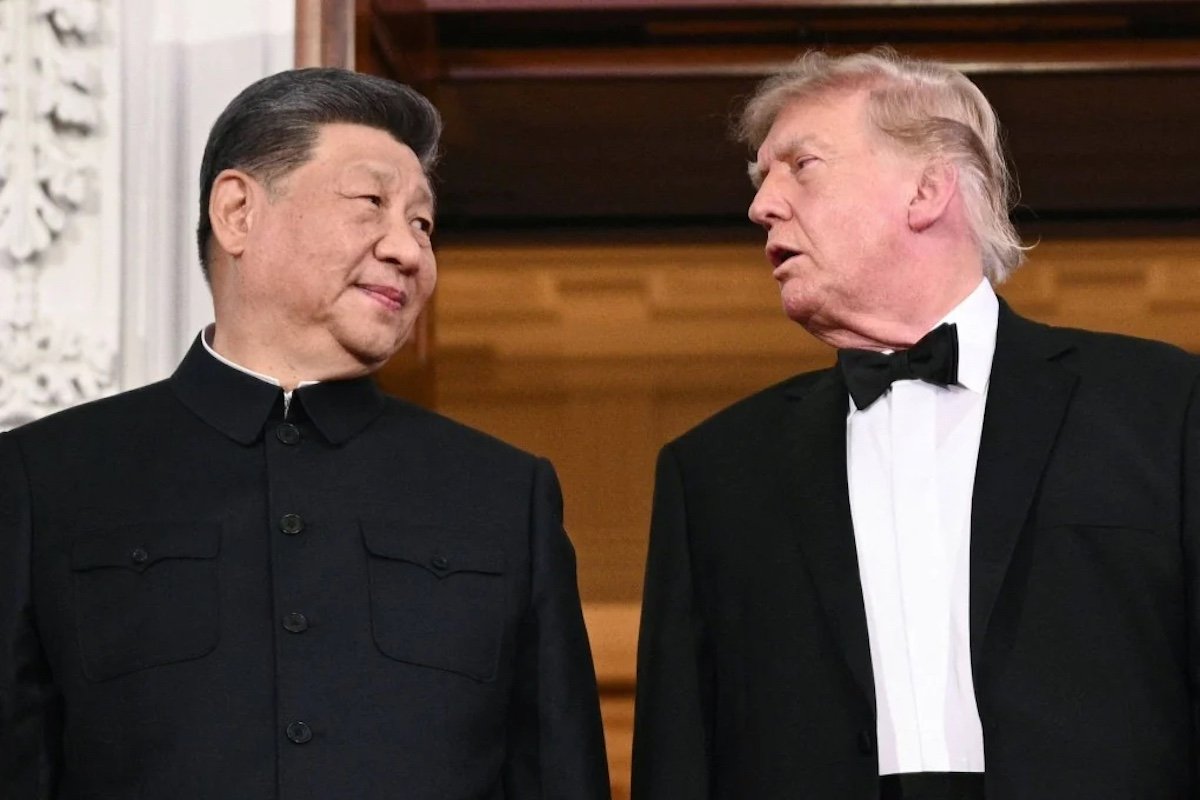
Donald Trump lands in Shenzhen on Thursday (November 19) for a three-way summit with Xi Jinping and Vladimir Putin, carrying the bruises of a midterm defeat and the shadow of a Chinese espionage scandal that has rattled Silicon Valley. The meeting evokes the great-power summitry of the 20th century, and allies from Kyiv to Tokyo are nervously scanning the agenda for signs they might be traded away.
The timing could hardly be worse for the US president. Days before his departure, Jensen Huang resigned as chief executive of Nvidia after admitting to an affair with a woman suspected of being a Chinese spy. The fallout has reignited scrutiny of Trump's decision to allow Nvidia to sell its most advanced AI chips to China, and of Commerce Secretary Howard Lutnick's handling of export controls. Critics accuse Lutnick of dragging his feet on restrictions in ways that benefited businesses tied to his family's firm, Cantor Fitzgerald. Treasury Secretary Scott Bessent is already keeping his distance, and Democrats and Republican China hawks are demanding answers—and at least one political scalp.
Trump's central objective in Shenzhen is to keep the US-China trade deal alive, starting with an extension of the tariff ceasefire that expires on January 10. That is now more difficult than it sounds. Since the April 2025 "Liberation Day" tariffs, Xi has mastered the art of making Trump wait, often settling for little more than a vague promise to talk later. Delay suits Beijing and hurts Trump. US inflation is creeping up, growth is underwhelming, and voters increasingly view tariffs as a stealth tax—a factor in the Democratic majorities won in the House and Senate on November 3. To justify the economic pain, Trump needs a "grand bargain" he can sell as a victory. Xi knows this, and he holds most of the cards, including dominance over rare-earth minerals.
A summit of constrained options
This week's Asia-Pacific Economic Cooperation (APEC) meeting in Shenzhen offers a rare window to extend the truce, but expectations are low. "It's unlikely to be a significant market catalyst, as domestic political constraints limit the scope for major concessions or substantive new announcements," said Carlos Casanova, economist at Union Bancaire Privée. A face-saving gesture—such as a large Boeing order or soybean purchases—could allow both leaders to claim victory while the underlying dynamics remain unchanged. Casanova doubts the summit will move markets, noting that a durable framework could lift Chinese and regional assets, but "markets may instead be vulnerable to disappointment."
Even if Trump manages to keep the Huang scandal off the table, the longer-term damage may be significant. It remains unclear whether Alice Huang (no relation to Nvidia's Huang) was a spy or whether the affair compromised national security. Alice Huang is a former executive at Megaspeed, a Singapore-based cloud computing firm at the center of allegations that Nvidia's top AI chips have been flowing to China.
The scandal has weakened Washington's most vocal advocates for relaxing semiconductor export controls just as Congress moves to tighten them. "Nvidia is now in a much weaker position to lobby against them, and with Democrats taking control of Congress in January 2027, pressure for tougher restrictions is unlikely to subside," said Diana Choyleva, chief executive of Enodo Economics. Xi, she added, "always regarded the US-China truce as temporary, and it now has another reason to doubt its durability. Tighter chip restrictions would leave Beijing feeling vindicated in its pursuit of technological self-reliance, and its controls over rare earth exports give it a powerful means of retaliation."
At a minimum, Choyleva said, the Nvidia scandal illustrates the inexorable forces driving what Enodo Economics calls the "Great Decoupling." Even if Huang is fully exonerated, those forces will remain, and his downfall risks accelerating them. Eurasia Group analyst Dominic Chu noted that the scandal has empowered China hawks in Washington. "We had flagged that the Megaspeed scandal would weaken Nvidia's ability to slow new export controls in Congress even if Huang kept his job," Chu said. Huang's resignation, he added, "complicates the situation further, removing the industry's most effective lobbyist and Nvidia's direct line to Trump." Congressional negotiators on both sides now face the awkward task of defending Nvidia to strip the three chip bills under consideration this year.
The chip-dollar and economic fallout
Beyond the immediate summit, the economic stakes are profound. Analysts at Deutsche Bank warn that the risk of an AI bubble bursting now threatens the dollar's role as a global safe haven and a key invoicing currency for oil trade, as well as the stability of US Treasuries and equities. "We argue that the petrodollar is rather quickly being superseded by the chip-dollar," said Deutsche strategist Mallika Sachdeva. "A dollar driven by chips, AI and private capital connections should be inherently riskier." Sachdeva notes that foreign inflows into US equities exceed US$1 trillion a year, making them a critical support for US deficit funding, particularly from Asia, home to many of the largest holders of US Treasury securities. Since May 2025, just after Trump opened the tariff spigot on Asia, the US dollar has risen about 3% on a trade-weighted basis. "Equity flows have not just been supporting the US dollar but have provided financing to the companies driving the AI buildout and chips boom itself," Sachdeva said. "The fact that the US dollar has become more dependent on foreign equity inflows than US Treasuries should make it inherently more volatile and exposed."
For Asian markets and governments, the Shenzhen summit is a reminder that the US-China relationship remains the region's central fault line. As Trump and Xi sit down, the broader context includes Xi's upper hand in the negotiations, and the hollowing out of US-Korea alliance expertise under Trump's second term. The outcome of this meeting will resonate far beyond the two leaders, shaping the technological and economic landscape for years to come.