As the United States remains preoccupied with Iran and Russia is bogged down in Ukraine, two military operations in different parts of the world are signaling a new method for Washington and Moscow to exert influence. Over the past few years, as international security arrangements have weakened, narrower and more selective security cooperation has emerged as a preferred tool.
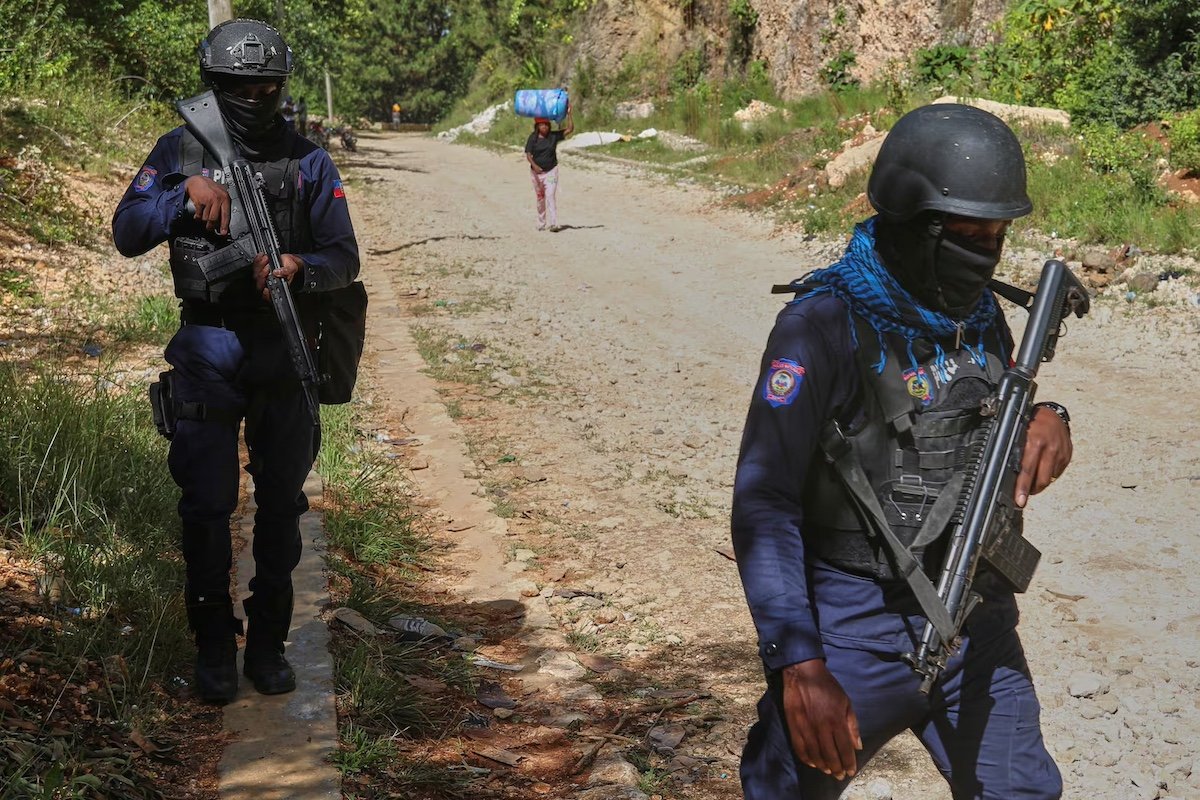
The first example came in Haiti on October 18, after the kidnapping of four Salvadorans by gangs. El Salvador initially sent 100 special forces soldiers to Port-au-Prince to search and rescue. By October 22, the numbers had grown to more than 2,000 troops, according to The Guardian. This marked El Salvador's first independent foreign military campaign since its brief 1969 war with Honduras.
Then, on October 26, Algeria announced plans to send troops to neighboring Niger amid separatist and jihadist activity on its southern border. It was Algeria's first major foreign military commitment since the 1973 Yom Kippur War, with the first convoy arriving on October 30.
The near-simultaneous timing and rarity of these campaigns are notable. But their work alongside American and Russian security organizations makes them more significant. In Haiti, the US-based private military and security company (PMSC) Vectus Global has been providing security support to Haitian authorities since early 2025. Niger has hosted Russia's Africa Corps paramilitary organization since 2024, after it absorbed much of the Wagner PMSC's former African network.
While PMSCs and paramilitary forces often operate within multilateral alliances, Washington and Moscow have established independent security footholds in Haiti and Niger, respectively, through these organizations. Vectus Global and the Africa Corps, however, have limited manpower and now appear to be turning to El Salvador and Algeria to reinforce their operations. This provides the US and Russia with additional military support while allowing them to maintain some degree of distance from the deployments.
The Caribbean cauldron
After former Haitian President Jovenel Moïse's assassination in 2021, US and Salvadoran efforts to restore security gradually converged. In the aftermath, Haiti requested US military assistance. However, despite concerns that instability could trigger a refugee crisis and create opportunities for organized crime, the Biden administration declined to intervene directly, instead backing a UN security force led by Kenya in 2023.
As instability worsened, Salvadoran President Nayib Bukele offered to help. In 2024, Bukele said that while a UN Security Council resolution was required, El Salvador could “eliminate” Haiti's gangs by using his domestic anti-gang policies, which he has credited with making El Salvador the safest country in the Americas.
Under the second Trump administration, these efforts coalesced. In early 2025, the US State Department authorized Vectus Global to export defense services to Haiti, permitting military-related work there. Founded by Trump ally Erik Prince, the company secured a 10-year contract to improve security by combating gangs and strengthening Haiti's customs framework.
Since March 2025, Vectus Global personnel have conducted drone strikes and helicopter attacks in Haiti, provided combat training, and supplied hundreds of fighters. Small Wars Journal describes the campaign as one in which “contracted mercenaries are engaging in legally questionable activities to stave off violent armed gangs from taking over full control of the capital Port-au-Prince.”
Meanwhile, Erik Prince's ties to El Salvador predated Trump's reelection. In August 2024, he visited El Salvador and proposed using their existing prison complex for migrants. In 2025, he registered an LLC called 2USV in Wyoming and shared his proposed plan with the White House when Trump took power. The proposal would have put Prince's company in charge of managing logistics for the prisons, including transporting detainees from American holding cells to El Salvador's prison, according to Politico. Prince's proposal, however, showed no signs of progress. The Trump administration, meanwhile, deported migrants to El Salvador prisons as part of its own operations.
While Prince's “prison plan” might have fallen through, Salvadorans comprise a large part of Vectus Global's personnel in Haiti. El Salvador has also strengthened official military cooperation with Washington before its deployment to Haiti. It received shipments of US rifles and helicopters throughout 2025, followed by additional firearms, medical supplies, and helicopter maintenance equipment from US Southern Command in 2026. In April, the two countries also cohosted the multinational military exercise CENTAM Guardian 26.
El Salvador's October move into Haiti received Washington's approval, and the US “provided C-130 transport aircraft to help move Salvadoran troops to Haiti,” a US military official told Reuters. The buildup indicates the deployment was planned well in advance, and the US, El Salvador, and Haiti each have their own interests to protect, potentially complicating these partnerships over time.
These simultaneous campaigns come amid a weakening of global multilateral security arrangements in recent years. Shortcomings of UN peacekeeping, breakdown in the Western alliance, and questions about globalization's future have created space for smaller, more selective partnerships. As Washington and Moscow test these new tactics, the implications for regional stability and sovereignty are profound, not least in the Indo-Pacific, where similar dynamics could emerge. For more on how great-power rivalry is evolving, see weather sovereignty as a new front and rethinking American power.