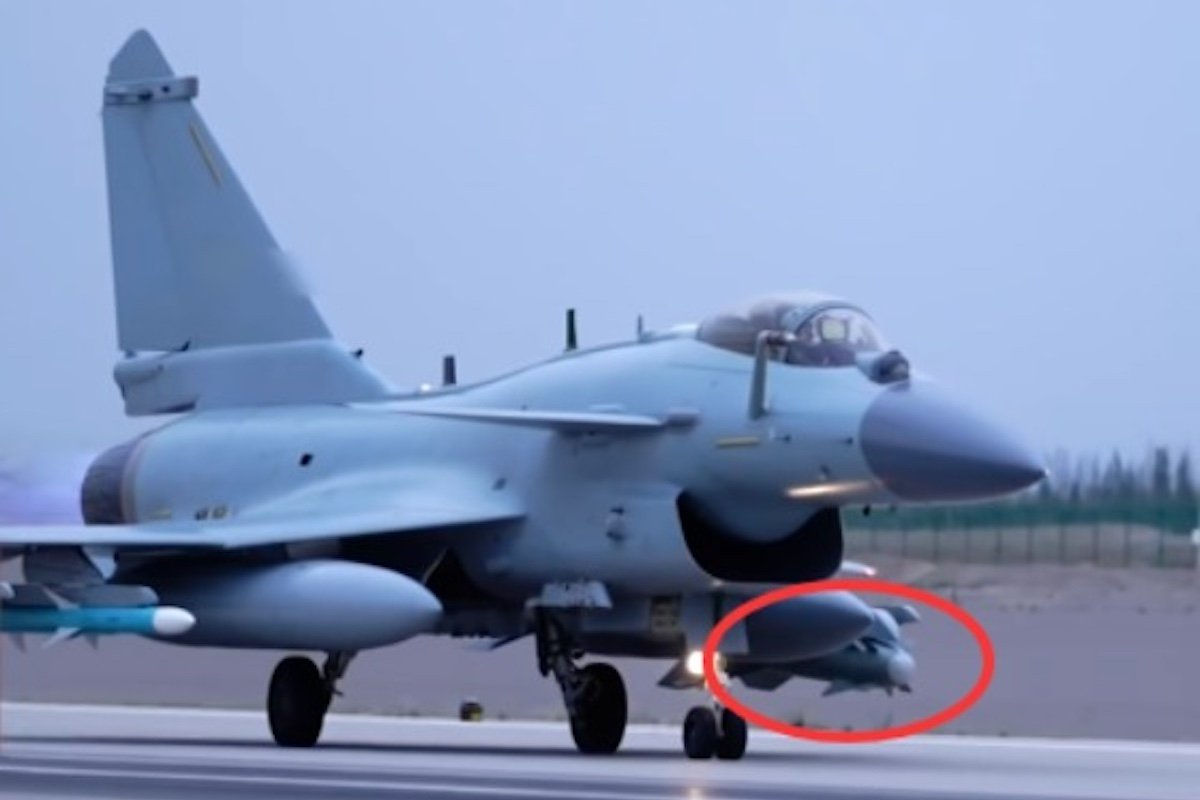
China's recent integration of an upgraded short-range air-to-surface missile onto its frontline J-10C fighter has drawn attention from military analysts, but the move may carry hidden risks in a potential Taiwan conflict. The missile, a domestically modified variant of the Russian-origin Kh-29T, was shown on state broadcaster CCTV mounted on the Chengdu J-10C for the first time this month, according to the South China Morning Post.
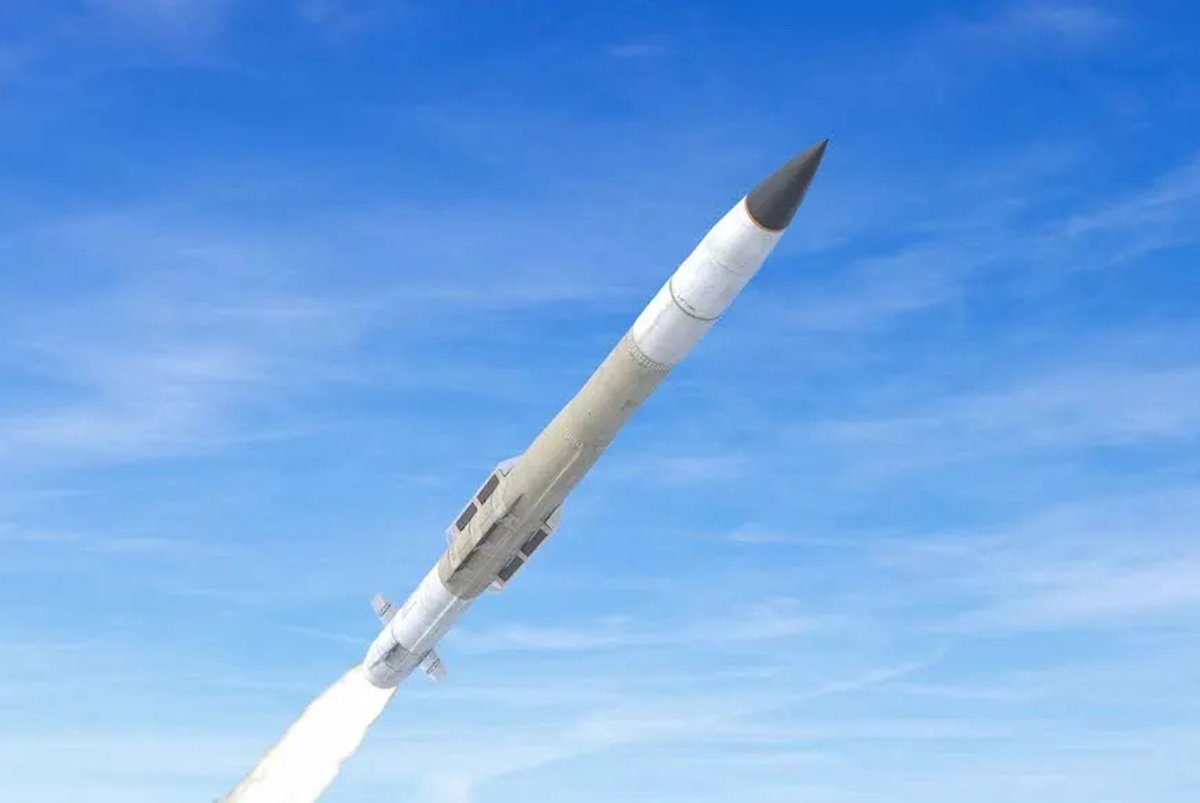
The Kh-29T, originally imported in the early 2000s alongside Su-30MKK fighters, has been upgraded with an imaging infrared seeker. Weighing about 685 kilograms and carrying a 320-kilogram armor-piercing warhead, it is designed for precision strikes against hardened targets like bunkers, bridges, runways, and ships within a 10- to 30-kilometer range. Previously seen on JH-7A and J-16 aircraft, its integration onto the J-10C—the People's Liberation Army's most numerous fighter family used in routine patrols around Taiwan—provides a cheaper alternative to the KD-88 cruise missile, which has a 200-kilometer range.
The Iran precedent
The US-Iran War offers a cautionary tale. According to a recent assessment by the Center for Strategic and International Studies (CSIS), the US expended 70 to 90 of its 90 prewar Precision Strike Missiles, over 1,100 of 4,400 Joint Air-to-Surface Standoff Missiles, and over 1,100 of 3,100 Tomahawk cruise missiles in the opening salvos. Stockpile replenishment is slow: PrSMs may be back by late 2026, but JASSMs not until mid-to-late 2027, and Tomahawks until early 2031.
As long-range stocks dwindled, the US military increasingly relied on shorter-range munitions like JDAMs, Small Diameter Bombs, and Hellfires. While inventories were substantial—roughly 160,000 JDAMs, 20,000 SDB Is, and 50,000 Hellfires—their shorter ranges forced aircraft closer to surviving Iranian air defenses. Although Iran's high-altitude systems like S-300 batteries were destroyed early, smaller, dispersed systems such as MANPADS and SHORAD units survived and posed a severe threat to low-flying aircraft.
An October 2026 Congressional Research Service report documents significant US aircraft losses, including one F-15E, one A-10, three MQ-1 drones, and one AH-64 Apache, plus battle damage to an F-35. These platforms could strike from outside Iran's air defense envelope, but operational pressures—including rationing long-range weapons—likely forced crews into contested airspace.
Taiwan's survival strategy
Recreating that dynamic in the Taiwan Strait depends on whether Taiwan can preserve its air defenses through an initial Chinese offensive. In an April 2023 article in the Journal of Indo-Pacific Affairs, Matthew Revels argues that Taiwan can survive a missile saturation attack by shifting from static long-range batteries to mobile, concealed, and asymmetric networks. Drawing on Yugoslav and Ukrainian tactics, he recommends keeping radars off during initial strikes, using urban terrain to complicate suppression, and hardening communications.
Because stationary Patriot batteries take two hours to relocate, Revels suggests Taiwan stockpile mobile short-range air defenses and MANPADS, deploy vertical-takeoff drones, and disguise long-range launchers inside shipping containers. If Taiwan's defenses weather the opening storm, China would face a steep stockpile dilemma.
China's long-range arsenal is finite. The US Department of Defense's 2025 China Military Power Report estimates the PLA Rocket Force fields 300 ground-launched cruise missiles, 900 short-range ballistic missiles, and 1,300 medium-range ballistic missiles capable of reaching Taiwan. William Alberque stated in November 2025 that these numbers are not unlimited, and attrition could be severe.
The J-10C's new missile, while cost-effective, may become a trap if Taiwan's defenses survive. As seen in Iran, the shift to shorter-range munitions can lead to unexpected losses. For China, the challenge is not just launching a barrage but sustaining a campaign. For Taiwan, the key is survival and attrition. The outcome of any conflict would hinge on these dynamics, making the J-10C upgrade a double-edged sword.
Related analysis: China's new missile shield and Seoul's missile defense highlight regional concerns.