China's latest live-fire missile interception exercise has underscored a major doctrinal shift as the People's Liberation Army (PLA) moves to protect its mainland leadership, nuclear arsenal, and expanding aircraft carrier fleet from US precision strikes, Indian submarine-launched nuclear missiles, and allied anti-ship networks.
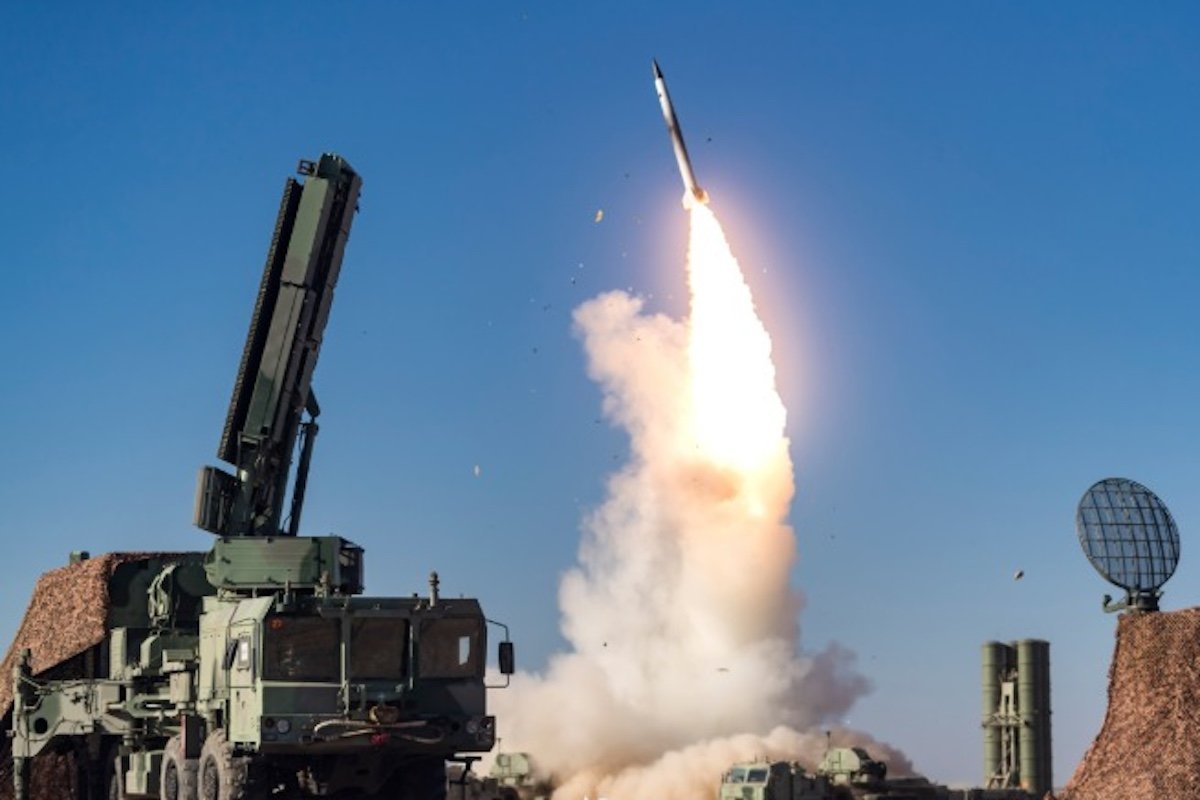
State media reported that the PLA successfully demonstrated the simultaneous interception of two new-type missile targets, including a ballistic missile that abruptly altered its trajectory during flight. The exercise, conducted by the Central Theater Command Air Force's “Shenwei Missile Battalion,” took place in a desert landscape resembling northwest China, after units deployed thousands of kilometers via road-mobile vehicles, railways, Y-20 transport aircraft, and roll-on/roll-off ships.
Using the HQ-9B surface-to-air missile system alongside an integrated network featuring the HQ-19 and exo-atmospheric HQ-29 interceptors, personnel reacted within a critical window of mere seconds to launch in an emergency as one incoming warhead suddenly changed course and descended sharply. PLA sources noted that delaying by even one or two seconds would have missed the engagement window, and that the interval between target warning and interception can be as short as two minutes.
From opposition to active defense
Chinese military analysts cited in state media said the drill underscores the PLA's advancements in thrust-vector control, active radar guidance, and multi-layered command integration, bolstering its capability to counter complex threats ranging from maneuvering ballistic missiles and hypersonic weapons to drone swarms and stealth aircraft.
While state media framed the desert drill as a tactical test of interceptor agility, these integrated systems reflect a broader transformation in China's nuclear and military strategy. According to a May 2026 article in the Journal of Strategic Studies by Alexander Richter and others, China's evolving ballistic missile defense architecture—anchored by road-mobile HQ-29 midcourse interceptors, HQ-19 terminal systems, dual-use early-warning satellites, and phased-array radars—demonstrates a capability to counter intercontinental, submarine-launched, and intermediate-range threats from the US and India.
Richter and colleagues argue that these systems mark a doctrinal shift from opposing missile defenses to embracing active damage limitation, nuclear escalation management, and deterrence against nuclear blackmail. At the operational level, China integrates mobile land-based and emerging Type 055 sea-based defenses to safeguard political leadership against decapitation strikes, defend retaliatory nuclear infrastructure, and protect blue-water naval forces conducting “far seas protection” missions.
Countering US precision strikes
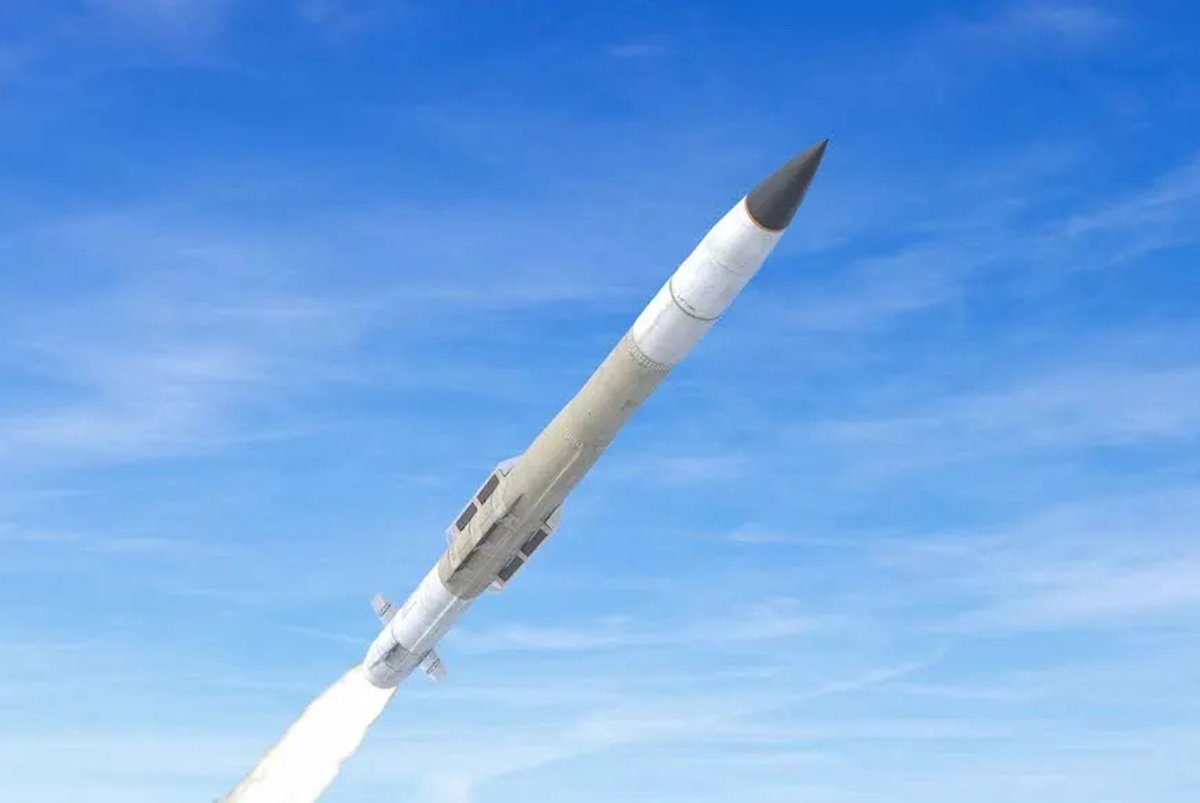
China's urgency to shield its mainland leadership and strategic infrastructure stems directly from growing US conventional strike capabilities designed to penetrate Chinese airspace during a potential conflict over Taiwan. A November 2024 RAND report notes that in a US-China conflict over Taiwan, the US could strike mainland China using standoff air, sea, and ground-launched conventional munitions—such as the Joint Air-to-Surface Standoff Missile – Extreme Range (JASSM-XR), Tomahawk Block V, and hypersonic weapons—to hold nearly 80% of key PLA targets at risk.
Philip Sheers and Stacie Pettyjohn note in a September 2026 Center for a New American Security (CNAS) report that mainland China has 1,500 land-based targets, with 800 within 370 kilometers of its coastline. While targets closer to the coast are within reach of relatively short-range swarming drones, longer-ranged munitions are required to hit targets deep inland.
RAND notes that rather than targeting the mainland on the first day of such a conflict, US forces would likely escalate to mainland naval ports, air bases, and logistics networks only after depleting specialized anti-ship munitions or in retaliation for Chinese strikes on regional US bases. The report says that limited, situational strikes on mainland China support operational defense, counter-anti-access/area denial (A2/AD), and theater interdiction while deliberately avoiding nuclear counterforce or leadership decapitation.
Offsetting India's sea-based deterrent
Beyond countering US precision-strike threats across the Pacific, China's expanding midcourse missile defense network is also racing to offset a rapidly maturing sea-based nuclear threat from India. In a September 2026 article for the Bulletin of the Atomic Scientists, Hans Kristensen and other authors mention that India is rapidly expanding its sea-based nuclear deterrent to establish a survivable retaliatory force capable of threatening China.
Kristensen and others point out that while the operational INS Arihant currently carries 700-kilometer K-15 missiles—which cannot reach China unless submarines transit into the South China Sea—India has commissioned the INS Arighaat and the larger, eight-tube INS Aridhaman, with the INS Arisudan and larger S5-class submarines in development. Once fielded, the 3,500-kilometer K-4 submarine-launched ballistic missile (SLBM) will enable Indian submarines to strike most of China from the northern Bay of Bengal, while the 5,000-kilometer K-5 under development will expand target coverage across all of Asia.
At the same time, China's push to integrate missile defenses onto its surface combatants is closely tied to its ambition to field a blue-water carrier fleet capable of operating far from home waters. The combination of land-based and sea-based interceptors, along with early-warning satellites, gives Beijing a layered shield that complicates any adversary's escalation calculus.
As China's missile defense matures, the strategic balance in the Indo-Pacific is shifting. The ability to intercept maneuvering warheads and manage nuclear escalation changes the cost-benefit analysis for any potential conflict, whether over Taiwan or in the Indian Ocean. For Washington and New Delhi, the new math is clear: China is no longer just building more missiles—it is building the means to stop theirs.