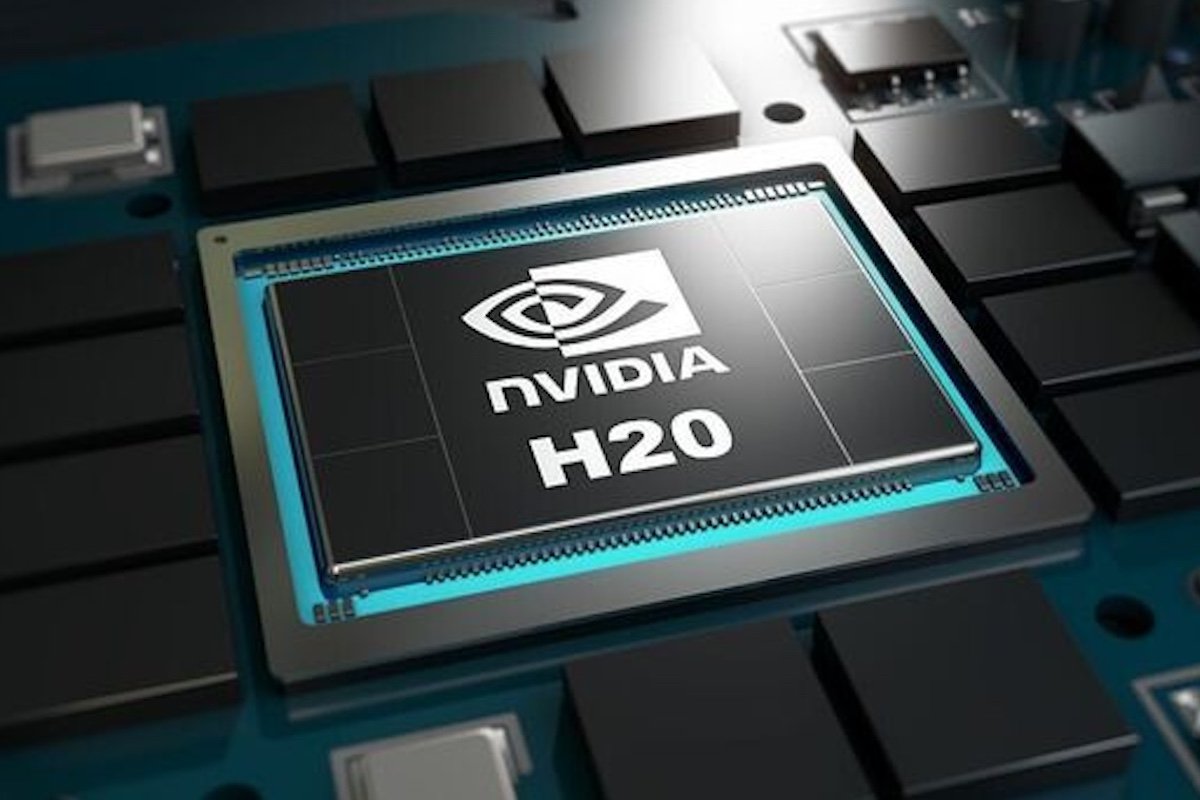
Chinese technology companies are scrambling to stockpile Nvidia’s artificial intelligence chips and lock in overseas computing capacity, as Washington moves to close loopholes in its export controls and presses allies to guard sensitive technologies. The urgency follows revelations about Nvidia founder Jensen Huang’s personal conduct, which many in China fear will accelerate US enforcement and lead to new legislation restricting remote access to advanced chips.
According to Reuters, citing people familiar with the matter, Chinese AI firms are accelerating plans to rent Nvidia-powered computing power abroad—an arrangement that remains legal despite US bans on direct chip sales. A leading cloud provider is reportedly considering locking in offshore AI capacity, while smaller AI labs are approaching rental firms in Southeast Asia. Gray-market middlemen are also hoarding restricted Nvidia chips, betting on further scarcity.
Nvidia itself has tightened its own rules. The company has cut its list of approved Asian buyers by more than half and capped the share of Chinese clients at its cloud partners at 49%. Southeast Asian firms seeking to become Nvidia Cloud Partners—a status that grants preferred access to chips—must now enroll in a system that tracks the physical location of their processors.
Washington’s new rule targets remote computing
The clampdown has come faster than many expected. On Monday, the US Commerce Department’s Bureau of Industry and Security (BIS) issued an interim final rule designed to prevent companies from circumventing chip restrictions through remote computing arrangements at data centers in third countries. Under the rule, companies must obtain a license to ship advanced AI chips to overseas data centers that provide significant computing power to firms headquartered in China or Macau. New license requirements apply to Indonesia, Malaysia, Singapore, Thailand, and Brazil, while data centers already serving Chinese firms must secure a license within 90 days.
Washington is also lining up allies. On November 15, the United States and nine partners—including Japan, South Korea, India, the United Kingdom, and Singapore—signed a declaration in San Francisco pledging to cooperate on policies that protect sensitive technologies and reduce excessive dependencies through trusted supply chains. The declaration, signed at a founders’ retreat of Pax Silica, a US-led initiative convened by Under Secretary of State for Economic Affairs Jacob Helberg, states: “Economic security is fundamental to national security, and no nation can be secure without securing its critical systems and technologies from those that would do it harm.”
The San Francisco Declaration builds on Pax Silica, launched in December 2025 to secure supply chains for AI chips and critical minerals. Besides the US, Australia, India, Israel, Japan, South Korea, Qatar, Singapore, the United Arab Emirates, and the United Kingdom signed it. The European Union, which joined Pax Silica in June, is still negotiating the text, while Germany, Sweden, and the Netherlands are expected to sign later.
Chinese commentators are skeptical about the declaration’s impact. Zhang Hongri, a writer at Guancha.cn, notes that the declaration “mainly sets out principles of cooperation and working mechanisms. It has yet to produce a unified list of technology controls or a legally binding regime of joint export restrictions on China.” She adds that Europe’s position is awkward: “Europe does not want to take sides in the US-China technology race as it relies heavily on US companies for advanced AI chips, cloud computing, and large AI models, and has deep industrial ties with China.”
A Sichuan-based columnist using the pen name “A Beam of Moonlight” argues that Washington’s goal is to “redefine AI standards and force its allies to pick sides, so that it can build a closed-loop supply chain that shuts out China and cement its absolute dominance in AI.” He suggests three countermeasures: tightening export controls on rare earths and critical minerals, using multilateral platforms like the World AI Cooperation Organization (WAICO) to offer an inclusive alternative, and accelerating localization across the semiconductor supply chain.
The pressure on Nvidia intensified after The Wall Street Journal reported on November 14 that Megaspeed, the Singapore-based Nvidia cloud partner at the center of the scandal, arranged nearly US$12 billion worth of orders for several hundred thousand export-controlled Nvidia chips for Chinese companies between 2023 and 2024. The report has fueled concerns that the US will crack down harder on smuggling and remote access, prompting Chinese firms to secure whatever capacity they can before new restrictions take effect.
For the broader Indo-Pacific, the episode underscores the fragility of AI supply chains and the growing role of Southeast Asian hubs like Singapore and Malaysia as intermediaries. As Washington and Beijing compete for technological supremacy, companies across the region are being forced to navigate a rapidly shifting regulatory landscape. The path beyond the Nvidia shock may lie in verified interdependence, but for now, Chinese firms are hedging their bets.