The resignation of Jensen Huang as chief executive of Nvidia on November 12 was not just a business story. It sent ripples through governments and boardrooms from Seoul to Kuala Lumpur, exposing how much of Asia's artificial intelligence ambitions were tied to one man's goodwill and travel schedule.
South Korea is now worried about joint projects with Nvidia valued at around US$510 billion. In Japan, 44 companies, including Sony, SoftBank, and Honda, joined a physical-AI consortium after Huang's visit in July. Malaysia has approved 385.7 billion ringgit (roughly US$95 billion) of data-center investment since 2021, much of it dependent on Nvidia chips.
A Korean editorial put it bluntly: Huang “is, in effect, Nvidia itself.” In Singapore, a columnist doubted the region would find another Nvidia boss willing to take its case to Washington. That is a strange thing to say about a company worth nearly $4 trillion, whose shares fell as much as 13% on the news. It is even stranger as a description of the foundation on which several countries have built national strategies.
Asia's exposure is physical. Taiwan makes the chips, South Korea produces the memory, Southeast Asia hosts a growing share of the servers, and Japan, China, and India are among the biggest markets. Yet the decisions that mattered most—which chips are sold, to whom, and on what terms—rested with one American company and, in practice, with its founder.
The Megaspeed affair shows where that leads. The Singapore-based firm has reportedly bought more than $4.8 billion of Nvidia chips since June 2024, and US officials suspect it of helping route restricted hardware to China. Nvidia has said its own checks found no diversion. Whoever is right, the first line of export enforcement was the seller, and the seller had every commercial reason to keep selling.
Some caution is due. The spying allegations are unproven. Singapore's home affairs ministry says Alice Huang, the former Megaspeed executive at the center of the story, was never investigated for espionage, and police found too little evidence to prosecute her over server declarations. Beijing calls the claims “groundless speculation.”
But policy is not waiting for the facts. In Washington, lawmakers from both parties want to close the gap that lets Chinese firms rent computing power in overseas data centers when they cannot buy the chips. New licensing rules could reportedly reach Malaysia, Thailand, Indonesia, and Singapore. Malaysia is weighing a law to monitor how its data centers use high-performance chips. Chinese investors, meanwhile, talk about replacing foreign chips with domestic ones as a matter of survival.
Each of these moves makes sense on its own. Added together, they push the industry toward two walled-off systems, and the economies in the middle will pay for the wall. Korean memory makers, Taiwanese foundries, and Malaysian data-center hosts all do best in a single market that rewards scale. A split one rewards picking a side.
A third option: verified interdependence
Washington frames the choice as engagement or decoupling. Asia does not have to order from that menu. There is a third option, which I would call verified interdependence: access to advanced computing in exchange for proof of how it is used.
In practice, that means a shared registry of where advanced chips are installed, who operates them, and who rents time on them, backed by end-use certificates and outside audits. The idea is already in the air. A Singapore analyst has argued that proof of where every chip sits and whom it serves is becoming part of the product. One regional tech site has called for a “know your compute customer” discipline.
The need is obvious enough: Singapore disclosed last year that 22% of Nvidia's chip sales were booked to entities there, while only 1% of the chips reportedly physically arrived. Finance has been here before. Strict know-your-customer and anti-money-laundering rules did not kill Singapore as a banking center. They became part of why money goes there.
And after the 1997 crisis, the ASEAN countries, China, Japan, and South Korea built a currency-swap safety net and later a surveillance office to watch one another's books. The region knows how to build dull, useful institutions after a shock.
The obvious objection is that neither Washington nor Beijing will accept a registry it does not control. At first, they may not. But the scheme does not need their blessing to start. Singapore, Malaysia, Thailand, and Indonesia host the servers, and they are the ones facing new American licensing rules. If they agree on common audit standards and recognize one another's checks, they can offer Washington something a blanket restriction cannot: actual visibility. They would also give Chinese customers who rent capacity lawfully a way to show it. Start in ASEAN, bring in the chip-making economies of Northeast Asia, then take it to APEC.
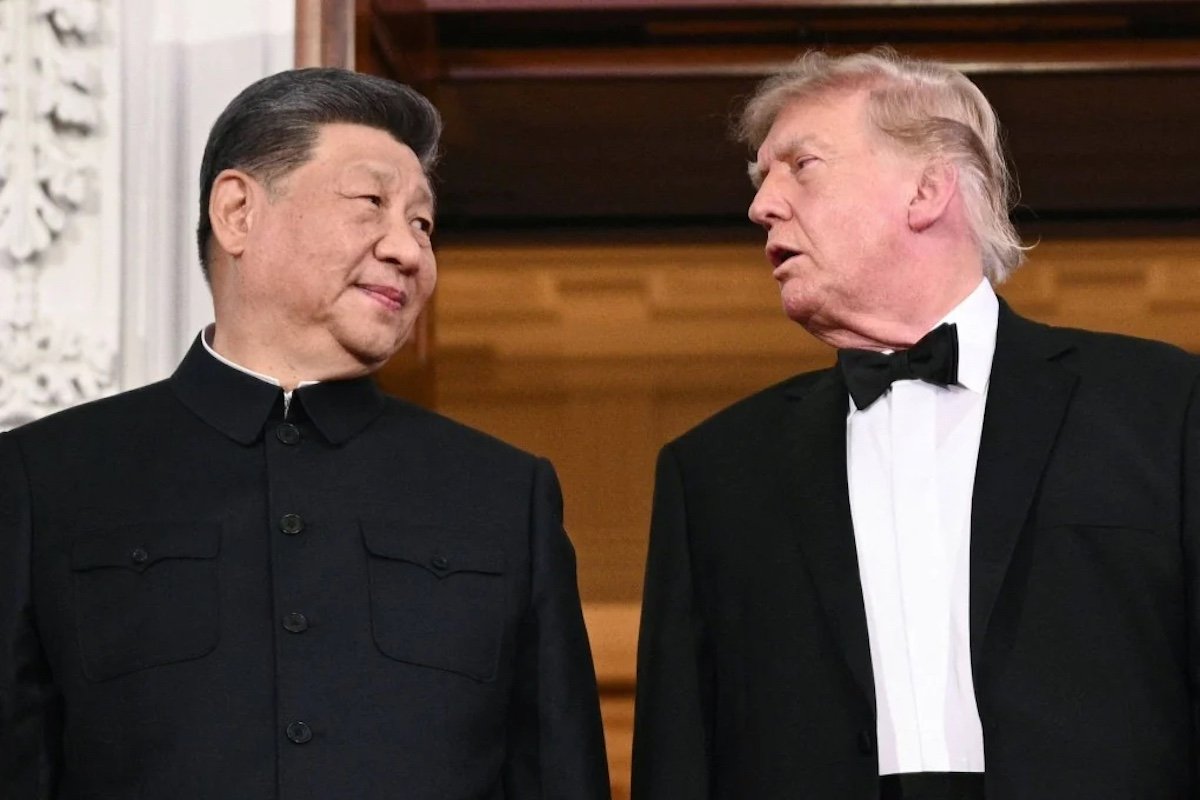
The timing helps. APEC leaders meet in Shenzhen on November 18–19, and Donald Trump and Xi Jinping are expected to talk on the sidelines. Chips will be discussed, whether or not they are on the agenda. Asian governments should put a proposal on the table before the two giants settle the matter between themselves.
There is a corporate lesson too, though it is not Asia's to enforce. One American analyst has asked whether systemically important AI firms should face guardrails like those on the largest banks. Huang had about 60 direct reports and reportedly did not believe in succession planning. Nvidia's leadership crisis is a reminder that Asia's AI future should not rest on the fate of a single executive or a single company.