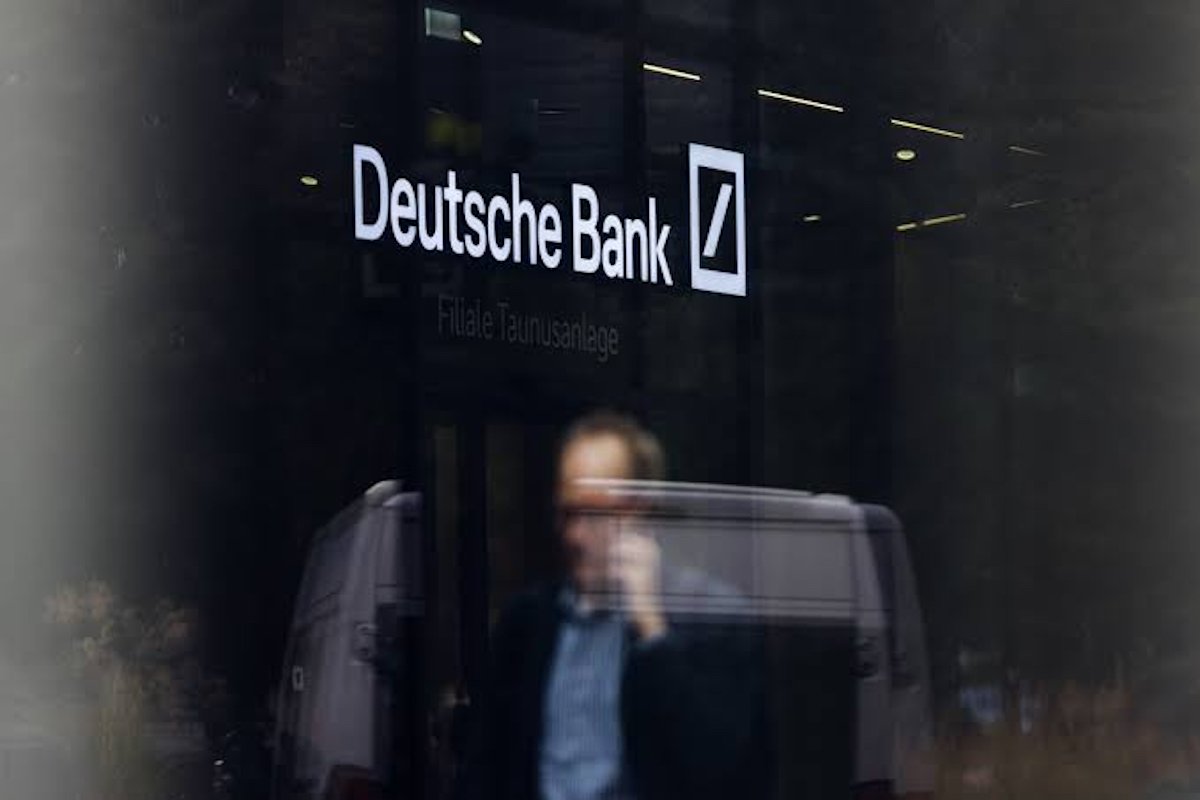
A trove of more than 15 million internal Deutsche Bank documents, released by whistleblowers, has laid bare what the Financial Times described on Tuesday as “bad behavior, systemic failures, and incompetence.” The files, which have been shared with media partners including Le Monde and the New York Times, expose hidden losses, secret payments to a Qatari royal, and money laundering on an industrial scale.
At the center of the reporting is the German lender’s role in financing Jeffrey Epstein, the late financier and convicted sex offender. According to the leaked records, Deutsche Bank processed nearly $600 million in Epstein-related payments, with internal regulators filing suspicious activity reports on $582 million of those transfers. The flagged transactions included payments to women, suspected misuse of charitable donations, and transfers from wealthy individuals such as Apollo Global Management co-founder Leon Black and hedge fund billionaire Glenn Dubin.
The scale of the bank’s dealings with Epstein is far larger than previously known. A report released in August by the office of U.S. Senator Ron Wyden (D-Ore.) had accused Deutsche Bank of ignoring “massive withdrawals of cash for questionable purposes from Epstein’s accounts.” The leaked documents now show that the bank enabled transfers that went well beyond those earlier findings.
Trump and the Baku money trail
Epstein was not the only infamous client. Le Monde’s investigation into the bank’s long relationship with President Donald Trump found “direct evidence of suspicious transactions connecting companies owned by Trump” to a notorious Azerbaijani money-laundering operation. That scheme, known as the “Azerbaijani Laundromat,” was used throughout the 2010s to buy political influence and siphon public funds for Azerbaijan’s elite.
The records show that in April 2015, entities linked to the laundromat attempted to wire precisely $141,261.82 to DT Marks Baku LLC, a Delaware-based firm that collected Trump licensing fees for a luxury hotel project in Baku. The transfer came just weeks before Trump announced his first presidential campaign. Le Monde noted that seeing “the same sum bouncing between four different bank accounts in just two weeks, with three different explanations” is “typical of how money-laundering operations function.”
“By multiplying transfers and altering payment descriptions,” Le Monde reported, “those behind the transactions obscure the financial chain and make tracing the origin of the funds nearly impossible. The complexity blurs the link between the often illicit origin of the money and its final beneficiary.”
Russian oligarchs and internal warnings
The leaked documents also show that Deutsche Bank repeatedly ignored internal warnings about doing business with Russian oligarchs tied to President Vladimir Putin. At least two divisions flagged the risks of continuing to work with Oleg Deripaska, a billionaire with a long record of allegations including money laundering, tax evasion, and ties to organized crime. An internal report documented these accusations, yet the bank continued its relationship, describing Deripaska in a memo as “a reputable businessman and well-established business partner with a significant pipeline of further transactions.”
Deutsche Bank only cut ties with Deripaska after Russia’s full-scale invasion of Ukraine in 2022, and even then only after its competitors had already announced plans to exit the Russian market.
The revelations come at a time when European banks are under heightened scrutiny over their compliance with anti-money-laundering rules. For Asian readers, the story underscores the global reach of financial crime and the importance of robust oversight in the region’s fast-growing financial hubs. As Asia’s oil buffer against Hormuz turmoil shows, financial and energy security are deeply interconnected, and lapses in one part of the world can have ripple effects across the Indo-Pacific.
The Deutsche Bank leak also highlights the challenges that regulators in Asia face as they seek to clamp down on illicit finance. With the region’s banks expanding their international footprint, the lessons from Frankfurt are clear: internal controls must keep pace with growth, or the consequences can be severe.