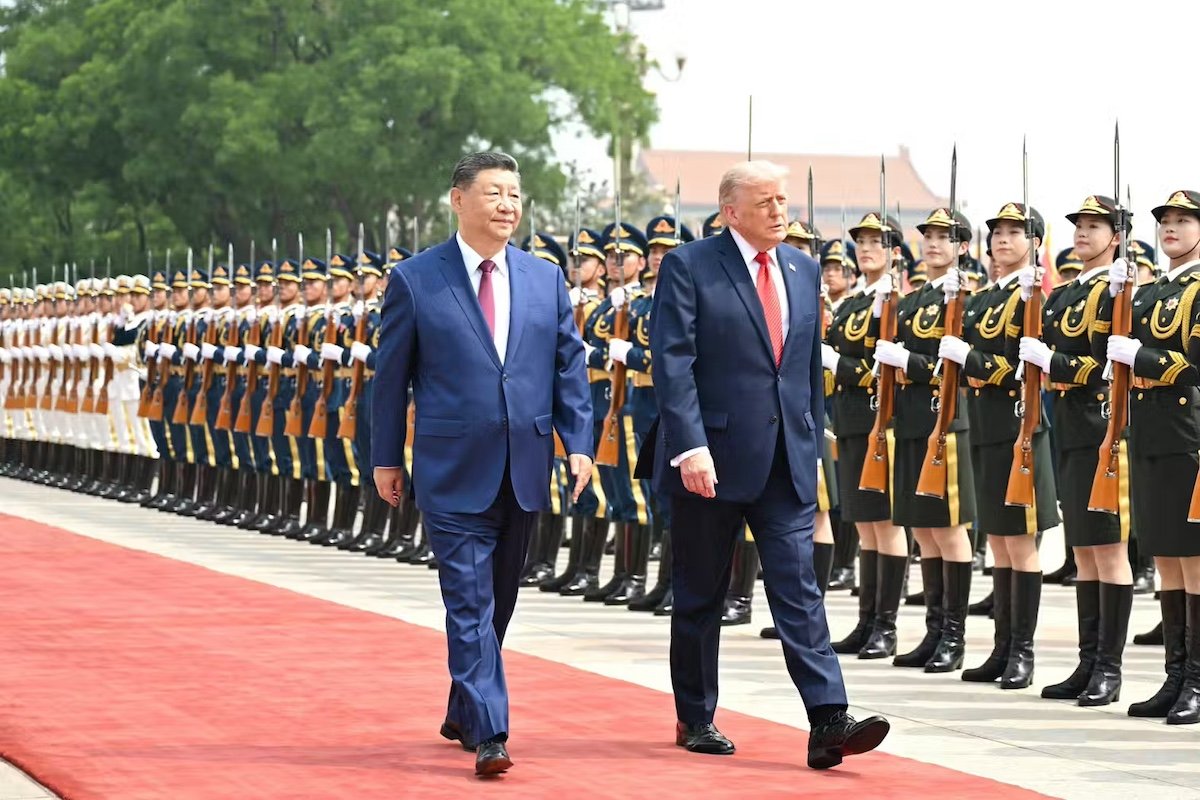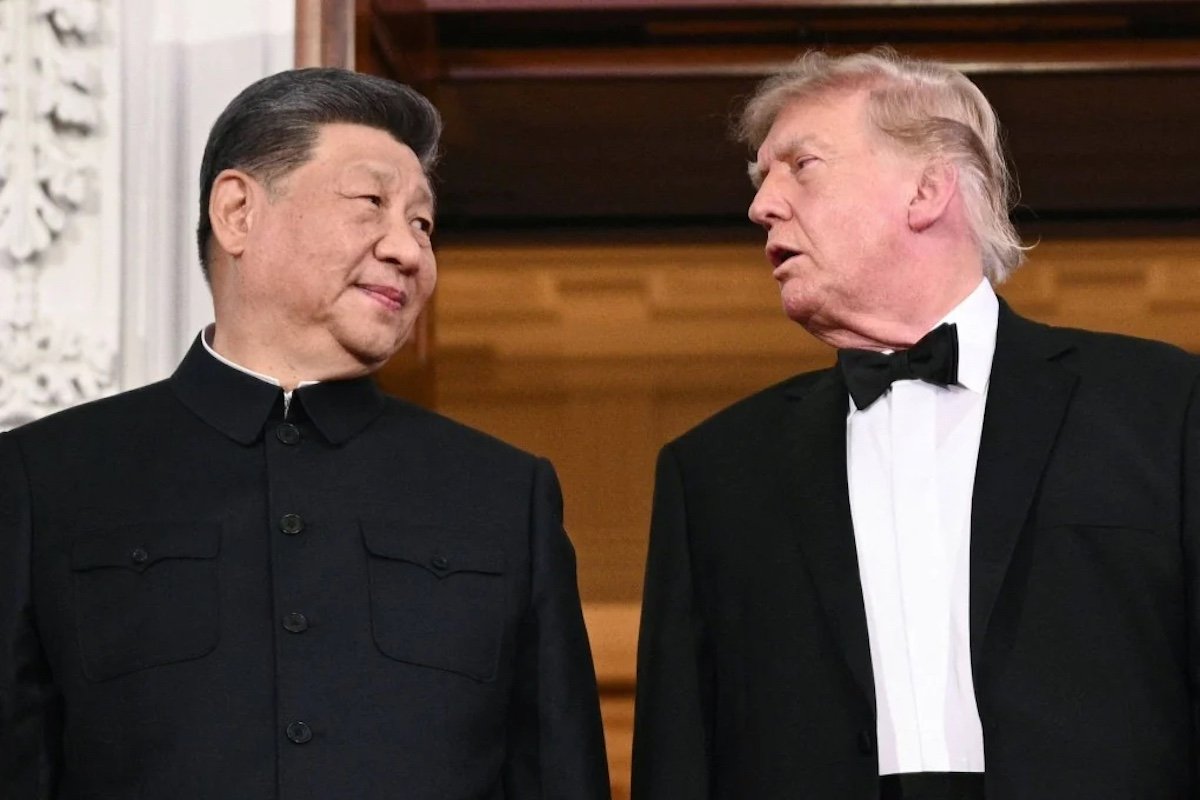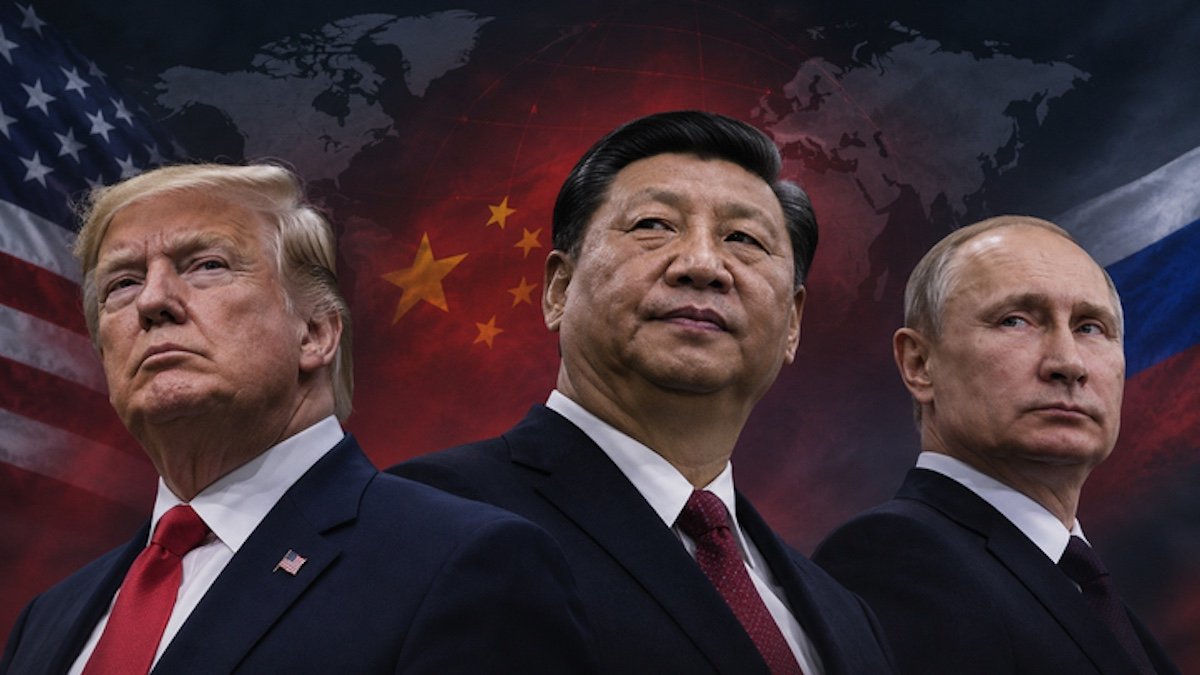
When Donald Trump, Vladimir Putin, and Xi Jinping sit down in Shenzhen on Thursday for their first three-way summit, the Chinese leader will command the table. For global investors, what Xi chooses to do with that leverage will matter far more than any joint communiqué.
Trump arrives weakened after the midterm losses, with the Iran conflict unresolved and a trade truce with Beijing set to expire in January. Putin is nearly five years into the Ukraine war, presiding over an economy increasingly dependent on Chinese imports. Xi, by contrast, is heading toward a fourth term next year and controls the rare earth supplies that both the United States and its allies rely on for everything from fighter jets to AI data centers.
Russia's dependency on China
Moscow's position is stark. Beijing now supplies roughly half of all Russian imports—about double the share before the full-scale invasion of Ukraine. Putin gets a prized seat next to the leaders of the world's two largest economies, but only because Xi allows it. If a credible path to a ceasefire emerges from this meeting, it will likely be because China decided the war had become more costly than useful.
Washington's hand is weaker than it appears. Trump needs a win he can sell at home, and Xi knows it. Beijing has extended its pause on rare earth export curbs by just two months—a deliberately short leash. US officials keep pressing China to honor promises on farm purchases and critical minerals. All those levers sit in Xi's hands.
Rare earths illustrate the dynamic. They are essential for electric vehicles, wind turbines, and the data centers powering artificial intelligence, and China dominates their processing. By releasing supply in short installments, Beijing reminds the world every few weeks who controls the flow.
What investors should watch
For markets, the summit's real test is trade. A firm, long extension of the truce with written commitments on critical minerals would likely do more for global equities than any statement on Ukraine. It would ease pressure on manufacturers' margins, steady supply chains for the AI build-out, and support emerging markets that trade heavily with both superpowers.
A thin outcome would have the opposite effect. Another short agreement with vague wording would leave tariff risk hanging over all of 2027. Markets would probably shrug at first, then grow uneasy as January approaches.
Energy is the second channel. Real progress on Ukraine would likely push European gas prices lower and lift the euro and European shares. Any sign that Beijing or Moscow will lean on Tehran could knock some of the war premium out of oil prices. Cheaper crude would ease inflation and give central banks more room to cut rates. Both outcomes depend heavily on whether Xi chooses to use his influence—and on what he asks in return.
The Taiwan factor
Taiwan remains the risk hanging over everything. Xi will press China's claims, and he'll do so in front of a US president who badly wants a big deal. A large share of the world's most advanced chips is made on the self-governing island, so any hint of escalation would hit tech stocks everywhere. On Taiwan, the best result for markets is that strong words stay as words.
Some commentators have compared Shenzhen to Yalta, where three leaders divided the postwar world. But the comparison flatters the occasion—nothing will be carved up here. Xi is doing something quieter and, for markets, more significant: showing that the road to a deal with Russia, to calm global trade, and to secure critical materials now runs through Beijing.
Time is also on his side. Trump is moving into the later stages of his presidency, and Putin relies more on Chinese goodwill with every month the war continues. Xi, secure at home for years to come, can afford to wait for better terms. His guests cannot.
None of this makes China untouchable. Its economy has serious problems, and Xi needs foreign demand and stable trade as much as anyone. Washington still holds real leverage, provided it uses it with discipline rather than chasing a quick photo-op.
Trump will fly home talking about a deal, and Putin about his return to the top table. The lasting outcome will likely arrive in January, when the trade truce expires and the world finds out what Xi wants in return for his patience.