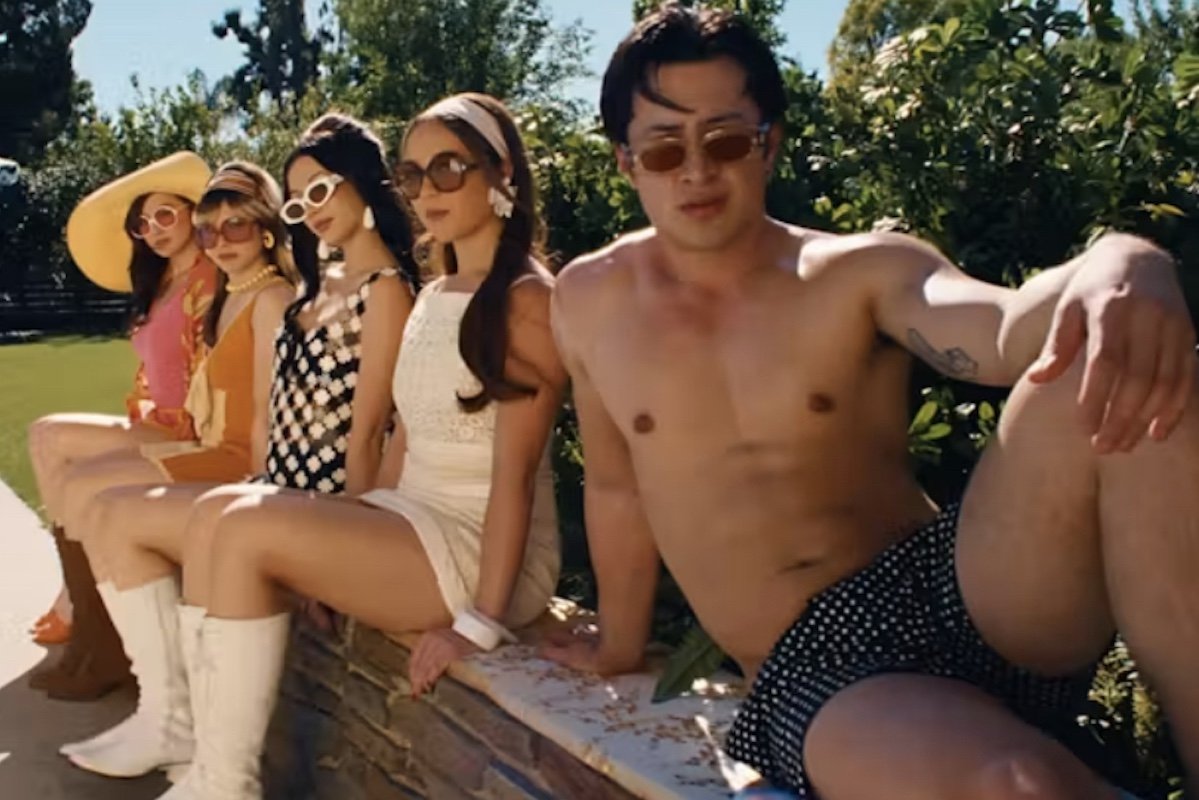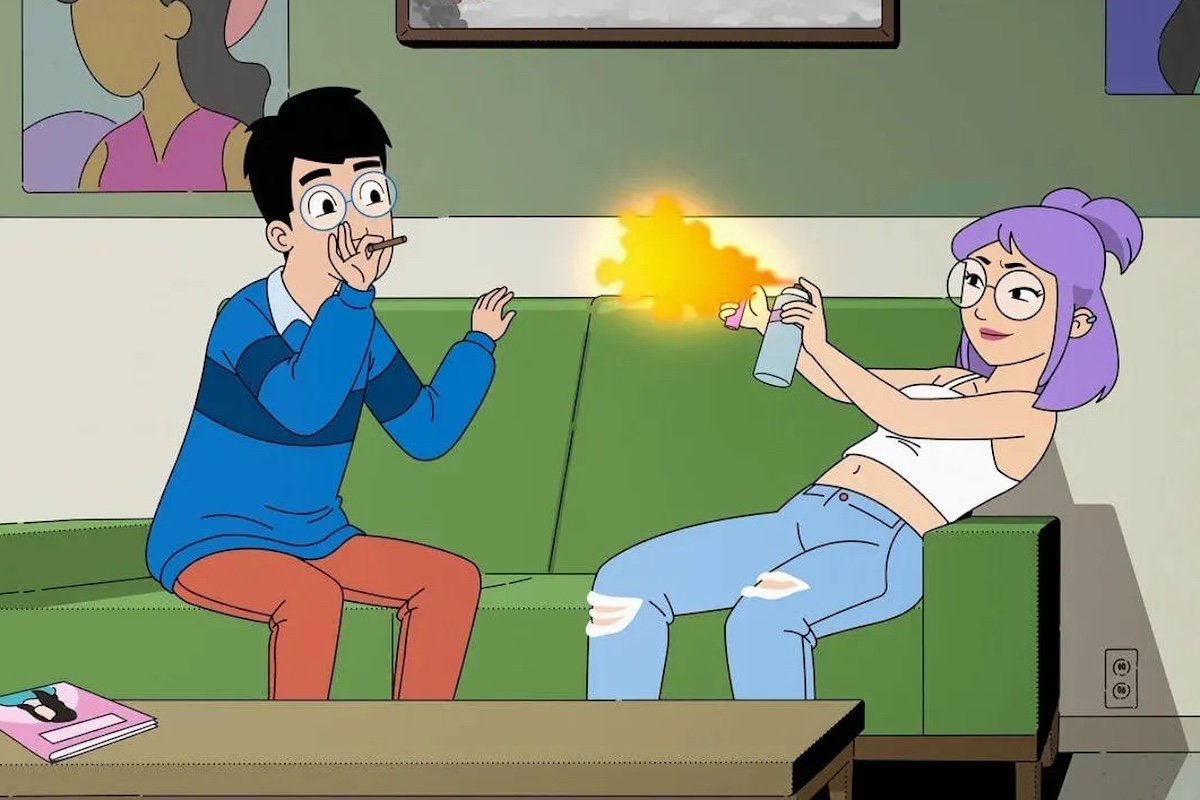
In 2015, while living in Brooklyn, my apartment flooded. My landlord offered temporary housing in a room belonging to his girlfriend, an aspiring actress from Minnesota named Poppy Liu. Even then, she struck me as one of the most original people I had met. Years later, she has landed a lead voice role in DANG!, a new adult animated series on Netflix premiering September 8. The show follows three Asian American siblings navigating life in New York City, with one sister chasing unconventional dreams while another embodies the high-achieving stereotype.
Before the show even aired, social media erupted with ridicule. Critics on Twitter mocked the premise, calling it yet another example of "Asian American art" obsessed with immigrant parents, strange lunches, and the pressure to succeed. One post sneered at the genre's "safe edginess" and "yearning for acceptance." Another joked about a fictional series starring a "typical UMC Chinese-American" grappling with stereotypes.
This dismissiveness is not new. Asian American art has long been a punching bag, even among Asian Americans themselves. But the criticism often rests on a narrow, unfair definition of what the genre can be.
Beyond the narrow label
The problem starts with how "Asian American art" is defined. Typically, it means work by Asian Americans about Asian American experiences. That double requirement excludes a vast amount of creative output. Art about Asian Americans by non-Asians is rare, partly due to identity politics that discourage outsiders from telling those stories. Yet some classics, like Harold & Kumar Go to White Castle, were written by white creators and still resonate.
More importantly, the definition ignores work by Asian Americans that does not center on their ethnicity. A filmmaker of Korean descent making a sci-fi thriller set in space is rarely labeled "Asian American art," even though it is. This narrow framing reduces a diverse community to a single narrative: the immigrant struggle, the model minority myth, the generational clash.
Consider Avatar: The Last Airbender, a beloved animated series that drew heavily on Chinese, Japanese, Tibetan, and Korean cultures. It was created by white showrunners, so it is seldom classified as Asian American art, despite its pan-Asian aesthetic and American storytelling style. The show's success proves that Asian-inspired art can transcend labels, but it also highlights how rigid those labels can be.
The genre's defenders point to works like The Joy Luck Club, Crazy Rich Asians, and Fresh Off the Boat as milestones. But these are just a fraction of what Asian American creators have produced. From poetry to graphic novels to independent films, the range is enormous. The problem is not a lack of creativity; it is a lack of recognition for anything that does not fit the expected mold.
This matters beyond the arts. In an era of rising anti-Asian sentiment and debates over immigration, Asian American stories shape how the community is perceived. Dismissing them as clichés only reinforces stereotypes. As India and Japan deepen their strategic ties, the cultural exchange across the Indo-Pacific also grows, making it more important to appreciate the nuances of Asian American identity.
Poppy Liu's journey from a Brooklyn apartment to a Netflix series is a reminder that Asian American artists are not a monolith. They are writers, animators, actors, and musicians who draw on their heritage but also on their individual imaginations. The next DANG! might not be a masterpiece, but it deserves a fair chance, not a reflexive sneer.
As the region's influence expands—whether through Vietnam's naval modernization or China's military tech experiments—the cultural output of the Asian diaspora will only grow in relevance. It is time to retire the tired jokes and engage with the art on its own terms.